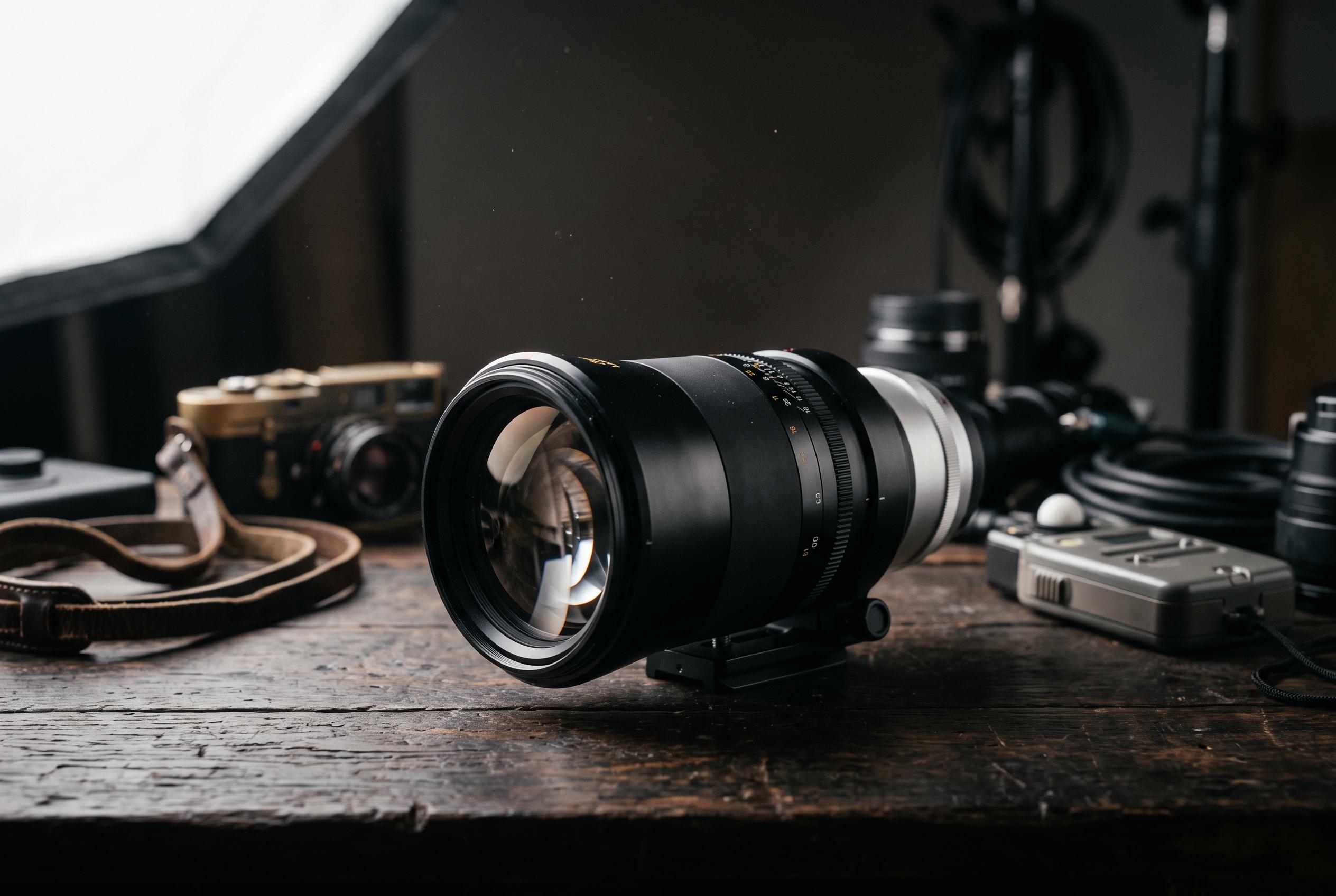

The Zeiss Otus 100mm f/1.4 APO-Sonnar stands out in the market for its exceptional optical quality and mechanical design, appealing primarily to purists and collectors despite its bulk and price.
The Zeiss Otus 100mm f/1.4 APO-Sonnar sits in an awkward but fascinating corner of the lens market. It is a manual-focus full-frame optic available in Canon EF and Nikon F mounts, and both Cameralabs and Zeiss describe it as part of the Otus line’s ambition to deliver exceptionally high image quality across the frame. In practice, though, it is a heavyweight and expensive proposition, and its appeal depends heavily on whether the buyer values ultimate optical performance over convenience.
Physically, the lens is built like a precision instrument. Thom Hogan lists 14 elements in 11 groups, a 9-blade diaphragm, an 86mm filter thread and a close-focus distance of 1.0m, while Imaging Resource places the weight at roughly 1.4kg depending on the mount. The design is fully manual, with no autofocus motor or electronic burden, which may be a drawback for many photographers but also reduces the number of components that can fail over time.
In use, the handling is deliberate rather than quick. The review at Phillipreeve.net notes a long, precise focus throw and an aperture ring on the Nikon F version, along with a large hood that improves the look and function of the lens but adds to its bulk. That same review is less enthusiastic about the rubberised control surfaces, while still acknowledging the advantage of a purely mechanical design for long-term serviceability.
Optically, the lens largely lives up to the Otus reputation, but not without caveats. Cameralabs and ePHOTOzine both praise the sharpness, contrast and low distortion, and Zeiss says the aspherical design is intended to preserve performance across the frame and throughout the focusing range. Yet Phillipreeve.net found that vignetting at wider apertures is stronger than expected for such a large lens, coma is visible at f/1.4 and f/2, and flare control is competent rather than class-leading.
The rendering is equally nuanced. Close-up performance is strong, but the review notes that the background character can become busier than many buyers might expect from a 100mm f/1.4 lens, with optical vignetting shaping out-of-focus highlights and some transition zones becoming distracting. Sunstars are decent when stopped down, and lateral chromatic aberration is very well controlled, but the overall bokeh is more contentious than the specification sheet might suggest.
Taken as a whole, the Otus 100mm f/1.4 is best understood as a specialist tool and a statement object rather than a rational everyday purchase. The decisive objection is not optical quality, which is excellent, but value: Phillipreeve.net argues that Sigma’s 105mm f/1.4 Art delivers better correction in several areas, adds autofocus and costs far less. That leaves the Zeiss as a lens for collectors, manual-focus purists and photographers who want an all-mechanical premium optic with little concern for cost or portability.
Disclaimer: This content is intended for informational purposes only. Readers are advised to exercise their own judgement, conduct due diligence, or consult a qualified expert before acting on any information provided.