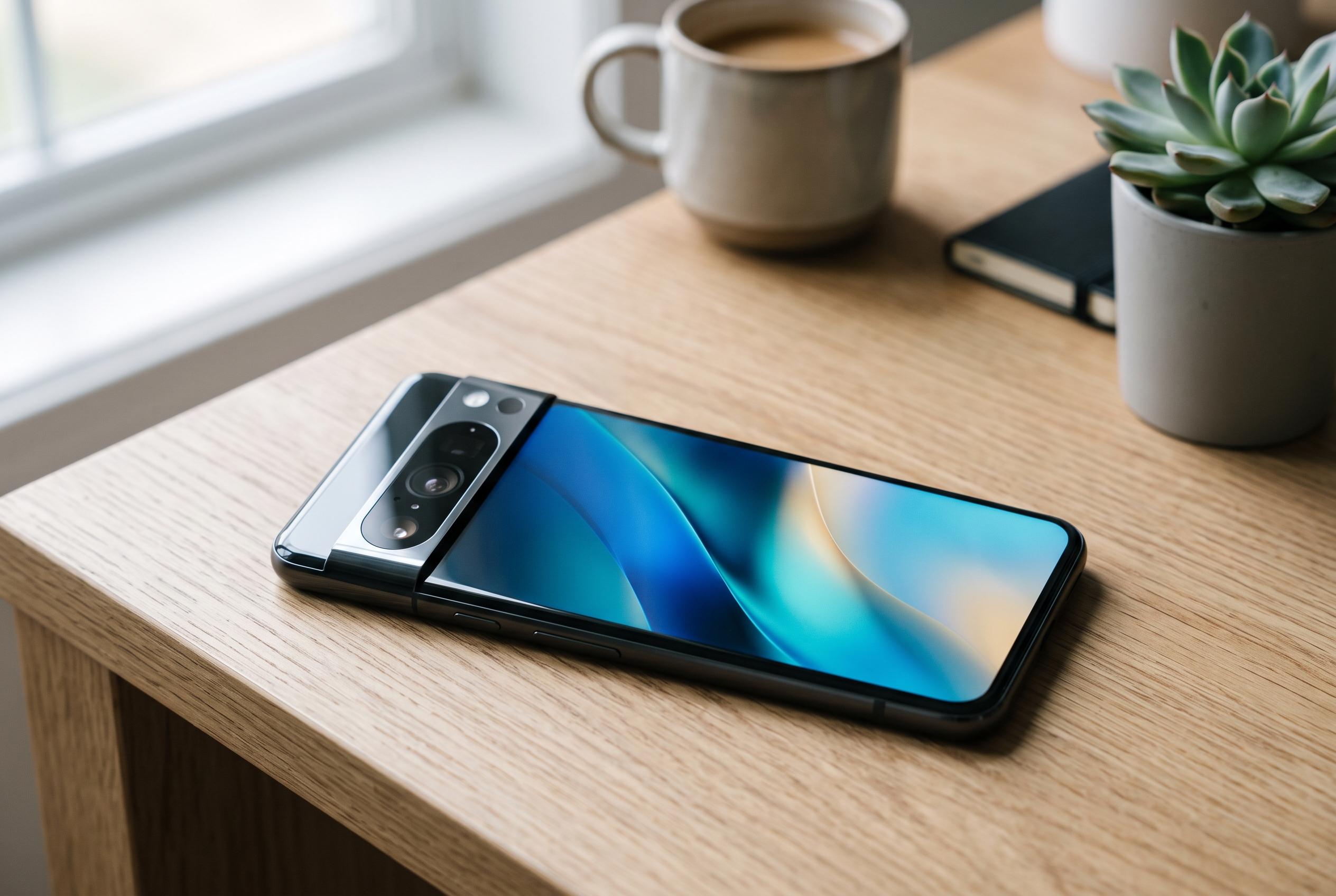

The Google Pixel 11 Pro XL maintains its flagship status through subtle refinements, notably a brighter display and camera improvements, but lacks compelling reasons for existing owners to upgrade amid modest performance boosts and increased pricing.
Google’s Pixel 11 Pro XL is a familiar sort of flagship: polished, expensive and very good at the things Google values most. The latest model keeps the company’s clean software, strong imaging pipeline and long support promise intact, while adding a brighter display, a revised rear design and a handful of new Gemini-led features. Yet the overall impression, as several reviews note, is of refinement rather than real progress. For buyers coming from older Pixels or other Android phones, it remains one of the most coherent premium handsets available. For owners of the Pixel 10 Pro XL, the case for upgrading is much weaker.
The display is the clearest hardware gain. Google has kept the same 6.8-inch class LTPO OLED panel size, but pushed peak brightness far higher, improving outdoor readability significantly. Reviewers also highlight a tougher front cover, alongside the continued usefulness of the ultrasonic fingerprint reader and the familiar 120Hz adaptive refresh rate. Design changes are subtle at the front, but the rear glass camera island has been reworked and the phone still feels unmistakably premium in the hand. Computerworld and TechSpot both point to the high-quality screen and overall finish as standout strengths.
Performance is more complicated. Google’s Tensor G6 is described as quicker in day-to-day use, especially for web browsing, app launches and on-device AI tasks, with a stronger TPU and tighter Gemini Nano integration. But independent reviews also say its raw CPU and graphics performance still trail the best Android rivals by a clear margin. That matters less for messaging, multitasking and general navigation than it does for demanding gaming, where the phone can still struggle under load. Another point of criticism is memory: the base model has dropped from 16GB to 12GB RAM, although higher-storage variants still ship with 16GB.
The camera system remains a central reason to buy a Pixel. Google has kept the familiar triple-camera layout, but improved the main and telephoto sensors, while adding faster night shooting and more aggressive AI-assisted zoom. Android Central, Tom’s Guide and Computerworld all praise the imaging upgrades, especially the responsiveness of low-light capture and the quality of telephoto results. The controversy is the same one that follows every new Pixel now: once the zoom goes beyond roughly the optical and hybrid range, AI reconstruction takes over, producing images that can look impressively sharp on screen but are not always faithful to the original scene. Text and fine lettering remain a weak point for the software. The front camera is unchanged, though video stabilisation has improved.
Battery life is better, even with a slightly smaller cell than last year. The 5,115mAh battery supports 45W wired charging and 25W wireless charging, with fast top-ups possible using compatible PD 3.0 hardware. That said, reviewers still describe charging as merely adequate rather than class-leading, and several note that the phone’s value proposition is harder to defend after the price rise. In the United States, Google has lifted the cost by $100, while in Hungary the starting price is 523,990 forints, lower than the Pixel 10 Pro XL’s launch price because of exchange-rate movement. The result is a flagship that is easy to recommend in isolation, but less compelling as an upgrade. It is best suited to buyers moving from older Pixels or from another Android ecosystem entirely. For Pixel 9 Pro XL and Pixel 10 Pro XL owners, the changes are too modest to make the jump feel urgent.
Disclaimer: This content is intended for informational purposes only. Readers are advised to exercise their own judgement, conduct due diligence, or consult a qualified expert before acting on any information provided.