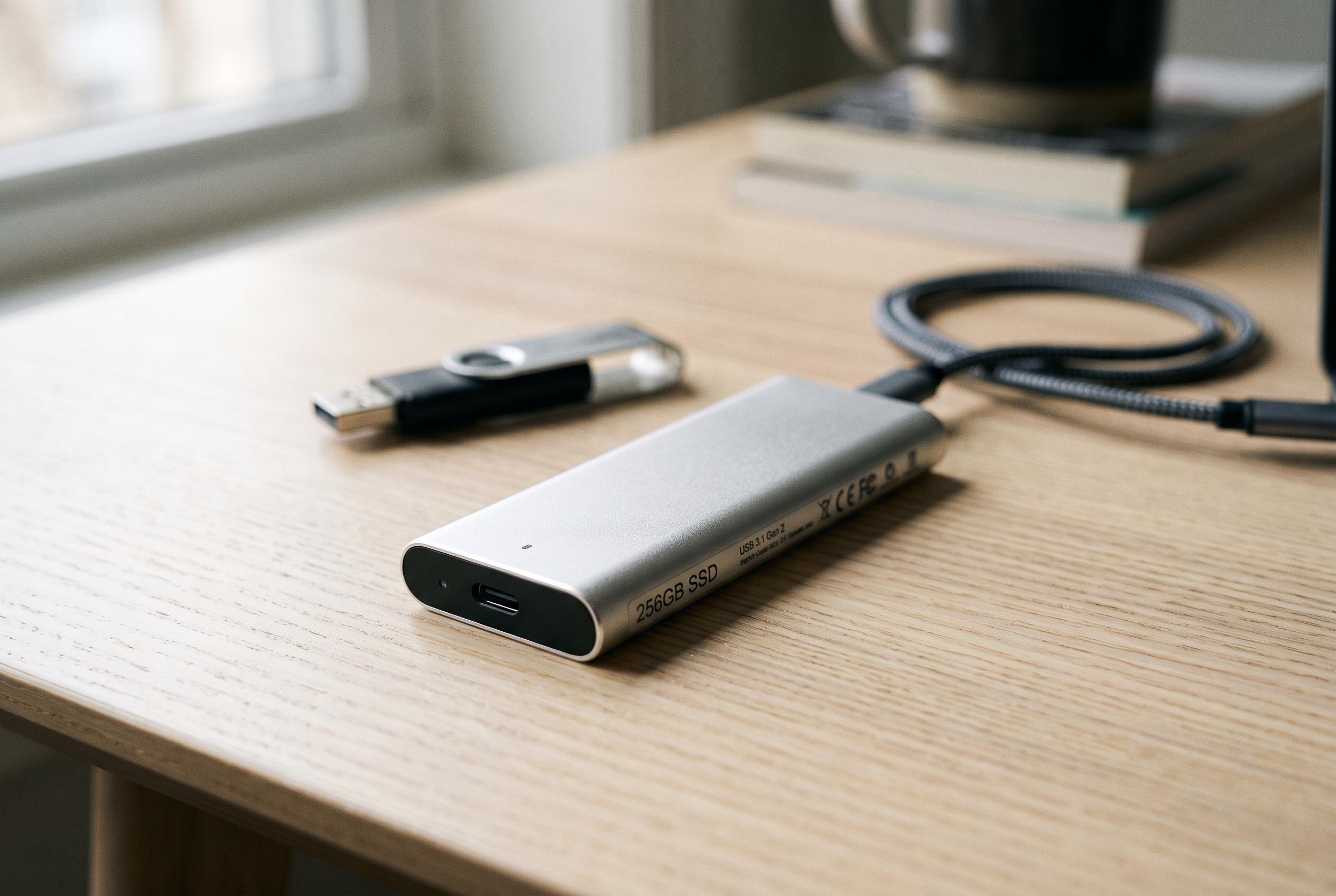

A repurposed 256GB SSD, housed in a low-cost aluminium enclosure, emerges as a faster, versatile alternative to traditional USB flash drives, highlighting the potential of affordable portable SSDs for everyday use.
What began as a simple way to repurpose an old Steam Deck drive has turned into a convincing argument for abandoning USB flash drives altogether. A discarded 256GB 2230 SSD, paired with a low-cost external enclosure, became a pocket-sized portable drive that is smaller than many thumb drives yet offers far better sustained performance, according to the How-To Geek account.
The case itself is part of the appeal. The enclosure cost the equivalent of about $12 and, despite the price, is described as aluminium, well assembled and rated for 10Gb/s transfers. It also includes a status LED and a magnetic cap, while a thermal pad is supplied for users who expect heavier workloads. That places it in the same broad class as similar compact 2230 enclosures sold elsewhere, including a US Amazon option priced higher at around $19, which adds a silicone sleeve but follows the same basic design.
In use, the rebuilt drive appears to behave much more like a proper external SSD than a typical flash stick. Large transfers reportedly approach the 10Gb/s ceiling, while smaller mixed files slow the pace, which is normal for this kind of storage. Industry guides from PCWorld note that external SSDs generally offer the best balance of speed, durability and portability for everyday use, whereas USB flash drives remain convenient but are usually less capable for sustained transfers and larger workloads.
Compatibility is also a major advantage. Formatted as exFAT, the drive can be used across Windows machines, a Mac mini and Android phones, with only a minor formatting step needed to make the Mac cooperate properly. That cross-platform flexibility is one reason portable SSDs are increasingly positioned as a practical alternative to flash drives and even some external hard disks, especially for users who move game files, screenshots, saves and other medium-sized data between devices.
There are limits. The enclosure has no USB-A connector, which makes it less convenient for older hardware, and the magnetic cap may come loose if carried on a keyring. Even so, the overall verdict is clear: for a small outlay, a spare 2230 SSD can be turned into a fast, reusable external drive that outclasses most thumb drives in both speed and usefulness.
Disclaimer: This content is intended for informational purposes only. Readers are advised to exercise their own judgement, conduct due diligence, or consult a qualified expert before acting on any information provided.