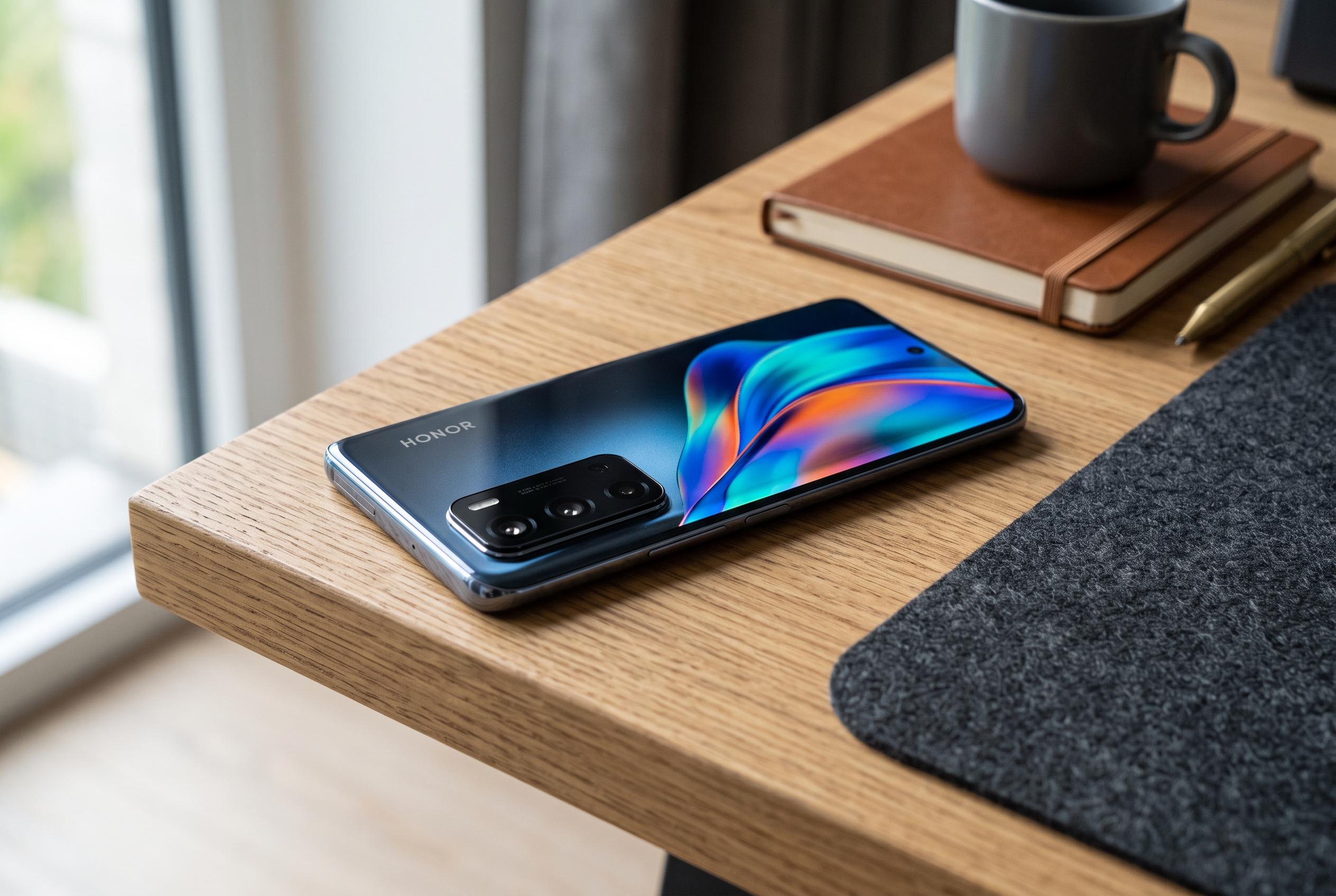

Honor’s newest mid-range smartphone offers a high-brightness AMOLED display, superior endurance, and a substantial camera upgrade, making it a formidable competitor to the Google Pixel 10a at the same price point.
Honor’s latest mid-range effort makes a strong case for itself against Google’s Pixel 10a, and the contest is tighter than it has been for years. Both phones sit at the same price point, yet Frandroid’s testing suggests the Honor 600 now has enough strengths to challenge the Pixel’s long-standing reputation for balanced software and dependable cameras.
At first glance, the Honor is the more eye-catching device. Its 6.57-inch screen, slimmer 7.8 mm frame and 185 g weight give it a lighter, more modern feel, while its orange finish and unusual rear design are clearly meant to stand out. The handset also goes further on durability, with IP69K resistance, and adds a side key that can trigger Honor’s AI tools or the camera. By contrast, the Pixel 10a is more restrained in appearance, although Google gives it a tougher Gorilla Glass 7i front and wireless charging, which Honor does not offer.
The display is one of Honor’s clearest advantages. Frandroid’s laboratory testing found the panel capable of an extreme peak brightness of 5,620 nits, far beyond the Pixel’s 2,900 nits, making it easier to read in direct sunlight. TechRadar likewise described the Honor’s AMOLED screen as one of its major selling points, while Android Central highlighted Google’s brighter pOLED panel and improved protection as refinements to the Pixel 10a rather than a wholesale change in direction. In practice, both should be excellent screens, but Honor appears to have pushed the hardware envelope much further.
Software support is now less decisive than it used to be. Honor is promising six years of Android updates, which brings it much closer to Google’s long support window than in previous generations. Frandroid also noted that Honor’s MagicOS leans heavily into visual flair and AI-assisted features, including voice-led photo and video editing and anti-deepfake protections, whereas the Pixel 10a stays relatively conservative despite Google’s obvious strength in artificial intelligence. Android Central reported that Google has added features such as Satellite SOS calling, Auto Best Take and Camera Coach, but its own AI toolkit still remains narrower than many buyers might expect from the company.
Performance is one area where Google still holds an edge. The Pixel 10a uses the Tensor G4, while Honor relies on Qualcomm’s Snapdragon 7 Gen 4, and benchmark results cited by Frandroid favour Google’s chip, especially in gaming. Even so, both phones are described as smooth in day-to-day use. Where Honor pulls ahead more decisively is endurance: its battery is far larger, and Frandroid found it lasting close to 17 hours in testing, with 80 W wired charging bringing a full top-up in under an hour. The Pixel lasts well enough and adds wireless charging, but it cannot match the Honor’s outright stamina.
Photography is more nuanced. Google still benefits from its strong image-processing reputation, yet Honor’s 200-megapixel main sensor gives it a real advantage in detail capture and digital zoom, especially in daylight and low light. The ultra-wide cameras are more evenly matched, and both phones produce vivid, warm-looking images. Taken together, the Honor 600 looks like the more ambitious all-rounder, while the Pixel 10a remains the safer choice for buyers who value Google’s software polish, wireless charging and a more familiar Android experience.
Disclaimer: This content is intended for informational purposes only. Readers are advised to exercise their own judgement, conduct due diligence, or consult a qualified expert before acting on any information provided.