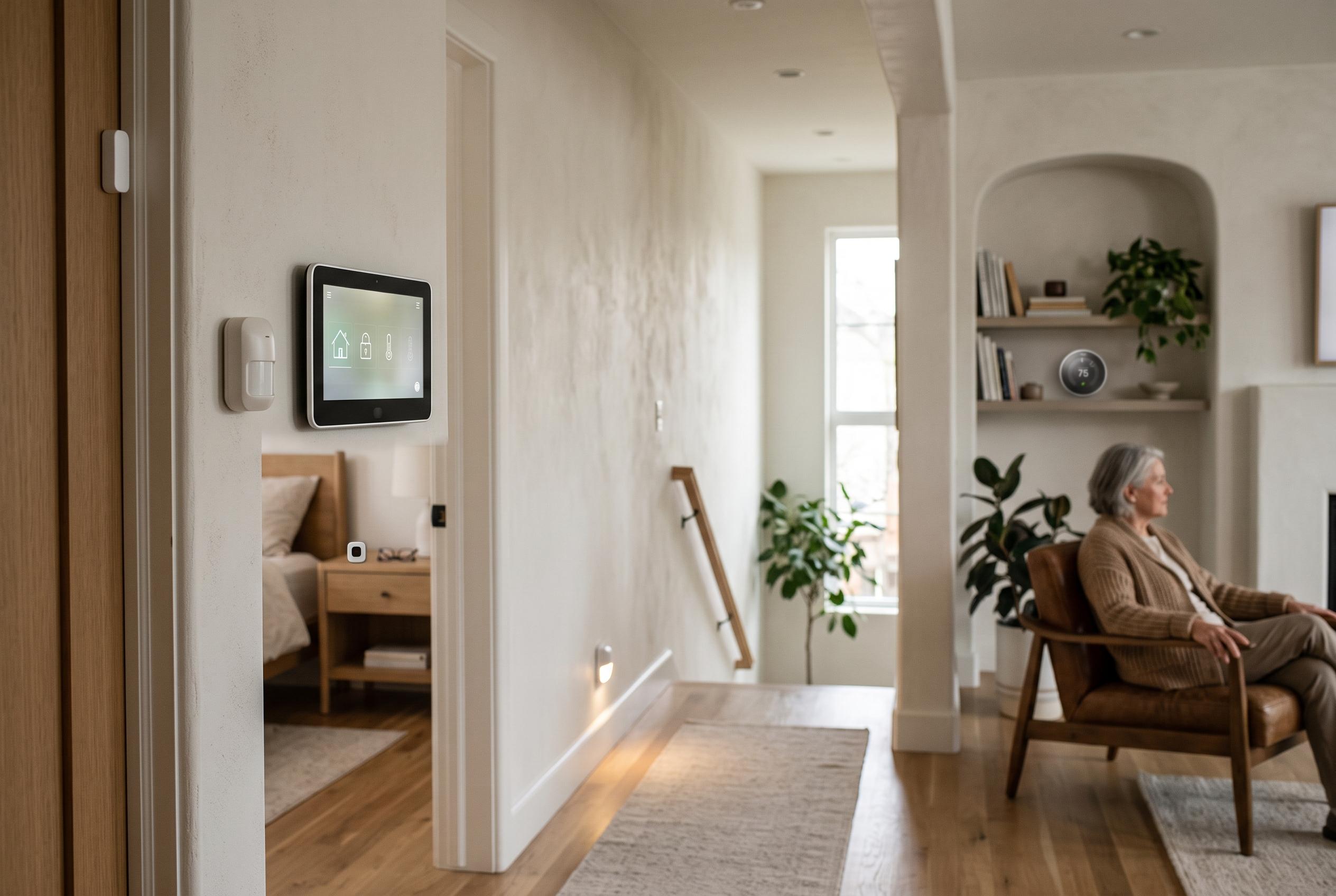

Effective home safety for older adults hinges on practical, adaptable support tailored to actual risks, combining simple modifications with layered technology to preserve independence and dignity.
Helping an older adult remain safe at home is less about buying the latest gadget than about matching support to everyday risks. The most useful starting point is not a wishlist of devices, but a close look at what has actually gone wrong in the past month: missed medication, a fall, a left-open door, poor hearing, or difficulty moving around at night. That practical approach avoids unnecessary spending and produces a system that responds to real routines rather than hypothetical emergencies.
The strongest setups work in layers. A video doorbell, for example, can help with visitors, but it will not help after a fall in the kitchen. A medical alert button can summon help, but it will not detect an open window or an appliance left running. According to the National Institute on Aging, home adaptations, alert systems and other support tools are most effective when they are part of a wider ageing-in-place plan that preserves both safety and dignity.
Falls deserve particular attention. The Mayo Clinic and the National Institute on Aging both note that falls are a major cause of injury in older adults, often leading to fractures, hospital treatment and a loss of independence. Technology can help, but it should be paired with basic measures such as better lighting, cleared walkways, firmer footwear, medication reviews and regular vision checks. Motion-sensitive night lights, timed bulbs and voice-controlled lighting can reduce the risk of late-night stumbles, but they do not replace grab rails, safer flooring or the removal of loose rugs.
Exercise also matters. Johns Hopkins Medicine says balance and strength training can reduce fall risk, while Harvard Health and MedlinePlus both point to muscle weakness, balance problems and cluttered homes as common contributors to accidents. That means a safer home is not only a smarter one; it is also one that supports movement, mobility and routine activity. The simplest changes often have the most value: brighter hallways, steadier furniture, clear bathroom access and easier routes between rooms.
Privacy is another part of the equation. Many older adults accept support until it starts to feel intrusive. Sensors, alerts and medication reminders can provide useful oversight without putting cameras in private rooms. If cameras are used at all, it is usually wiser to restrict them to entrances or common spaces and to be clear about who can see the footage. Framing the arrangement as a way to protect independence, rather than monitor behaviour, often makes the difference between acceptance and resistance.
The best systems are also the simplest to use under stress. Large controls, audible alarms, reliable batteries and clear alerts to family or caregivers matter more than flashy features. A setup that requires constant app-switching, password resets or troubleshooting will usually fail when it is needed most. It should also spread responsibility, so that one person is not carrying every call, notification and check-in alone.
Most importantly, the plan should change as needs change. Vision can decline, memory can weaken and mobility can alter the value of every device already installed. A good home-safety system is therefore not a one-off purchase but a routine review: keep what works, remove what is redundant and add only what addresses a current problem. Done well, ageing-in-place technology should feel unremarkable. That is often the clearest sign that it is doing its job.
Disclaimer: This content is intended for informational purposes only. Readers are advised to exercise their own judgement, conduct due diligence, or consult a qualified expert before acting on any information provided.