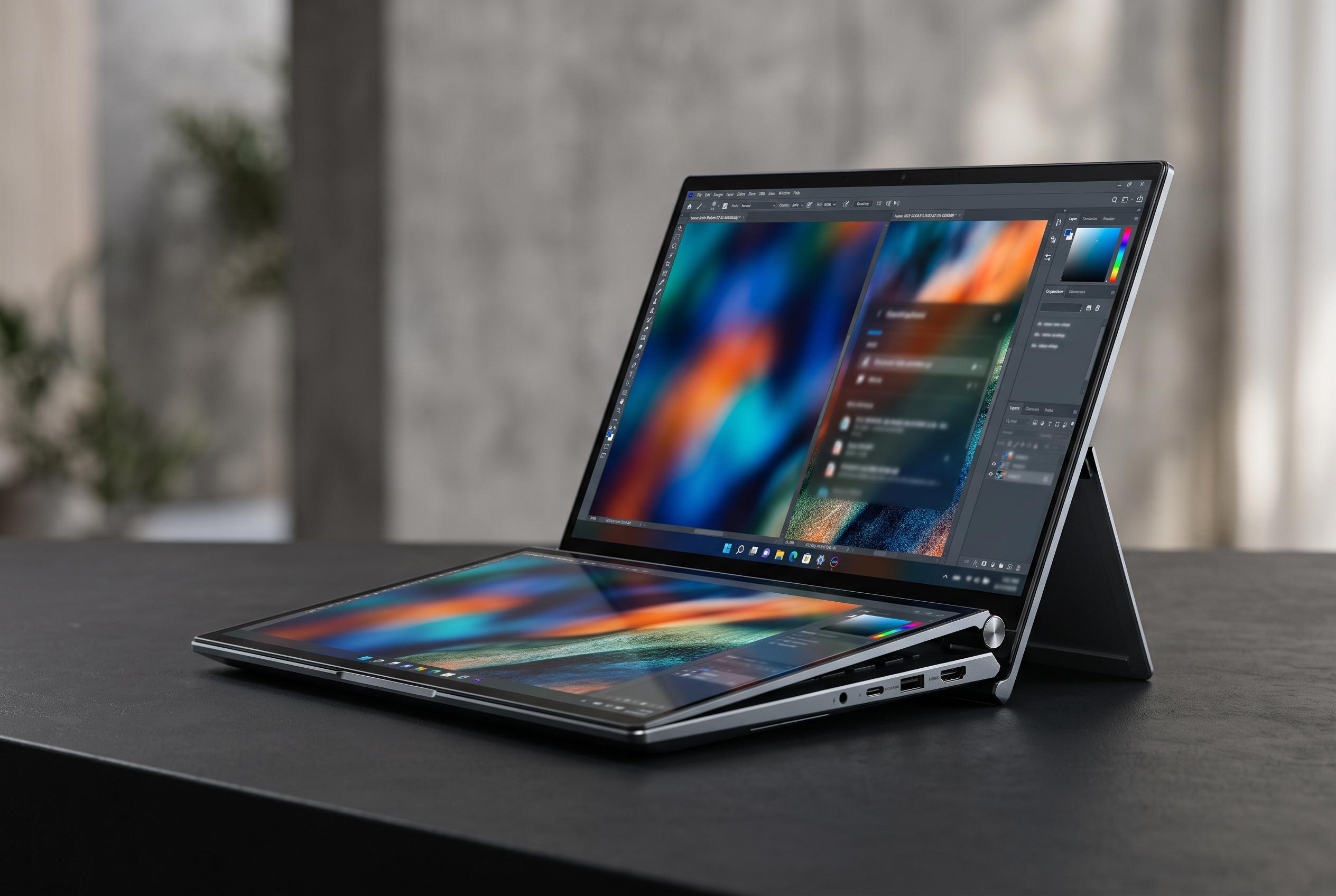

The latest Asus Zenbook Duo combines a sleek, flush dual-OLED display with improved performance, offering a powerful yet portable solution for multimodal workflows, despite some trade-offs in weight and price.
The Asus Zenbook Duo remains one of the few laptops that treats a second display as a core feature rather than a novelty. In its latest form, the machine keeps the appeal of a portable dual-screen setup while moving closer to the kind of all-in-one design that was always promised by the category. For users who split their work between reference material and an active document, the concept is still unusually practical.
Asus has refined the chassis so both OLED panels now sit flush when the laptop is open, removing one of the more awkward compromises of earlier versions. That change matters because it makes the device feel less like a clever prototype and more like a finished product. Reviewers have also noted that the newer hinge arrangement improves the overall presentation, while the twin 3K displays offer the sort of clarity and refresh rate that suits both productivity and media use.
Performance is another clear strength. According to reviews from Tom’s Hardware, Tom’s Guide and TechSpot, the latest Zenbook Duo pairs strong battery life with Intel’s newer Core Ultra platform, and its integrated graphics are capable enough for light creative work and some gaming. TechSpot also praised the ceraluminum chassis and the improved battery endurance, while Gadgets 360 highlighted better thermals and a more polished industrial design. In practice, that gives the machine a broader remit than many niche dual-screen devices.
The trade-offs have not disappeared, however. Multiple reviewers pointed to the high asking price, limited port selection and the extra weight that comes with carrying two displays in one chassis. Tom’s Hardware also flagged the bundled software and an average webcam as weak points, while Business Standard noted that the format still demands a certain workflow before it feels natural. For some buyers, those drawbacks will outweigh the benefits; for others, they are the cost of getting a genuinely flexible mobile workstation.
Taken together, the Zenbook Duo looks less like a spectacle and more like a refined answer to a specific problem. It is not designed for everyone, and it does ask users to adapt to its layout. But for people who already live in multiple windows, tabs and documents, it offers a rare combination of portability, power and screen space that standard laptops still struggle to match.
Disclaimer: This content is intended for informational purposes only. Readers are advised to exercise their own judgement, conduct due diligence, or consult a qualified expert before acting on any information provided.