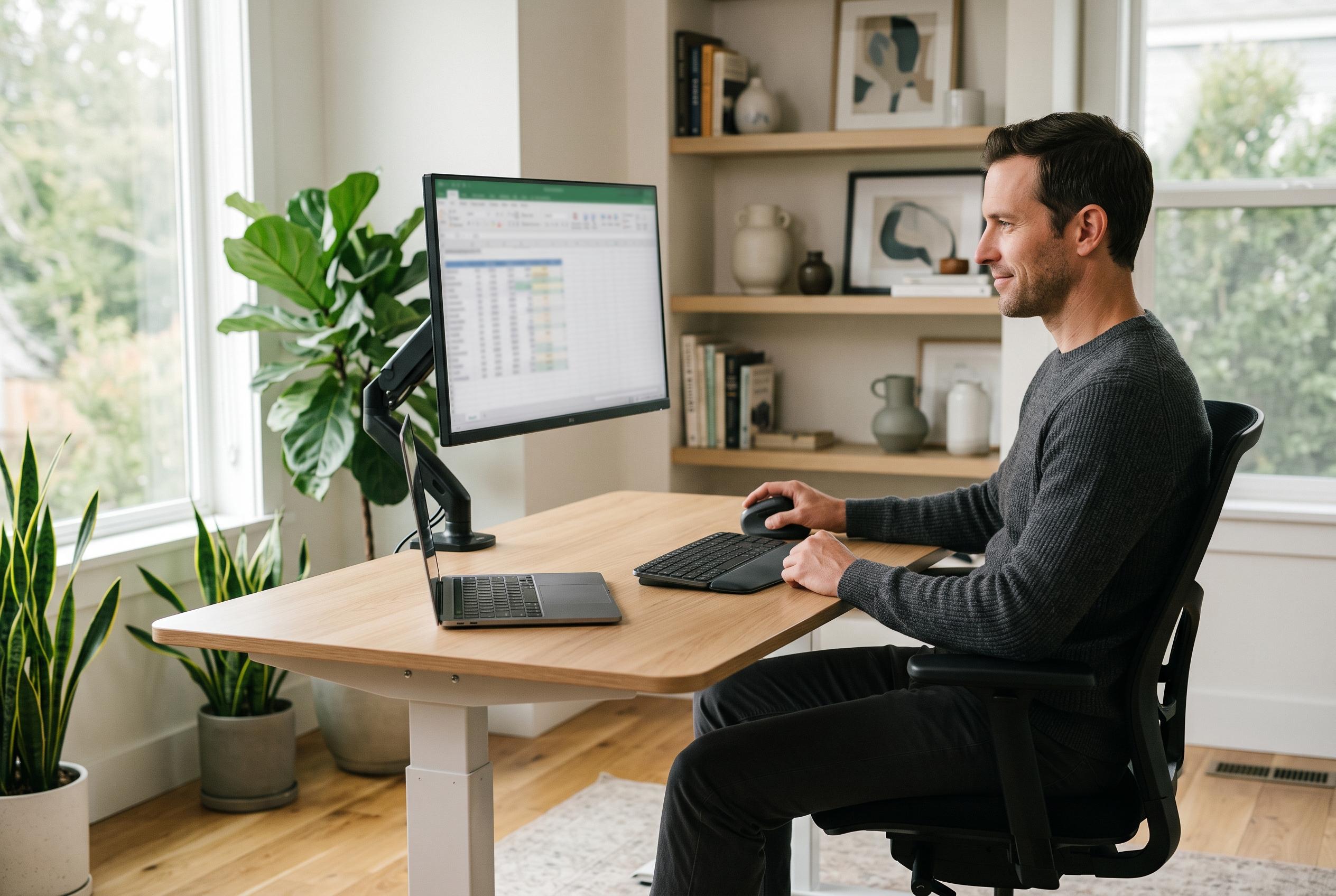

As hybrid work becomes more prevalent, the true challenge lies not only in screen time but in how devices and environments contribute to physical and cognitive strain, reshaping productivity and employer responsibilities.
Digital fatigue is often treated as a side effect of too much screen time. Yet the issue is broader than that. As work becomes increasingly hybrid, the strain comes not only from hours spent online, but from the way people interact with devices, the quality of their setups and the cumulative effect of small physical and cognitive irritations.
That matters because screens now shape much of the working day. Video calls, spreadsheets and presentations have turned the computer into a constant environment rather than a simple tool. According to eye-health guidance from All About Vision, prolonged use of digital devices can contribute to symptoms such as sore eyes, headaches and neck stiffness, particularly when posture, lighting and viewing distance are poorly managed.
The modern office has also shifted far beyond the desk. Many employees now split time between home, shared spaces and corporate premises, and those environments are not always designed for long computer sessions. The result can be a slow build-up of discomfort that affects concentration, energy and output without being immediately obvious.
Peripherals are central to that picture. Logitech’s Ergo Lab says frequent mouse users may move a device the equivalent of a marathon each year, while even average users cover many kilometres through repetitive hand motion. That kind of repetition helps explain why design details in keyboards, mice and other accessories can have a measurable effect over time.
Research and reporting from other sources point to the same conclusion from different angles. All About Vision says regular pauses, better workstation layout and sensible visual habits can reduce eye strain. A separate article on digital cognitive fatigue argues that fragmented work, constant interruption and the pressure to appear busy can damage attention, memory and creativity, while a report on notebook performance suggests that tiny delays, or micro-lags, can accumulate into substantial lost time across a workforce.
The wider lesson is that productivity is being redefined. Faster hardware and more software do not automatically translate into better work if the user experience is physically uncomfortable or mentally draining. Technology that reduces friction, lowers noise, simplifies switching between devices and eases repetitive tasks may deliver a more durable gain than raw performance alone. Artificial intelligence is moving in that direction as well, not only by automating tasks but by removing small obstacles that consume attention throughout the day.
In that sense, digital fatigue is less a niche ergonomics issue than a management issue. The cost is not limited to discomfort. It can also affect focus, decision-making and the quality of work itself. For companies and individuals alike, the question is no longer simply how much technology can do, but how well it supports the people using it.
Disclaimer: This content is intended for informational purposes only. Readers are advised to exercise their own judgement, conduct due diligence, or consult a qualified expert before acting on any information provided.