
HP launches the OmniPad 12, a 12-inch Android tablet with a detachable keyboard aimed at students and light users, offering a stylish design and impressive display but limited by mid-range hardware performance.
HP’s OmniPad 12 arrives at a time when the old promise of a cheap laptop has become harder to keep. As consumer PC costs climb, the company is pitching a different idea: a 12-inch Android tablet with a detachable keyboard, aimed at people who want something lighter than a notebook but more practical than a standard slate. In India, the base model is priced at ₹48,999, placing it firmly in the premium end of the tablet market rather than the budget segment. According to HP’s launch details, the device is intended for students, first-time PC buyers and professionals who need a portable workstation.
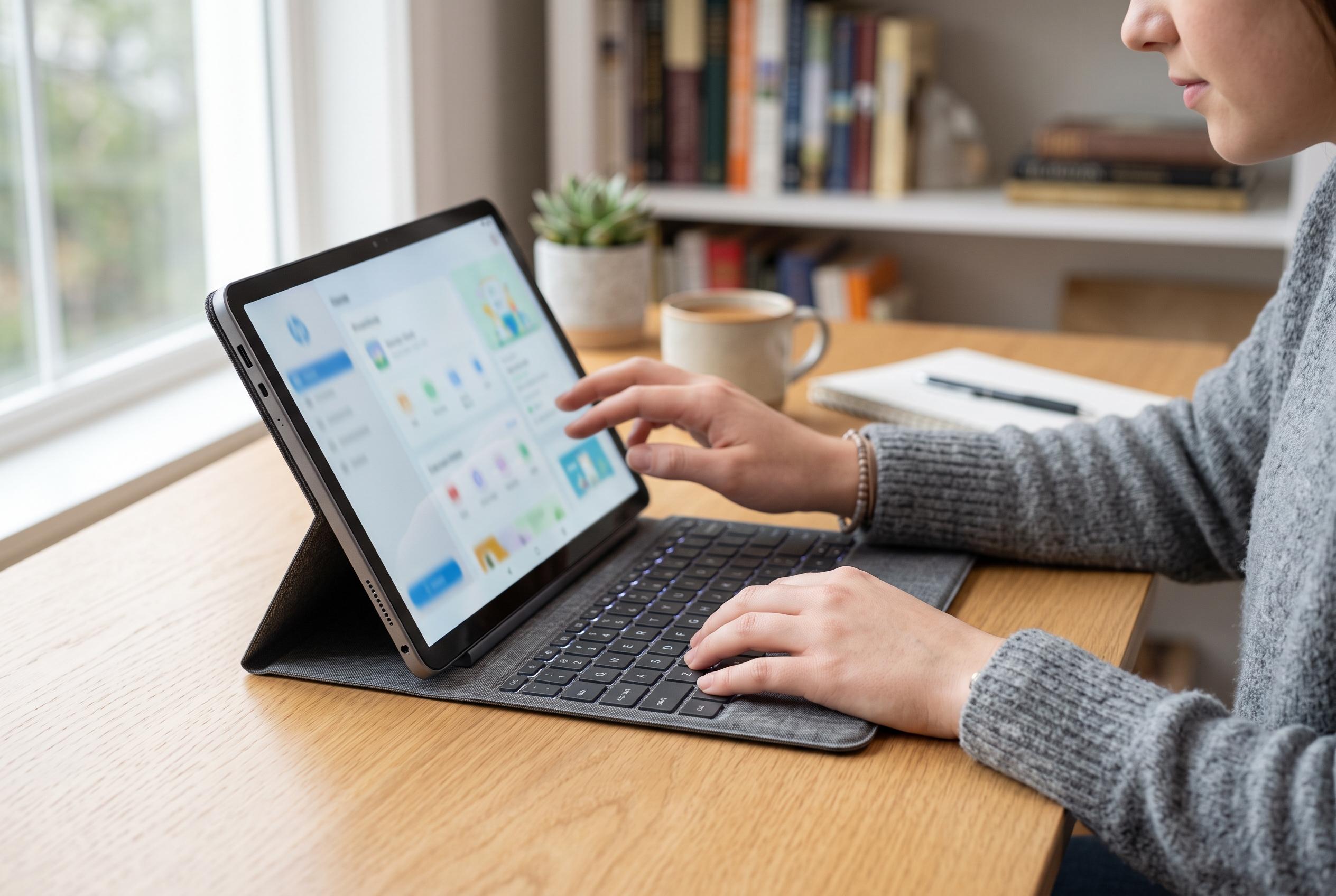
The hardware is neatly put together. HP has given the OmniPad 12 a metal body, a folio cover and a keyboard that connects through pogo pins, so there is no Bluetooth pairing to manage. The tablet is sold in Denim Blue and Meteor Silver, and the bundled keyboard means the product is judged as a complete package rather than as a bare tablet. At roughly 600g for the tablet itself and about 650g for the keyboard, the combined weight is close to that of some thin-and-light laptops. That makes the device comparatively easy to carry, while still feeling more substantial than many consumer tablets.
Its display is one of the strongest parts of the product. HP has fitted a 12-inch 2K touchscreen with a 90Hz refresh rate and claimed brightness of up to 400 nits. In practice, that gives the OmniPad 12 a sharper, more comfortable workspace than many entry-level laptops, especially for reading documents, editing presentations and consuming media. The review also notes strong colour coverage and responsive touch input, while the quad-speaker setup helps video playback and calls sound clearer than on most low-cost notebooks.
Performance is where the compromise becomes obvious. The tablet uses Qualcomm’s Snapdragon 6 Gen 3 platform in a hexa-core configuration, paired with 8GB of LPDDR5 memory and up to 256GB of storage, though some launch material also highlights microSD expansion of up to 1TB. That chip is designed for mid-range phones rather than demanding desktop-style multitasking, and the review found the OmniPad 12 slow when switching between apps, tabs and desk mode tasks. HP’s software layer does at least try to make the format work, with Android 16 able to shift between a conventional tablet interface and a desktop-style mode once the keyboard is attached.
Battery life is more convincing. HP says the 31Wh battery can last for up to 18 hours, and the review found that claim broadly plausible in everyday use, with a full workday of mixed typing, streaming and browser activity remaining realistic. Charging is less impressive, despite the included 33W adaptor. The cameras are functional rather than memorable: a 13-megapixel rear unit and an 8-megapixel front camera are adequate for video calls, but not a substitute for a smartphone. In the end, the OmniPad 12 looks best suited to students and light productivity users who value portability and a good screen over raw speed. For heavier work, the weak chipset is likely to be a limiting factor.
Disclaimer: This content is intended for informational purposes only. Readers are advised to exercise their own judgement, conduct due diligence, or consult a qualified expert before acting on any information provided.