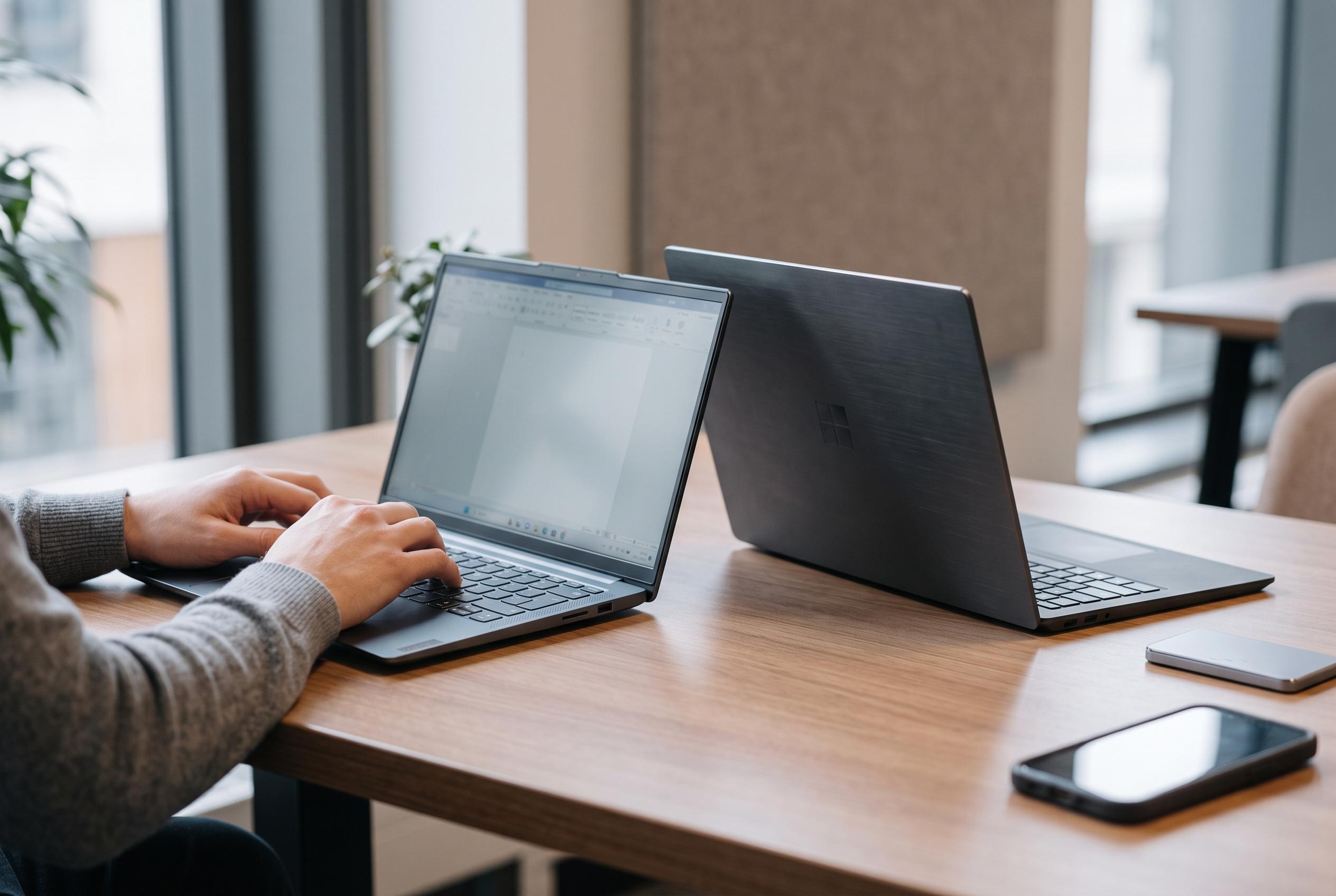

As ARM-based Windows laptops gain ground, the Lenovo Yoga Slim 7X and Microsoft’s Surface Laptop 2024 emerge as leaders, offering distinctive features tailored for mobile professionals and creators navigating new hardware horizons.
The market for Windows laptops built on ARM has moved beyond novelty. The appeal is clear: lighter chassis, quieter operation, strong battery life and solid everyday speed. But these machines still differ in meaningful ways, and the best choice depends less on the processor label than on display quality, storage, ports and software compatibility.
Among the current options, the Lenovo Yoga Slim 7X with Snapdragon X Elite stands out as the most complete package. Tom’s Hardware and Tom’s Guide both praised the model for its combination of strong performance, long battery life and a 14.5-inch OLED touchscreen, while also noting the compromises that come with its all-Type-C design, including the absence of USB-A and a headphone jack. That balance of premium screen quality, portability and stamina is what gives it the edge for mobile professionals and creators who can work comfortably within Windows on ARM’s limits.
Microsoft’s Surface Laptop 2024 is the cleaner choice for compact productivity. PCWorld described it as slim, light and well suited to long working sessions, with Wi-Fi 7 and good real-world performance from Qualcomm’s Snapdragon X Elite. Yet its IPS touchscreen does not match the contrast and richness of OLED, and its 256GB storage option is modest for buyers who keep large files locally. It is therefore best seen as a travel-friendly office machine rather than a capacity leader.
For users who want more room to work, the Lenovo IdeaPad Slim 3X offers a practical middle ground. Its 15.3-inch 16:10 touchscreen gives spreadsheets and documents more space than the Surface Laptop, while 1TB of storage makes it easier to live with over time. It lacks the refinement of the OLED Yoga models, but that trade-off is sensible for buyers who care more about storage, security features and a larger display than about panel technology.
The second Yoga Slim 7X variant and HP OmniBook 16 are more specialised choices. The Yoga with Snapdragon X2 Plus puts emphasis on connectivity and camera hardware, while the HP offers the largest screen in the group and an included hub for older accessories. Still, the missing battery details on both weaken their case for mobile buyers. For anyone considering ARM Windows laptops, the main lesson is simple: confirm application support first, then choose the display, storage and port layout that matches the way the laptop will actually be used.
Disclaimer: This content is intended for informational purposes only. Readers are advised to exercise their own judgement, conduct due diligence, or consult a qualified expert before acting on any information provided.