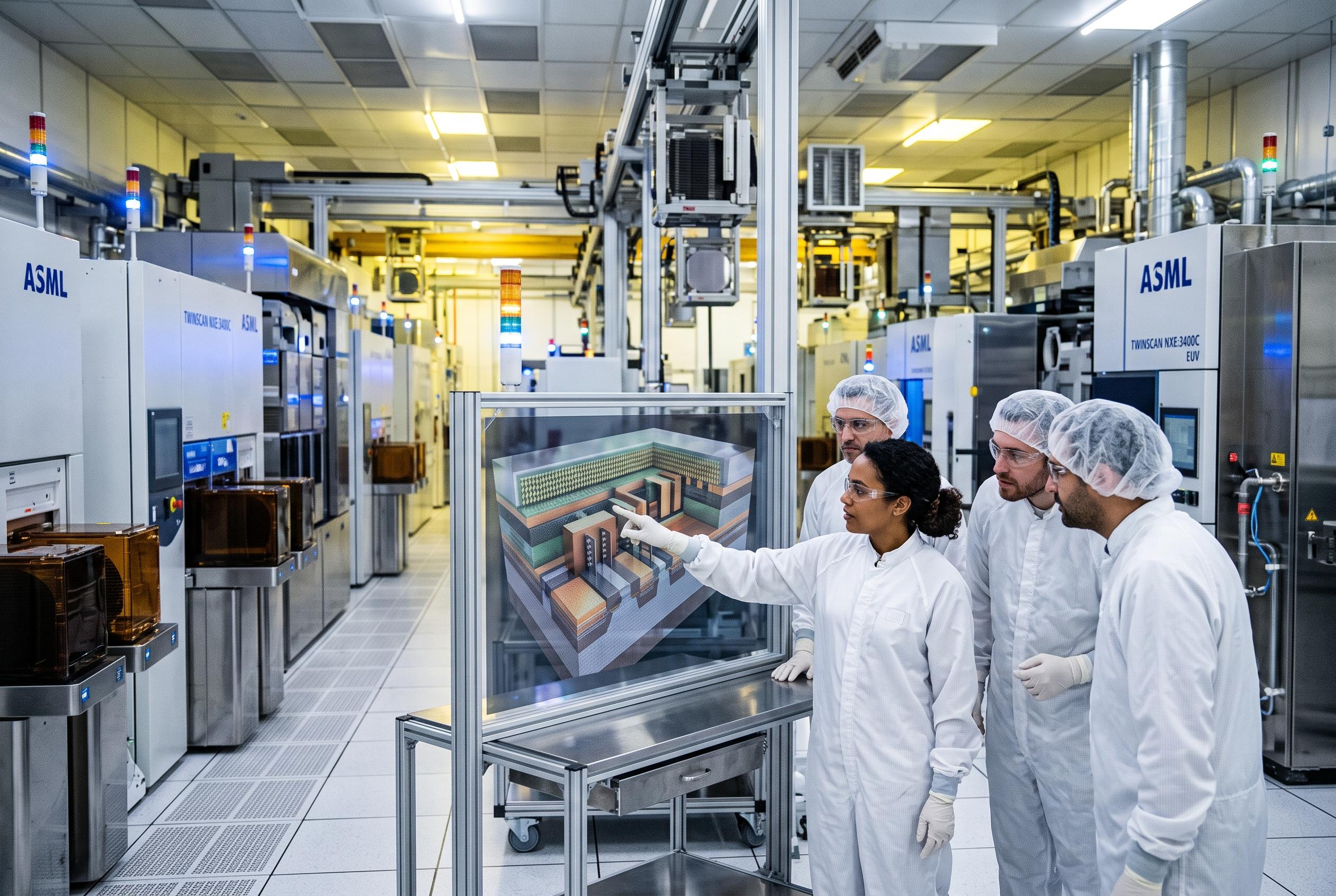

Intel’s recent $23 billion funding aims to fast-track next-generation chip production, with a focus on AI workloads, advanced packaging, and global capacity expansion amid a strategic roadmap update.
Intel’s latest capital raise is designed to give the company room to spend more on manufacturing, packaging and future chip process technology as it tries to keep pace with demand in data centres. Speaking at a Deutsche Bank fireside chat, chief financial officer David Zinsner said the financing was meant to support higher capital expenditure, substrate investment and capacity commitments, after Intel lifted its 2026 capex outlook by a couple of billion dollars from an earlier range of $18 billion to $20 billion.
According to Intel and reports from Yahoo Finance and Tom’s Hardware, the company has raised about $23 billion in equity financing, with the proceeds linked to a broader push to expand supply for data-centre CPUs and advanced packaging while preparing for next-generation process nodes. Zinsner said the raise comes before the spending, not after it, and framed it as evidence of confidence in Intel’s execution and demand pipeline.
The company’s roadmap also appears to be moving forward. Zinsner said Intel 18A yields are improving ahead of internal targets, while 14A defect density is tracking better than expected and improving faster than earlier process generations. Intel is due to release version 0.9 of its process design kit for 14A in October, with risk production expected in 2027 and high-volume manufacturing targeted for 2028, a timetable also outlined in recent industry reporting. Intel has already said two potential foundry customers are exploring test chips on 14A, although it has not disclosed any firm customer commitments.
Capacity planning is becoming more urgent as Intel tries to balance internal products with foundry ambitions. In Ireland, the company is expanding output from existing clean-room space and expects to more than double production next year for Granite Rapids server processors. In Arizona, Fab 52 is already making 18A chips and Fab 62 is nearing readiness, while Oregon is expected to shift more 18A work to Arizona so it can serve as a pilot and volume site for 14A. Intel is also building shell capacity in Ohio.
Zinsner said demand patterns are changing in ways that favour CPUs, especially as AI workloads move from training towards inference and agentic computing. He argued that such systems can require four to six times as many CPUs as conventional training data centres. Intel is also seeing double-digit growth in server units and improving average selling prices per core, which Zinsner said has helped stabilise pricing after earlier declines.
Advanced packaging is another key part of the strategy. Zinsner highlighted Intel’s EMIB-T technology as a way to support larger AI-oriented designs without an interposer, and said packaging revenue could begin to ramp in the second half of 2027, become a recurring business in 2028 and reach full stride in 2029. He described it as a multibillion-dollar opportunity per customer, with margins that could be attractive enough to help draw foundry clients into broader manufacturing relationships.
Intel is also trying to strengthen other parts of its portfolio. Zinsner said higher memory prices may weigh on client PC demand, prompting Intel to redirect capacity towards larger-core client products and data-centre supply. He called Panther Lake a strong client product and said Nova Lake should improve Intel’s position in high-end desktops. He also pointed to edge computing and physical AI as areas that could eventually become as large as Intel’s client business.
Financially, Zinsner said Intel is now “comfortably in the 40s” on gross margin, up from internal plans that had started the year in the high-30% range. He said the longer-term goal is to move into the mid- and high-40% range and eventually above 50%, although growth in foundry, packaging and ASIC businesses may dilute company-wide margins because those lines are likely to run closer to 40%.
For Intel Foundry, the aim remains break-even by the end of 2027, though Zinsner said stronger demand could delay that to 2028 if it requires more investment. He said the foundry arm is still losing about $2.5 billion a quarter, but expects steady quarterly improvement. Intel plans to hold an analyst day next year rather than in 2026, and Zinsner said it will not use that event to announce foundry customers unless those customers do so themselves.
Disclaimer: This content is intended for informational purposes only. Readers are advised to exercise their own judgement, conduct due diligence, or consult a qualified expert before acting on any information provided.