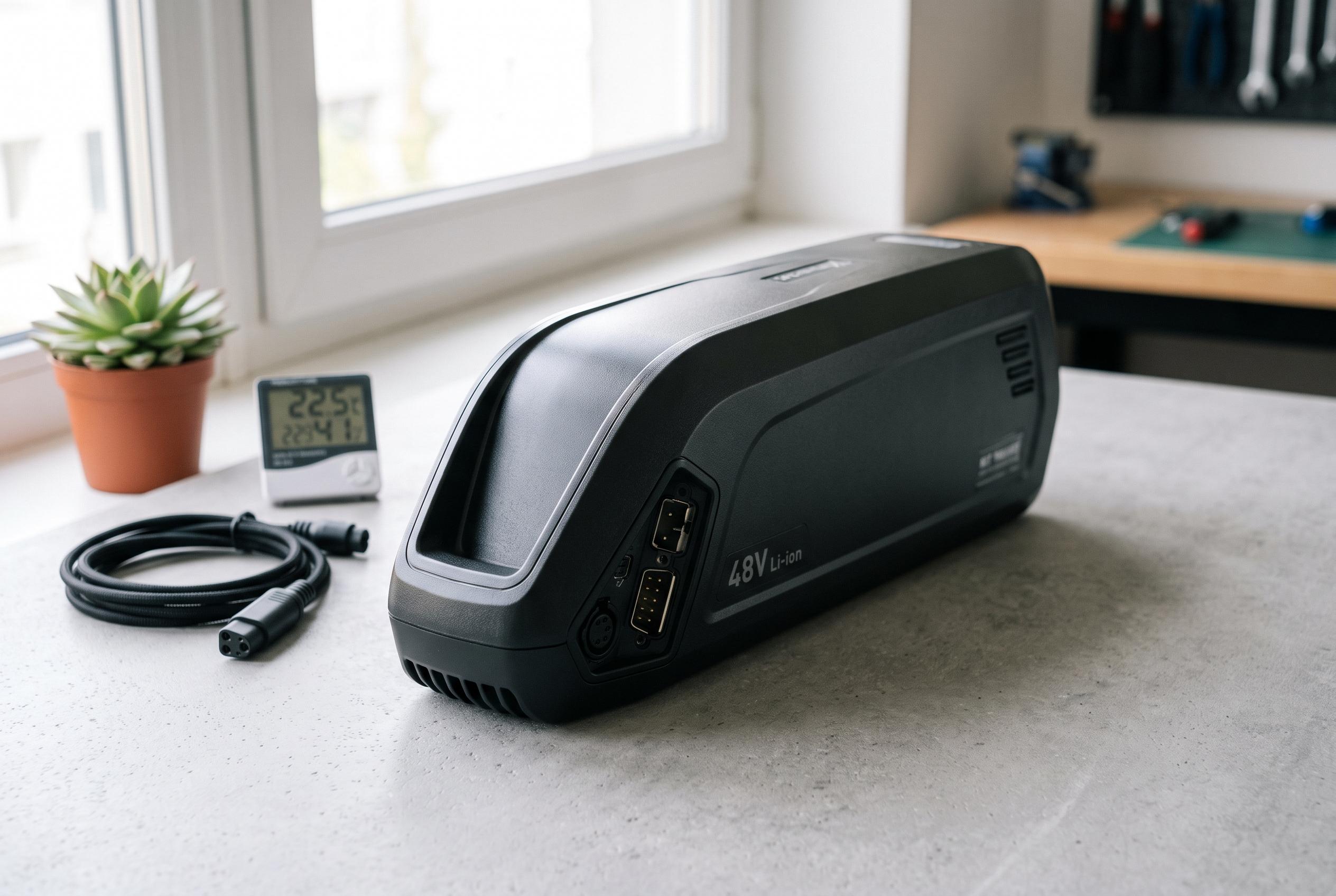

Proper charging, storage and handling are crucial for e-bike batteries’ longevity, with recent guidance emphasising the importance of temperature control and physical care to prevent premature ageing.
An e-bike battery is both the most valuable and the most vulnerable part of the system. Most packs use lithium-ion cells, which can deliver hundreds of charge cycles, but longevity depends far more on daily handling than on the chemistry alone. In practice, careful charging, sensible storage and protection from heat or physical shock matter as much as ride frequency. Industry guides from several e-bike specialists broadly agree on that point.
The first rule is not to flatten the battery completely. Allowing a lithium-ion pack to sit at zero charge can push it into deep discharge, which may make recovery difficult. By the same token, keeping it at 100% for long periods is not ideal either. For regular use, charging to suit your riding pattern is usually enough, while off-season storage is better done at a partial state of charge, typically somewhere around 40% to 60%. Several maintenance guides also recommend the wider 30% to 80% band for everyday use, rather than constant full charging.
Temperature is another major factor. A battery that has just been used hard should be allowed to cool before it is plugged in, and a very cold battery should be brought indoors and left to warm naturally first. Charging a frozen or overheated pack can shorten its life and may trigger built-in protection systems. Storage conditions matter just as much: a cool, dry place is preferable, and batteries should not be left in hot cars, sheds or next to radiators. Consumer guidance and specialist e-bike advice are consistent that excessive heat is one of the quickest ways to age a pack prematurely.
Routine care also extends to the connector points and the battery housing itself. Dirty, damp or corroded contacts can create intermittent faults even when the cells are still healthy. Cleaning should be done gently, with the bike switched off and the battery removed, using a dry cloth unless the maker says otherwise. High-pressure washing is a particular risk because water can be forced into seals, mounts and connectors. That is why most maintenance guides recommend only light cleaning around electrical components and ensuring charging ports are fully closed before washing.
Physical damage is another red flag. E-bike packs contain numerous cells, sensors and a battery management system, so a fall or heavy impact can cause internal harm even when the case looks intact. A battery that is swollen, cracked, leaking, unusually hot or giving off a chemical smell should not be used or charged. It is also important that the battery sits properly in the frame and locks firmly into place, since a loose fit can cause sudden power loss over bumps and wear down the mounting hardware over time.
Winter use needs extra discipline. Cold weather can reduce range temporarily without meaning the battery is failing, so riders should not mistake seasonal performance loss for permanent damage. If the bike is being stored for weeks, it is best to remove the battery where possible, keep it indoors at a partial charge and check it periodically so it does not drift too low. More broadly, riders should expect gradual capacity loss over time, because all lithium-ion batteries age. What matters is whether the decline is steady and predictable, or sudden enough to suggest a fault in the battery, charger, contacts or bike electronics. Internal repairs are not a do-it-yourself task; if a battery shows serious warning signs, it should be handled by a qualified technician.
Disclaimer: This content is intended for informational purposes only. Readers are advised to exercise their own judgement, conduct due diligence, or consult a qualified expert before acting on any information provided.