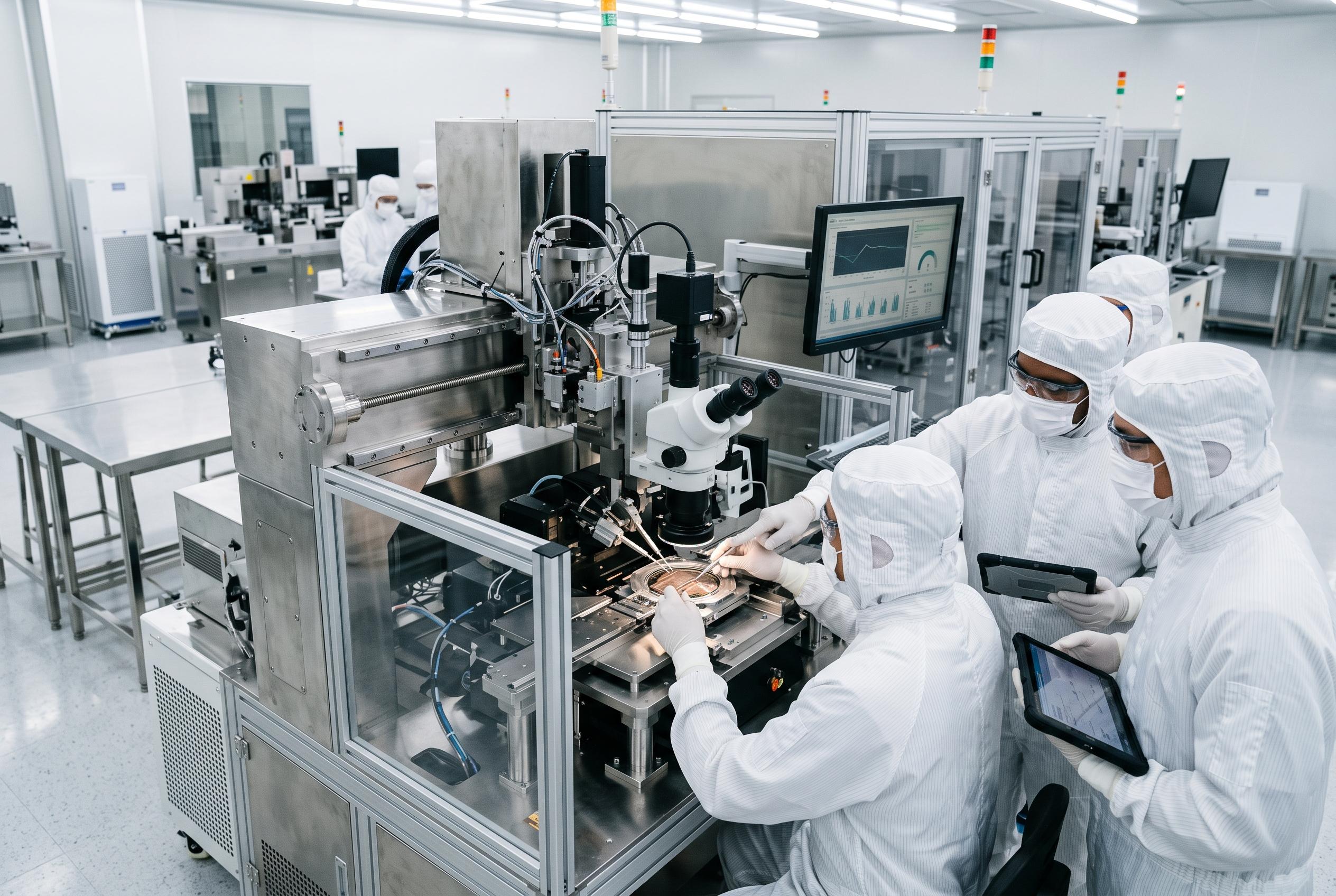

Thailand’s electronics industry has attracted over $30.5 billion since 2023, signalling a strategic shift towards high-value sectors, advanced semiconductor packaging, and AI hardware, positioning the country as a key player in regional and global supply chains.
Thailand’s electronics industry has drawn more than $30.5 billion in investment since 2023, a sharp rise that reflects the country’s growing role in regional supply chains for chips, AI hardware and advanced manufacturing. Roughly a third of that capital, or more than $10.1 billion across 224 projects, has gone into printed circuit boards and electronic components, according to the Thailand Board of Investment and reporting around the Thailand Electronics Circuit Asia summit in Bangkok.
The latest figures point to a manufacturing shift that is not limited to assembly work. Global companies are expanding capacity in advanced semiconductor packaging, electronic components and other parts of the supply chain that support high-performance computing and artificial intelligence. At THECA 2026, more than 300 companies and 7,000 delegates from 40 countries are meeting at Bangkok’s BITEC centre, with a programme covering AI infrastructure, photonics, semiconductor manufacturing and electronics services.
Thai officials are presenting the investment surge as part of a broader economic strategy. The Board of Investment says it is moving from simple capital attraction to a model centred on higher-value sectors, workforce skills, supply-chain integration and links between local firms and multinationals. That approach sits alongside wider government efforts to raise competitiveness, lift growth and move the economy beyond the middle-income trap.
The country’s selection to host the 17th Electronic Circuits World Convention in 2027 further underlines its ambitions. Industry figures say the next phase of competition will depend less on factory scale alone and more on specialised knowledge, research cooperation and technical talent. As demand rises for edge computing, smart mobility and AI-related hardware, Thailand is trying to position itself not just as a production base, but as a deeper participant in global electronics design and manufacturing networks.
Disclaimer: This content is intended for informational purposes only. Readers are advised to exercise their own judgement, conduct due diligence, or consult a qualified expert before acting on any information provided.