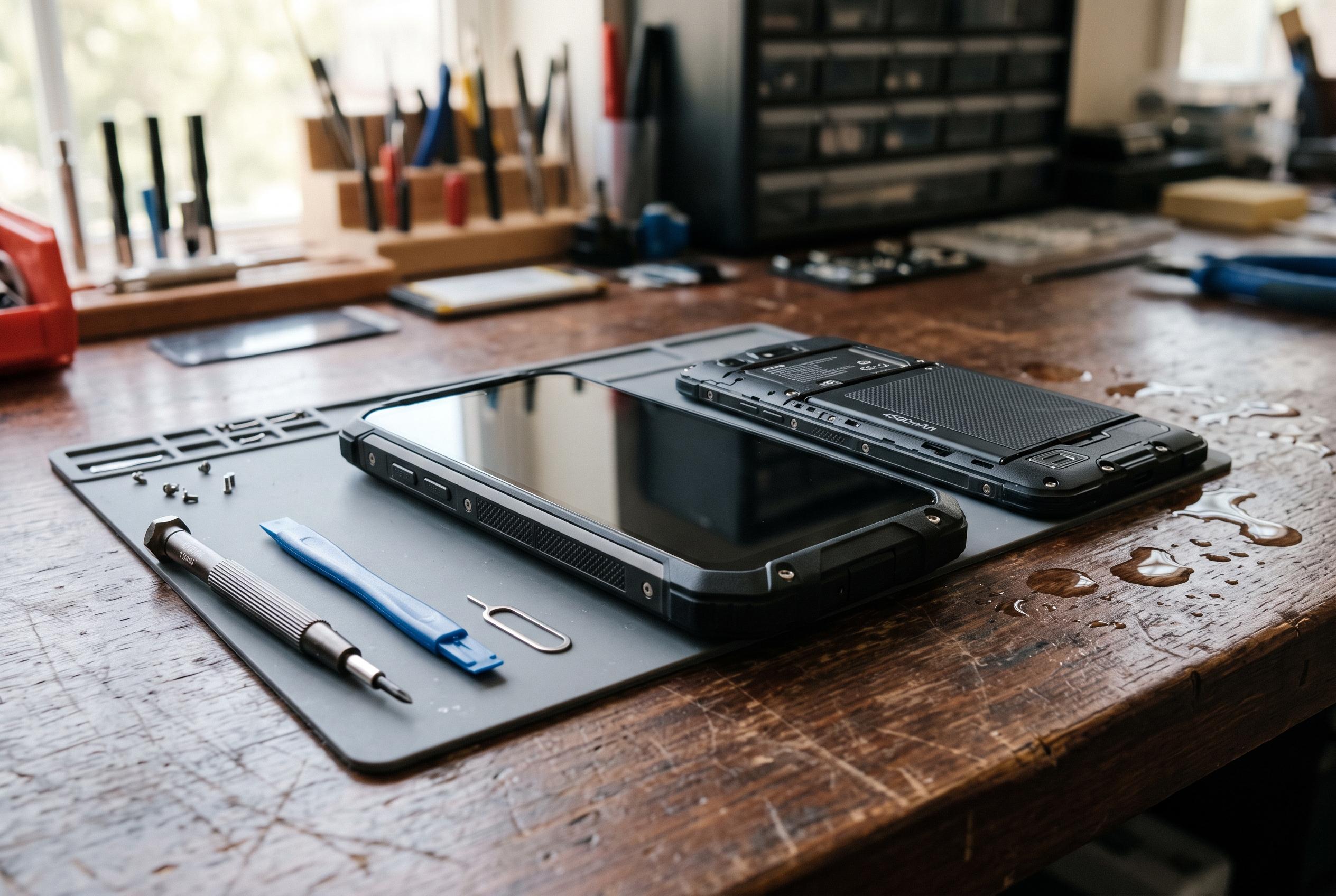

The Gigaset GS6 Pro stands out in the mid-range market with its European assembly, removable battery, and IP68 protection, but its performance and camera quality lag behind rivals, raising questions about value and practicality.
The Gigaset GS6 Pro is an unusual entry in the Android mid-range market. It pairs a glass rear panel with IP68 protection, a removable back cover, a replaceable battery and wireless charging, while still arriving at a price that begins at about €380. The device is assembled in Bocholt, in North Rhine-Westphalia, and Gigaset presents that production base as part of its appeal to buyers looking for a European alternative to mass-market Chinese and Korean rivals.
That “Made in Germany” label, however, does not mean the handset is built entirely from domestic components. Notebookcheck notes that key parts such as the OLED panel, the MediaTek processor and the camera sensors come from external suppliers, including Samsung. Gigaset says the development, manufacturing, final assembly, inspection and after-sales support all take place in Germany, and that local update servers are intended to improve privacy handling compared with many competing devices assembled in China.
The GS6 Pro also stands out for features that are becoming less common in modern phones. It includes a dedicated action button and microSD expansion, with support for cards up to 1TB, which will matter to users who value repairability and storage flexibility. But the same reviews point to trade-offs: the handset is heavier and thicker than rivals, its USB port is limited to USB 2.0, and its performance is only adequate for routine tasks rather than demanding applications.
In practice, that places the GS6 Pro in a difficult position. Test reports describe a strong build and decent battery life, helped by a 5,300mAh removable battery with 30W wired charging and 15W wireless charging. Yet they also say its camera quality is uneven, its loudspeaker lacks refinement and its overall speed falls short of similarly priced Samsung and Xiaomi phones. For buyers weighing value over origin, the phone’s German production may be attractive, but it does not fully offset the specification gap versus stronger mainstream alternatives.
Disclaimer: This content is intended for informational purposes only. Readers are advised to exercise their own judgement, conduct due diligence, or consult a qualified expert before acting on any information provided.