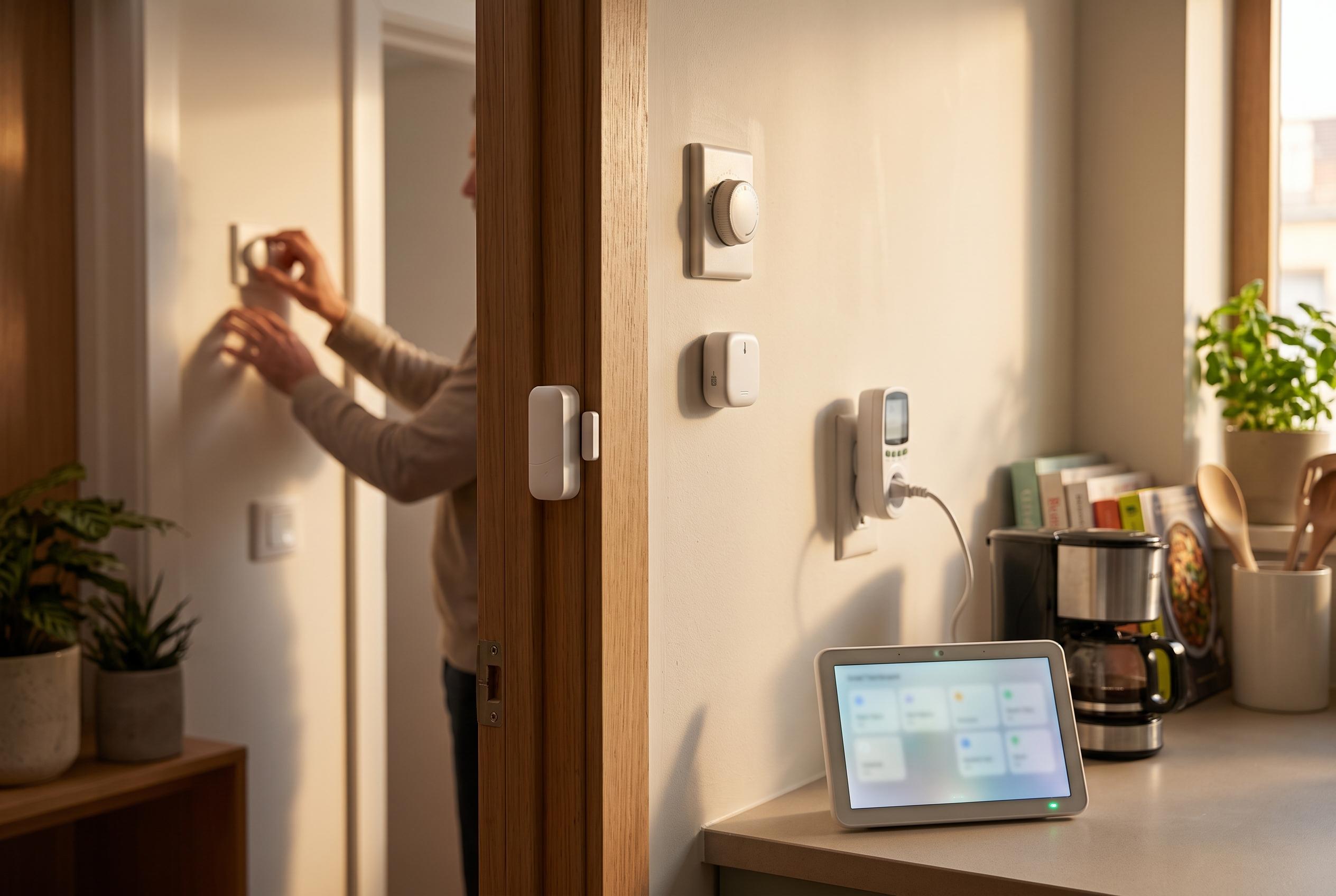

Affordable sensors like door contacts, temperature probes, and power monitors, when integrated with Home Assistant, unlock sophisticated automation and energy efficiency in modern homes, demonstrating that inexpensive hardware combined with smart software creates practical, actionable value.
Cheap sensors often look trivial until they are tied into Home Assistant, where their real value becomes clear. A basic door contact, a temperature probe, a power-monitoring plug or an old phone can become a useful trigger, a warning system or a way to automate routine decisions. The appeal is not the hardware itself, but the fact that low-cost data can be turned into action.
Simple contact sensors are one of the clearest examples. A magnet and a switch can be used to control air conditioning only when doors are shut, switch on corridor lighting when an entrance opens after dark, or send an alert if a door has been left ajar too long. For readers who want a longer-range option, YoLink’s LoRa door sensor kits are sold with support for Home Assistant and are designed for dependable alerts over much greater distances than typical Wi-Fi devices, which may make them more practical in large homes or outbuildings. Yet the principle remains the same: the sensor is basic, but the automation can be quite sophisticated.
Temperature and humidity sensors are just as useful once they report into a central system. Instead of simply displaying numbers on a small screen, they can drive climate control, dehumidifiers or enclosure monitoring for equipment such as 3D printers. That kind of use is increasingly common in products aimed at Home Assistant users. Shelly’s Flood S Gen4, for example, is a Matter-compatible water leak sensor built for under-appliance and under-sink placement, while local-control sensors such as Everything Presence Lite and LD2450-based mmWave modules show how far low-cost sensing has moved beyond simple motion detection.
Power monitoring is another area where inexpensive hardware becomes more valuable once the data is visible in Home Assistant. A smart plug with energy metering can expose hidden standby draw, highlight inefficient appliances and flag equipment that is ageing or failing. In practice, that turns a convenience accessory into a basic energy-audit tool. It is often easier to justify than a more exotic smart device because it can reveal costs that were already being paid, only unnoticed.
Even an old smartphone can be repurposed. With the Home Assistant Companion app installed, its built-in sensors can be used for presence detection, light-based automations, battery reminders and location triggers. That is a useful reminder that connected-home value often comes from software integration rather than expensive hardware. The sensor may be ordinary, but when it feeds a system that can decide and act, it stops being gimmicky and starts being practical.
Disclaimer: This content is intended for informational purposes only. Readers are advised to exercise their own judgement, conduct due diligence, or consult a qualified expert before acting on any information provided.