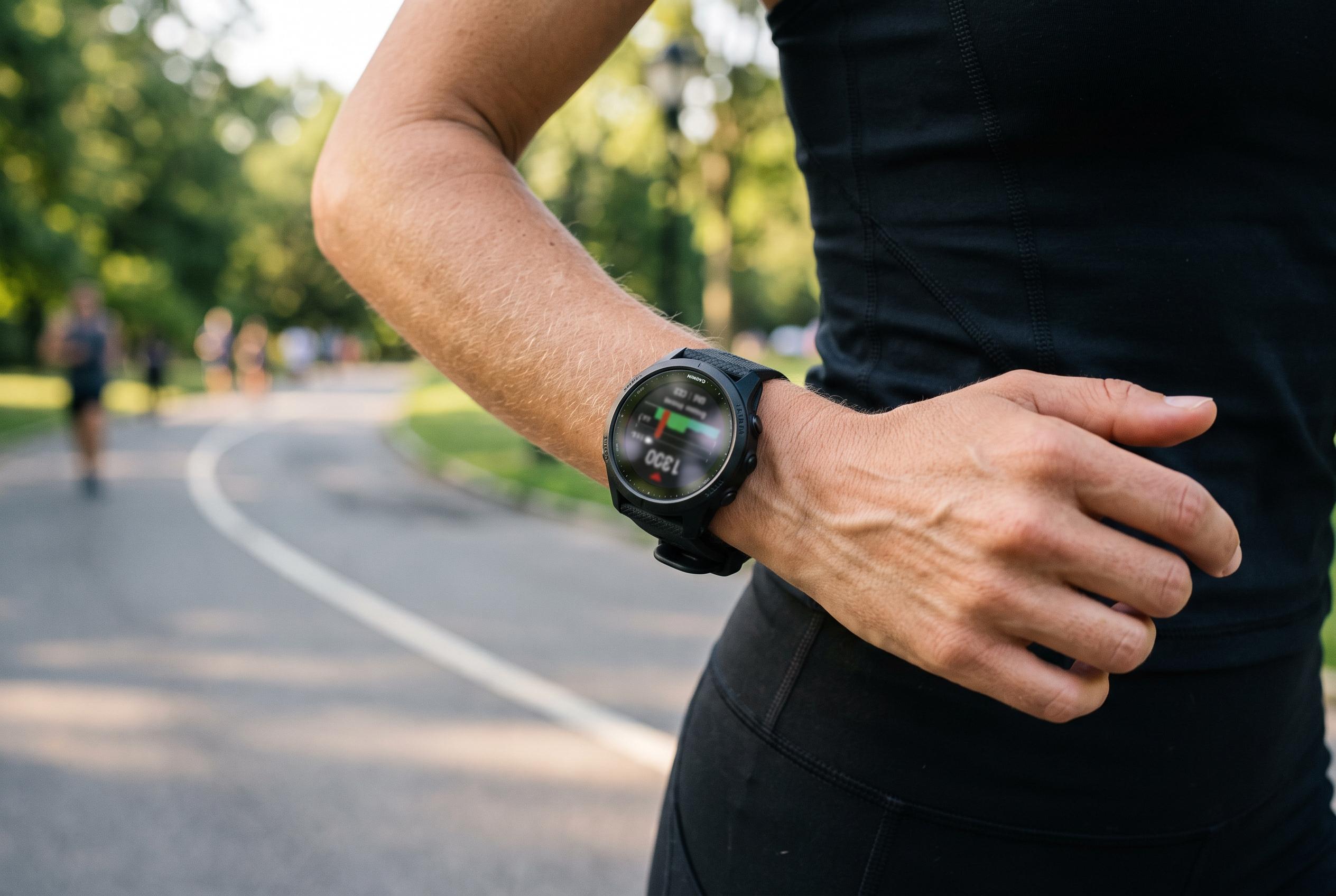

Garmin’s Forerunner 170 bridges the gap between entry-level and advanced running wearables, offering a blend of accuracy, features, and growth potential for those serious about their training.
Garmin’s Forerunner 170 is not a basic running watch in the strict sense. It sits below the company’s premium models, but according to Garmin’s own product information it brings a 1.2-inch AMOLED touchscreen, Garmin Pay, more than 80 sports profiles, training plans and recovery metrics into a relatively light 41g package. That makes it a more serious device than many first-time runners will need, yet it is also designed to be something users can grow into rather than out of quickly.
The most important question is whether that extra capability is useful. The5krunner’s review argues that for someone who only runs a few hours a week, the answer may be no. Garmin’s own ecosystem remains the real selling point here: Training Readiness, Training Status, HRV Status and wrist-based running power add more context than a standard step-counting sports watch, while Garmin Connect provides the back-end analysis. The trade-off is complexity. The setup process is still more involved than rivals such as Apple, Polar or Suunto, and Garmin’s interface can feel cluttered to a new user.
In testing, though, the hardware held up well. The5krunner reported strong GPS results across park runs, an urban route, a suburban grid and cycling, with no consistent drift and no major bias in distance recording. Heart-rate tracking was also described as excellent across steady running, short intervals, cycling, gym work and yoga, despite the watch using Garmin’s older Elevate Gen 4 optical sensor rather than the newer versions found in higher-end models. Garmin’s inclusion of a barometric altimeter also gives the 170 better elevation handling than the cheaper Forerunner 70, particularly for hill running and hiking.
Battery life appears respectable rather than exceptional. Garmin says the watch can last up to 10 days in smartwatch mode and up to 20 hours in GPS-only mode, while the Music edition is rated for up to 7 hours with music and GPS active. The5krunner’s real-world testing found mixed results depending on recording mode, but the 170 generally outperformed its specifications when Smart Recording was involved and sat between Garmin’s stated GPS figures in continuous use. Tom’s Guide likewise described the watch as accurate in most conditions and highlighted its useful support for external sensors, breadcrumb navigation and offline music on the Music model. TechRadar was similarly positive, praising the accuracy, comfort and breadth of Garmin’s training tools while noting that buyers focused mainly on training value may still find the cheaper Forerunner 70 the better buy.
That tension defines the Forerunner 170. It is not the most affordable option, nor the most technically advanced. But it does combine solid accuracy, a bright display, contactless payments, music support on the higher-tier version and enough training intelligence to remain useful as a runner improves. For someone who wants a watch that can cover everyday runs and then expand into more structured training, Garmin has made a convincing case.
Disclaimer: This content is intended for informational purposes only. Readers are advised to exercise their own judgement, conduct due diligence, or consult a qualified expert before acting on any information provided.