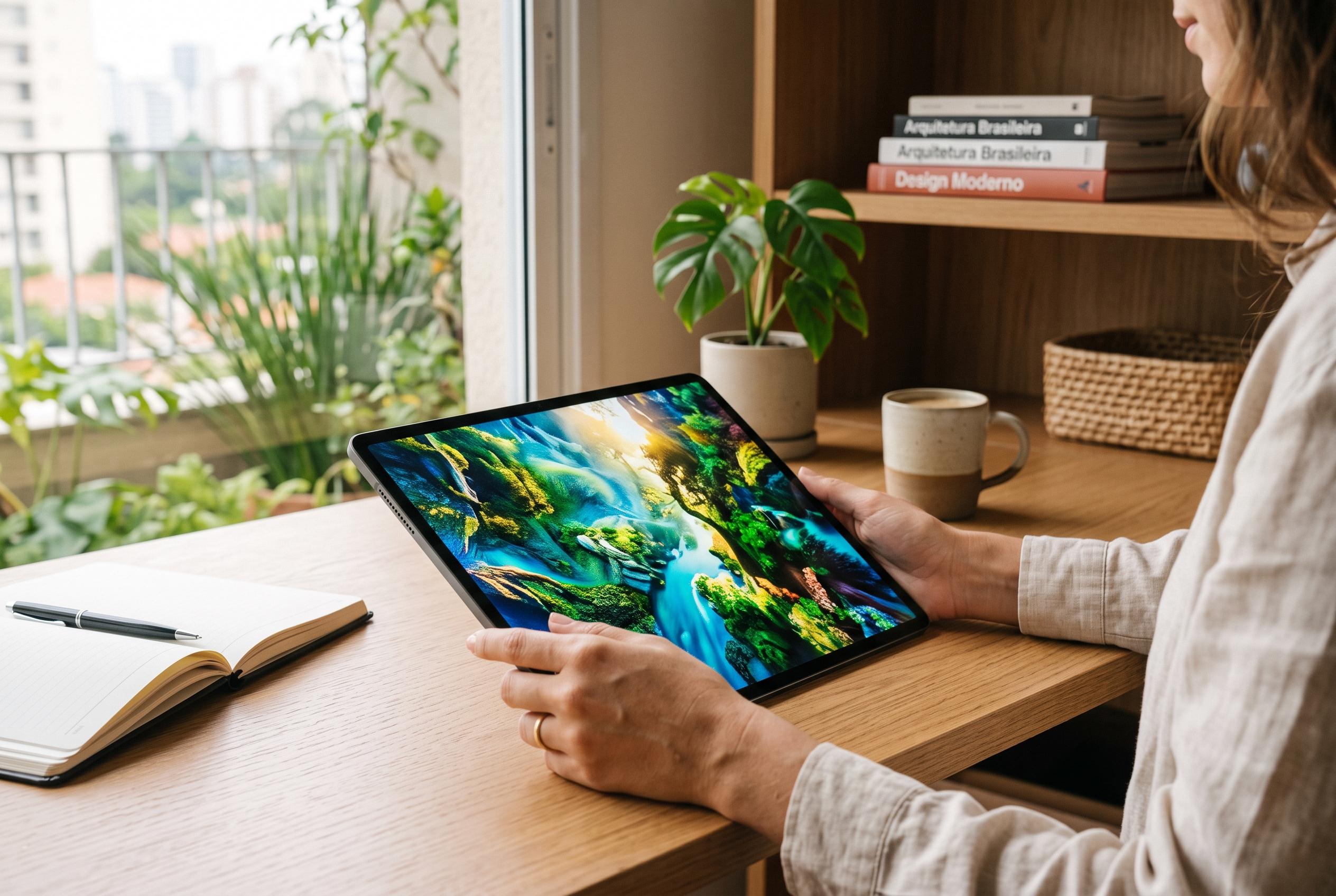

As Brazil’s 2026 tablet market evolves, consumers are prioritising device features such as display technology, performance, and value over size alone, with options ranging from premium 14.6-inch models to affordable 12.1-inch devices tailored for media, study, and work.
Choosing a large-screen tablet is less about chasing the biggest panel and more about matching the device to the task. In Brazil’s 2026 market, the strongest options range from premium 14.6-inch models to more affordable 12.1-inch devices, with clear differences in display quality, performance, accessories and portability. Tecnoblog’s guide frames the decision around media consumption, study, work and partial laptop replacement.
At the top end, the Samsung Galaxy Tab S11 Ultra stands out for its 14.6-inch Dynamic AMOLED 2X panel, 120Hz refresh rate and 2960 x 1848 resolution. What Hi-Fi, TechRadar, Tom’s Guide and PhoneArena all point to the same core appeal: it is built for immersive video, fast multitasking and Samsung DeX, with the MediaTek Dimensity 9400+ handling demanding workloads comfortably. The tablet also comes with an S Pen, supports an optional keyboard cover and carries an IP68 rating, though its 692g weight makes long one-handed use awkward and its rear cameras are aimed more at casual snapshots than serious photography.
Apple’s iPad Pro with M5 is the rival for users who want a large tablet with high-end display technology and strong creative performance. Tecnoblog notes its 13-inch Ultra Retina XDR OLED panel, ProMotion variable refresh rate and up to 1,600 nits for HDR content, while the M5 chip is positioned for video editing, illustration and music production. That makes it a better fit than the iPad Air for users who want the strongest possible screen and more sustained performance, although the nano-texture option is only available on the higher-capacity configurations.
The iPad Air with M4 remains a more restrained alternative. Its 13-inch Liquid Retina LCD is sharp, supports P3 colour and True Tone, and still reaches a useful 600 nits, but it lacks OLED contrast and stays fixed at 60Hz. Tecnoblog’s assessment is that this is still a powerful tablet for editing and content creation, just without the visual refinements and motion smoothness of the Pro model. For many buyers, that trade-off will come down to budget and whether the screen is for work first or premium media use first.
Samsung’s Galaxy Tab S10 FE+ sits in the middle ground. Its 13.1-inch TFT LCD, 90Hz refresh rate and Exynos 1580 chip are less ambitious than the flagship Tab S11 Ultra, but the package is still practical for documents, note-taking and study. Tecnoblog highlights the included S Pen and IP68 protection as major advantages, especially for users who want a large Android tablet without moving into premium pricing. The screen is not as contrast-rich as AMOLED, but it is a sensible compromise for everyday productivity.
Below that, the Redmi Pad 2 Pro and Lenovo Idea Tab Plus aim at value. The Redmi uses a 12.1-inch LCD with 120Hz refresh, Dolby Vision and a Snapdragon 7s Gen 4, which Tecnoblog says makes it a strong cost-effective choice for streaming, browsing and light multitasking. Its limitation is the lack of video output over USB-C, which reduces its usefulness with external displays. Lenovo’s Idea Tab Plus offers a 12.1-inch 2.5K LCD, 90Hz refresh and up to 800 nits, plus a bundled pen, but the keyboard is sold separately and the Dimensity 6400 is clearly tuned for routine tasks rather than heavy workloads.
VAIO’s TL 12 rounds out the field with a 12.6-inch AMOLED screen, 60Hz refresh and a package that includes keyboard, case and pen. Tecnoblog presents it as a notebook-style tablet for users who want accessories in the box, while acknowledging that the fixed 60Hz panel trails the smoother displays in the group. As a rule, the larger the tablet, the more important it becomes to weigh display technology, refresh rate, weight and accessory bundles rather than size alone. For readers wanting the best value, Tecnoblog places the Redmi Pad 2 Pro ahead on price-performance; for the most complete stylus-equipped large tablet, it points to the Galaxy Tab S11 Ultra; and for reading, the iPad Air remains a strong choice because of its large, sharp display and anti-reflective finish.
Disclaimer: This content is intended for informational purposes only. Readers are advised to exercise their own judgement, conduct due diligence, or consult a qualified expert before acting on any information provided.