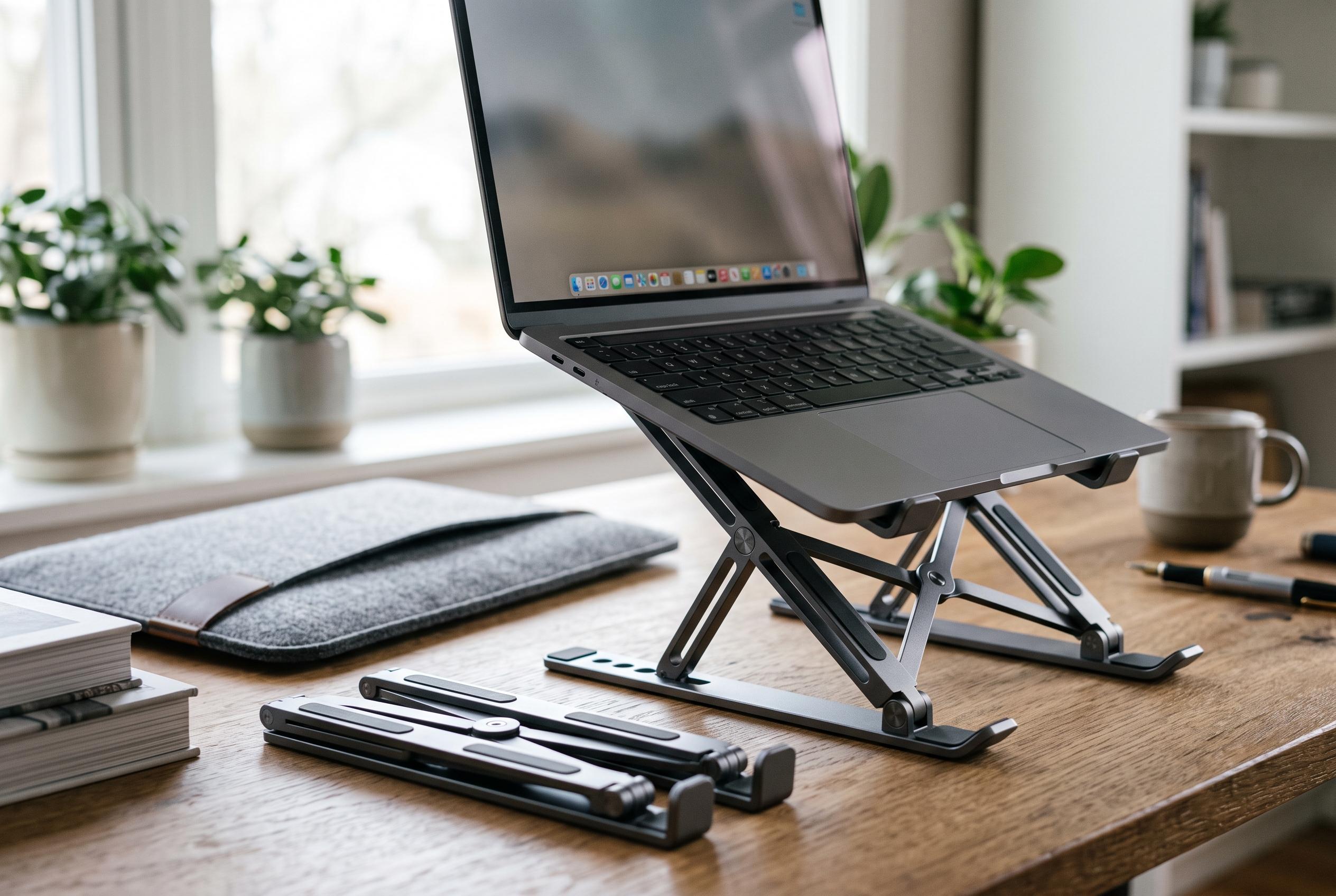

As portable laptop stands diversify, consumers must navigate between lightweight travel options and sturdy, feature-rich models, with the Amazon Basics Ergonomic Laptop Stand emerging as a versatile choice for various needs.
Portable laptop stands have become more than a posture aid. For many users, they now sit between a bag-friendly accessory and a proper desk fixture, with the main question being whether a stand is genuinely portable or merely foldable. The most convincing all-round choice in this roundup is the Amazon Basics Ergonomic Laptop Stand, which combines stable height adjustment, decent airflow and real foldability at a modest price. At the other end of the scale, the SODI Ultra Compact is the clear choice for anyone who values packed size above everything else, while the AXA AXCESSABLES DJ Stand is built for a narrow but demanding audience: performers, presenters and mobile professionals who need extra height and accessory support on the move.
That split between portability and rigidity runs through the whole category. The best compact models are light enough to live in a laptop sleeve or backpack pocket, but that usually means accepting a narrower footprint and less resistance to wobble. The heavier designs feel more like desk risers that happen to fold, which makes them better for home offices, studios or hybrid setups where the stand moves between two fixed locations rather than travelling every day. For users with larger machines, especially 15-inch and 16-inch workstations such as the portable CAD laptops highlighted by Creative Bloq, that distinction matters even more because weight and leverage expose weak hinges and narrow bases quickly.
The strongest everyday value proposition comes from stands that balance ergonomics with build quality. The Amazon Basics model offers a useful 7 inches of height adjustment and an open, ventilated structure, which makes it practical for longer work sessions. The Tonmom, meanwhile, is the light travel pick for standard-size laptops, with enough adjustability for ordinary seated work and a folded profile that disappears into a bag. For buyers who want more stability rather than less weight, the LOXP is the heaviest-duty option in the group, and its higher load rating makes sense for users running hotter, heavier laptops for long stretches.
Specialist features can be genuinely useful, but only for the right workflow. OMOTON’s LA10 is the only stand here with a rotating base, which makes it well suited to screen sharing at a desk but less appealing to frequent travellers. The AXA stand is even more specialised, with a tall pole design and travel bag that suit DJs and presenters rather than students or café workers. According to Tom’s Guide’s 2026 desk recommendations, buyers increasingly expect accessories to fit into wider workstation setups rather than stand alone, and that same logic applies here: a stand that works well with cable management, an external keyboard and a fixed desk can justify extra bulk if it is part of a fuller setup.
The practical trade-off is that a raised laptop is no longer a complete workstation on its own. Once the screen is lifted to improve neck posture, the keyboard is usually too high for comfortable typing, so an external keyboard becomes part of the real cost of the purchase. That is why the best stands in this roundup are not simply the ones with the highest elevation, but the ones that match a buyer’s routine. A commuter needs fast folding and low weight. A remote worker needs stability and airflow. A presenter needs rotation. A heavier laptop owner needs rigidity first and portability second.
Price does not always map neatly to usefulness. Several budget adjustable stands deliver much of the same ergonomic benefit as more polished rivals, but the differences show up when the laptop gets larger or the hinge is folded repeatedly. Build refinement, pad durability and tolerances matter more over time than the marketing label on the box. For most people, the sensible approach is to choose the lightest stand that still handles the laptop properly, then pay extra only if the machine is heavy, the desk use is daily, or the stand will be folded and unpacked often.
In that context, the roundup’s ranking makes sense. The Amazon Basics stand is the most complete compromise. The SODI is the clearest travel-first option. The Tonmom and LOXP serve buyers at opposite ends of the stability-versus-weight spectrum. And the specialist picks, from OMOTON to AXA, show that the best portable laptop stand is really the one that fits a specific working pattern rather than a generic spec sheet.
Disclaimer: This content is intended for informational purposes only. Readers are advised to exercise their own judgement, conduct due diligence, or consult a qualified expert before acting on any information provided.