
Schneider Electric introduces Schneider Charge, a home EV charger featuring load management and grid integration capabilities, aiming to simplify installation and support growing EV adoption.
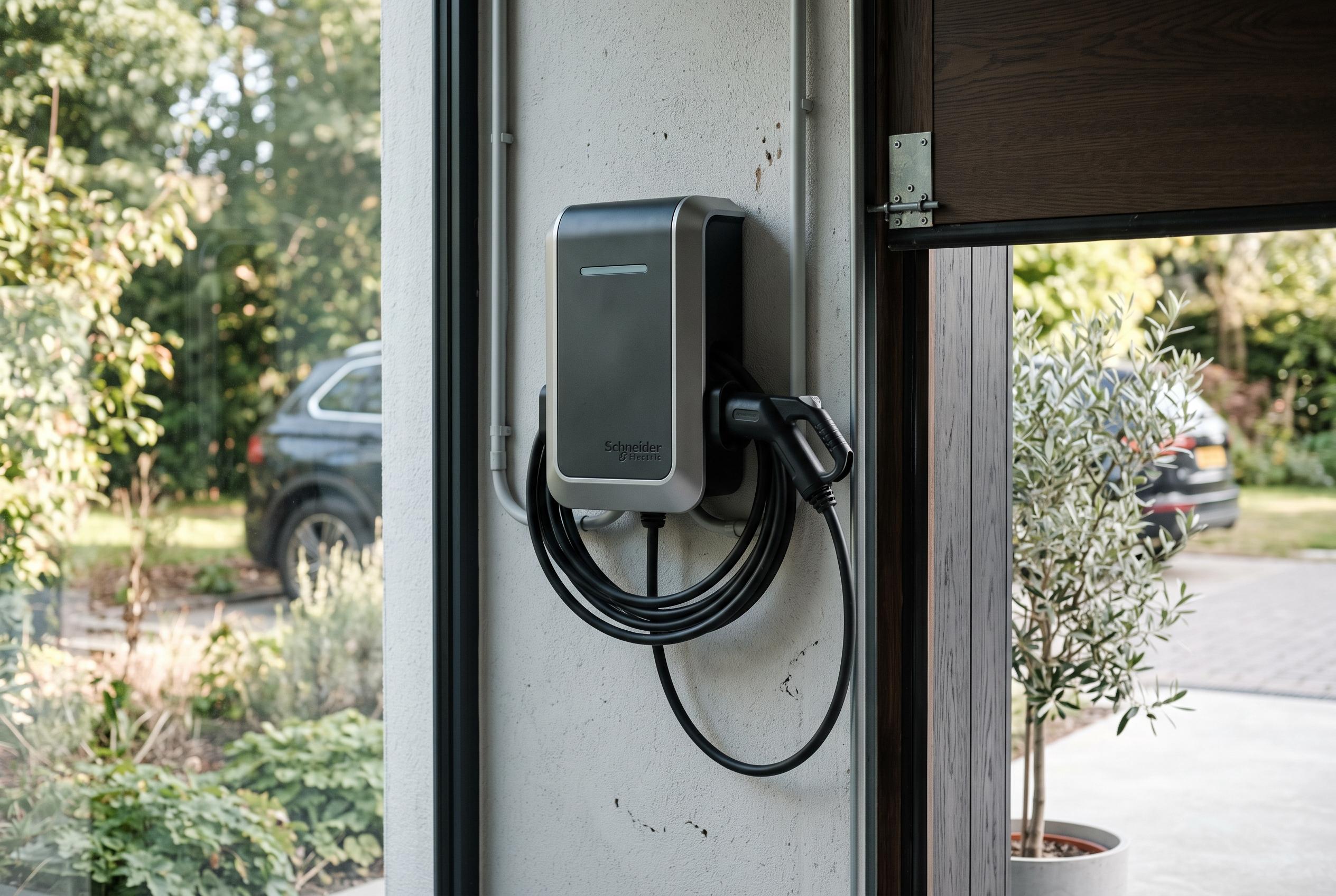
Schneider Electric has entered the home EV charging market with Schneider Charge, an SAE Level 2 AC unit designed to work within a household’s existing electrical capacity. The company says the charger is aimed at owners who want home charging without the cost and disruption of upgrading service equipment, which can otherwise run into several thousand dollars. According to Schneider Electric, the product sits alongside its existing Schneider Charge Pro model for commercial sites such as multi-unit housing, workplaces, fleets and destination charging.
The key feature is SmartAmp, a load-management system that continuously measures household power use and automatically reduces charging output when demand rises elsewhere in the home. Schneider says the system is compliant with UL 3141 and does not require separate monitoring hardware or additional components. When electrical supply allows, the charger can deliver up to 11.5 kW of AC power.
Schneider is also positioning the charger for longer-term grid integration. It supports OCPP 1.6, which may allow future participation in grid service programmes, although the company says it is not currently bidirectional. The charger will be offered with either a J1772 connector or a Tesla-style North American Charging Standard connector, using a 25-foot cable. It will also come in hardwired and plug-in versions, with app-based controls for live charging data, settings and scheduled overnight charging.
The launch reflects a broader push to make home charging easier to install as EV adoption grows and more households add other high-load electric equipment. Schneider Electric said it is working with installer Omerit to support deployment. For electricians and contractors, the company argues, integrating load management into the charger itself should reduce installation complexity and lessen disruption for homeowners.
Disclaimer: This content is intended for informational purposes only. Readers are advised to exercise their own judgement, conduct due diligence, or consult a qualified expert before acting on any information provided.