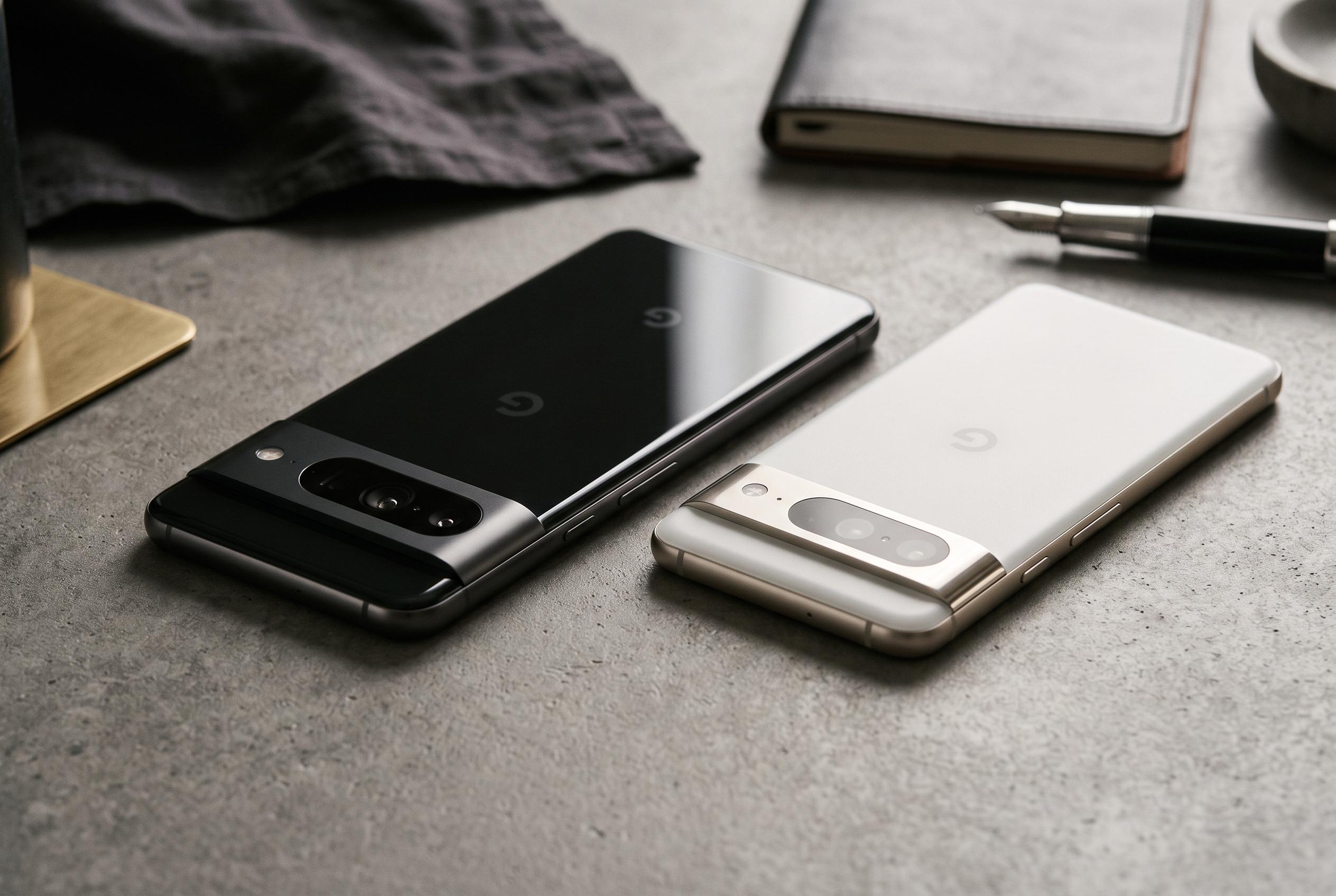

Google’s latest Pixel 11 Pro and Pixel 11 Pro XL arrive amid rising smartphone prices, offering refined hardware, upgraded cameras, and software enhancements, but at a higher cost for less base memory.
Google’s latest flagship pair arrives in a year when smartphone pricing has been shaped as much by component shortages as by product strategy. According to Droid Life’s review, the Pixel 11 Pro and Pixel 11 Pro XL are more expensive than their predecessors, start with less memory in the base configuration, and yet still make a strong case through hardware polish and camera performance. Google has clearly chosen to absorb some of the pressures in the market while leaning on incremental improvements elsewhere.
The design language remains familiar, and that is largely a strength. Droid Life says Google has kept the same overall form for a third straight year: a flat glass front and back, a metal frame, and the prominent rear camera bar. The smaller Pro model keeps the compact flagship formula alive, while the larger Pro XL offers the same experience in a bigger shell. Google’s own specifications show the phones in Canyon, Olive, Fog and Obsidian, with the black version moving to a matte frame. The result is a restrained but refined finish that feels more mature than radical.
The display hardware also follows that pattern of careful refinement. Google’s specifications list 6.3-inch and 6.8-inch Super Actua panels with a 1-120Hz refresh rate, HDR support and peak brightness of up to 3,600 nits. Droid Life says the screens are not only brighter outdoors than before, but also more resistant to scratches, thanks to a new anti-scratch shield over Gorilla Glass Victus 2. In practice, that means the same excellent visibility and colour tuning Pixel buyers expect, but with a little more resilience in daily use.
The camera system is where the new Pro models appear to justify most of their appeal. Google has fitted a new 50MP main sensor and an upgraded 48MP telephoto unit, with a 5x lens, while the company says the phone can now push Pro Zoom to 120x. Droid Life describes the camera experience as faster and more consistent than competing flagships, with quicker focus, less lag and stronger low-light performance. The review also highlights new software tools such as Magic Capture, which automatically surfaces useful moments after video recording ends, and Looks, a preset system that lets users save a preferred photographic style. Those additions are less about spectacle than control, giving the Pixel a more deliberate imaging workflow.
Battery life appears to have improved modestly despite the smaller cells in the base devices. Google’s specifications put the battery at 4,850mAh, with 30W wired charging and 25W Qi2.2 wireless charging, while Droid Life says real-world endurance is slightly better than on the Pixel 10 Pro family. The site also notes stronger magnetic attachment, which should make the new wireless charging standard more practical. That is a useful change at a time when many flagships still treat magnetic accessories as an afterthought.
Software remains one of Pixel’s clearest advantages, but the biggest additions are not all immediately visible. The phones ship with Android 17 and Google promises seven years of updates. Droid Life says Rambler, the new Gboard voice-to-text tool, is the standout feature, handling natural dictation with better punctuation and structure than older speech input systems. Proactive Assistance, meanwhile, is a more modest evolution of last year’s contextual prompts and appears to be surfacing only occasionally so far. The broader Pixel experience still matters most: call screening, Circle to Search, Now Playing and Google’s generally clean Android interface continue to define the line.
The main drawback is value. Google has raised the starting price of the Pixel 11 Pro to $1,099 and the Pixel 11 Pro XL to $1,299, while the base 256GB models ship with 12GB of RAM rather than 16GB. Higher-capacity versions restore the fuller memory configuration, but the entry point now costs more for less. Droid Life argues that owners of a Pixel 10 Pro can safely skip this generation, while users of a Pixel 9 Pro or earlier have a more compelling upgrade path. That is probably the fairest summary: the Pixel 11 Pro series looks excellent, but it is an iterative refinement rather than a meaningful rethink.
Disclaimer: This content is intended for informational purposes only. Readers are advised to exercise their own judgement, conduct due diligence, or consult a qualified expert before acting on any information provided.