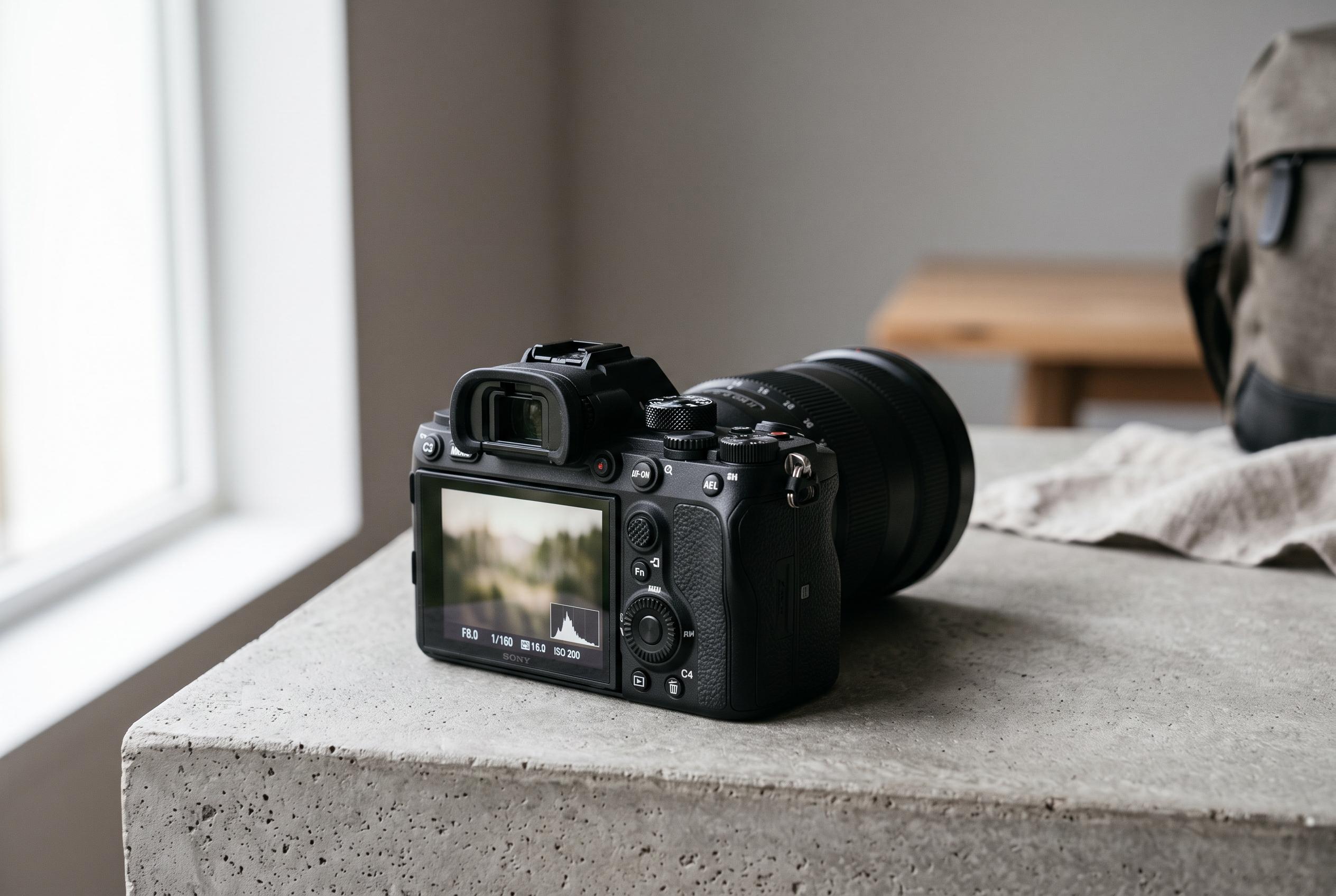

The Sony A7R VI introduces a fully stacked sensor, enhanced battery life, and usability features that make it a compelling choice for demanding photographers, challenging the dominance of its predecessors and competitors alike.
Sony’s full-frame mirrorless bodies continue to overlap on paper, but the practical differences between the A7R V, A7 V and A7R VI are substantial once they are in use. In a comparison based on owning all three cameras, Luca Petralia argues that the choice depends less on badge loyalty than on whether the buyer values resolution, speed, storage flexibility or battery endurance. Reviews from Tom’s Guide and DPReview still place the A7R V as a strong high-resolution hybrid option, particularly for stills, while newer coverage of the A7R VI has focused on the move to a stacked sensor and the resulting gains in speed and handling.
Petralia highlights several physical changes that are easy to miss in a spec sheet but matter in daily use. He points to the A7R VI’s illuminated controls and revised mode dial, which adds an asterisk position for storing extra custom settings. He also notes the storage split: the A7R V and A7R VI each offer two hybrid card slots that accept CFexpress Type A or SD media, whereas the A7 V combines one hybrid slot with one SD slot. That omission, he suggests, is harder to justify at a price around $3,000, even if it is not enough on its own to disqualify the camera.
Battery life is where the newer body stands out most sharply. Petralia says the A7R VI uses a newer, higher-capacity battery than the NP-FZ100 pack shared by the A7R V and A7 V, and he was unable to empty it in a single shooting session that produced nearly 1,800 frames. TechRadar and Digital Camera World both describe the A7R VI’s battery and grip redesign as part of a broader update to usability, while also noting that the larger body and new power system can affect compatibility with existing accessories.
The sensor architecture explains much of the performance gap. Petralia says the A7R V relies on a conventional CMOS sensor, the A7 V uses a partially stacked design, and the A7R VI moves to a fully stacked sensor. That matters most for the electronic shutter, which becomes genuinely usable on the newer bodies and enables 30fps shooting with a blackout-free viewfinder. For low light, he argues that the A7 V and A7R VI’s dual base ISO behaviour can be more important than chasing the lowest number on the dial, especially when a scene would otherwise push the camera into a noisier range.
Video is another clear dividing line. Petralia says he used the A7R V for a year and a half without serious issues, but the newer bodies alter the options considerably. The A7R V’s 4K 60p mode carries a heavy crop, while the A7 V offers 4K 60p without a crop in angle-of-view priority mode and 4K 120p in Super 35. The A7R VI trims that crop at 4K 120p and, according to recent reviews, also benefits from faster readout, improved autofocus and a more polished viewfinder. The broad takeaway from current coverage is consistent: the A7R V remains the best-value buy if resolution is the priority and the used price is right, but the A7R VI is the more complete camera for users who need speed as well as detail.
Disclaimer: This content is intended for informational purposes only. Readers are advised to exercise their own judgement, conduct due diligence, or consult a qualified expert before acting on any information provided.