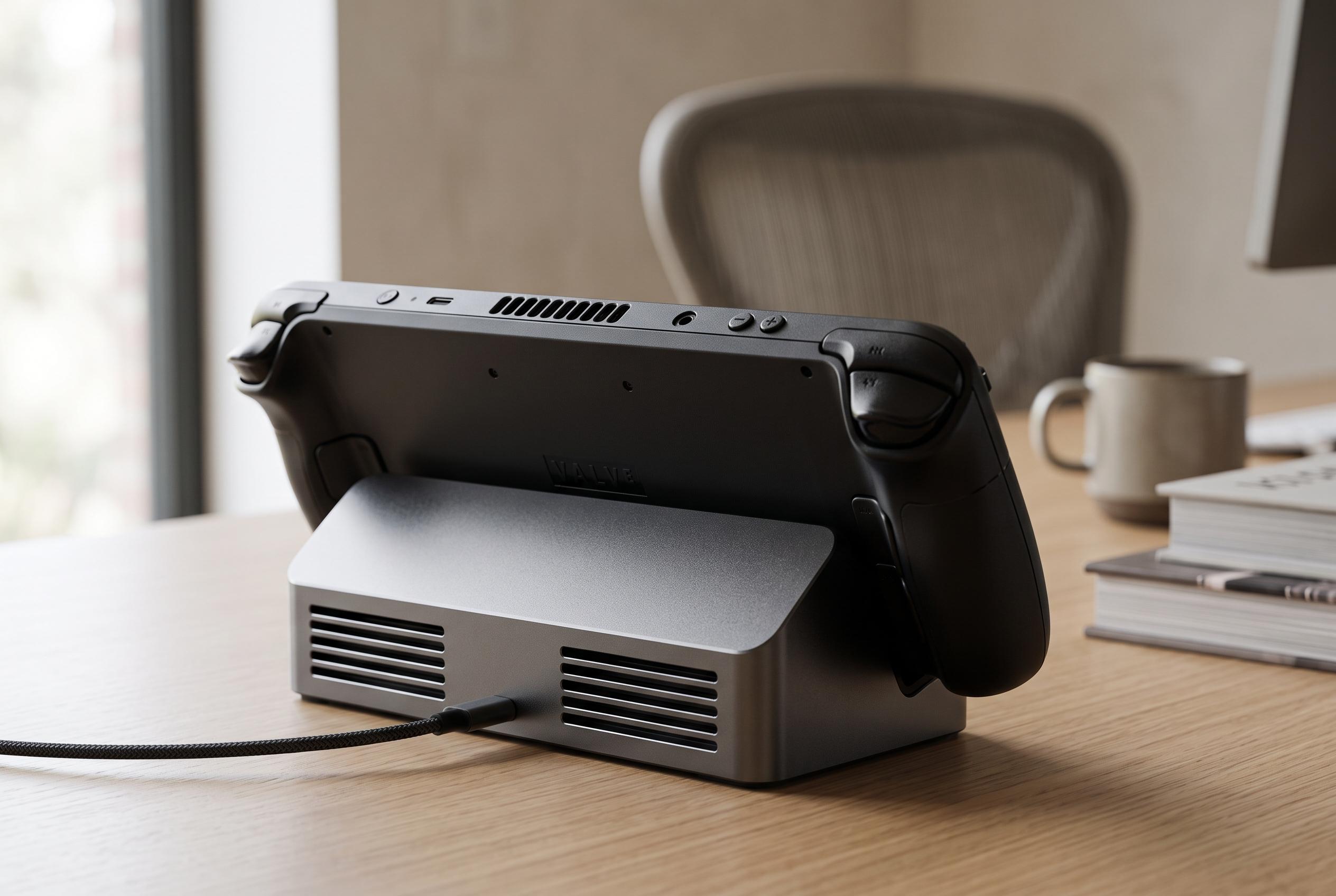

While Valve’s official Steam Deck dock remains costly in 2026, market competition from third-party options like UGREEN, JSAUX, and Anker offers consumers greater choice, compatibility, and value, reshaping the docking landscape for handheld gamers.
Valve’s official Steam Deck dock still commands a premium in 2026, but the market around it has moved on. Third-party options from JSAUX, UGREEN and Anker now cover the basic docking use case for far less money, while also chasing newer handhelds such as the ROG Ally family, Legion Go and MSI Claw. The real divide is no longer whether a dock exists, but how much compatibility, video headroom and charging transparency buyers are willing to pay for.
The clearest pattern is price. Anker’s A83S1 is positioned as the budget choice, while JSAUX’s upgraded dock sits in the middle and UGREEN’s 75126 asks a little more but adds the most capable video output in the group. Valve remains the most expensive option, but its appeal lies in first-party support rather than raw hardware value. That matters because handheld docks are often bought as a one-time accessory and then left on a desk, making everyday reliability more important than brand prestige.
On paper, UGREEN has the strongest technical specification. Its 75126 model uses HDMI 2.1, which allows 4K at 120Hz, and UGREEN says it supports Steam Deck, ROG Ally, Legion Go, Go S and MSI Claw devices, while explicitly excluding Nintendo Switch and Switch 2. That breadth of support is especially relevant for owners of newer Windows handhelds, where dock compatibility has often lagged behind the hardware cycle.
JSAUX is the most complicated case because its dock line has evolved. The company’s current upgraded dock is listed as compatible with Steam Deck LCD and OLED, ROG Ally and Ally X, Legion Go and Go S, and MSI Claw, with HDMI 2.1 and 100W PD charging. JSAUX also has an older version of the dock family that tops out at HDMI 2.0 and is cheaper, which explains why shoppers can still find very different JSAUX listings depending on model number.
Anker takes the opposite approach: fewer claims, simpler hardware. Best Buy lists the A83S1 as a 6-in-1 dock for Steam Deck OLED, ROG Ally and Legion Go, but not ROG Ally X. It offers 4K HDMI, Gigabit Ethernet, two USB-A ports, a USB-C data port and 100W Power Delivery. That narrower compatibility list may be a limitation for buyers of the newest handhelds, but it also avoids the overpromising that often causes return headaches in this category.
For Steam Deck owners, Valve’s official dock still has one advantage the others do not: it is the only option backed directly by the handheld’s maker. That makes it the safest choice for buyers who want the most conservative support path, even though the hardware itself is not the most generous on price or HDMI capability. For everyone else, the decision is less about “official” versus “third-party” and more about whether the dock will be used with a single device or across a mixed household of handhelds.
Charging is the other area that separates the stronger docks from the merely cheap ones. JSAUX says its updated dock supports 100W PD charging, while Anker also states 100W Power Delivery on the A83S1. JSAUX’s earlier compatibility updates for the ROG Ally also show why buyers of higher-draw handhelds should look beyond basic wattage figures and check whether the dock, charger and handheld firmware are all aligned.
The practical conclusion is straightforward. Valve is the safe but costly pick for Steam Deck purists. UGREEN is the best all-rounder if broad compatibility and 4K120 output matter. Anker is the cleanest low-cost option for people who just want the essentials. JSAUX sits between those poles, with enough compatibility and power delivery to be useful, but without the single standout advantage that makes the choice obvious.
Disclaimer: This content is intended for informational purposes only. Readers are advised to exercise their own judgement, conduct due diligence, or consult a qualified expert before acting on any information provided.