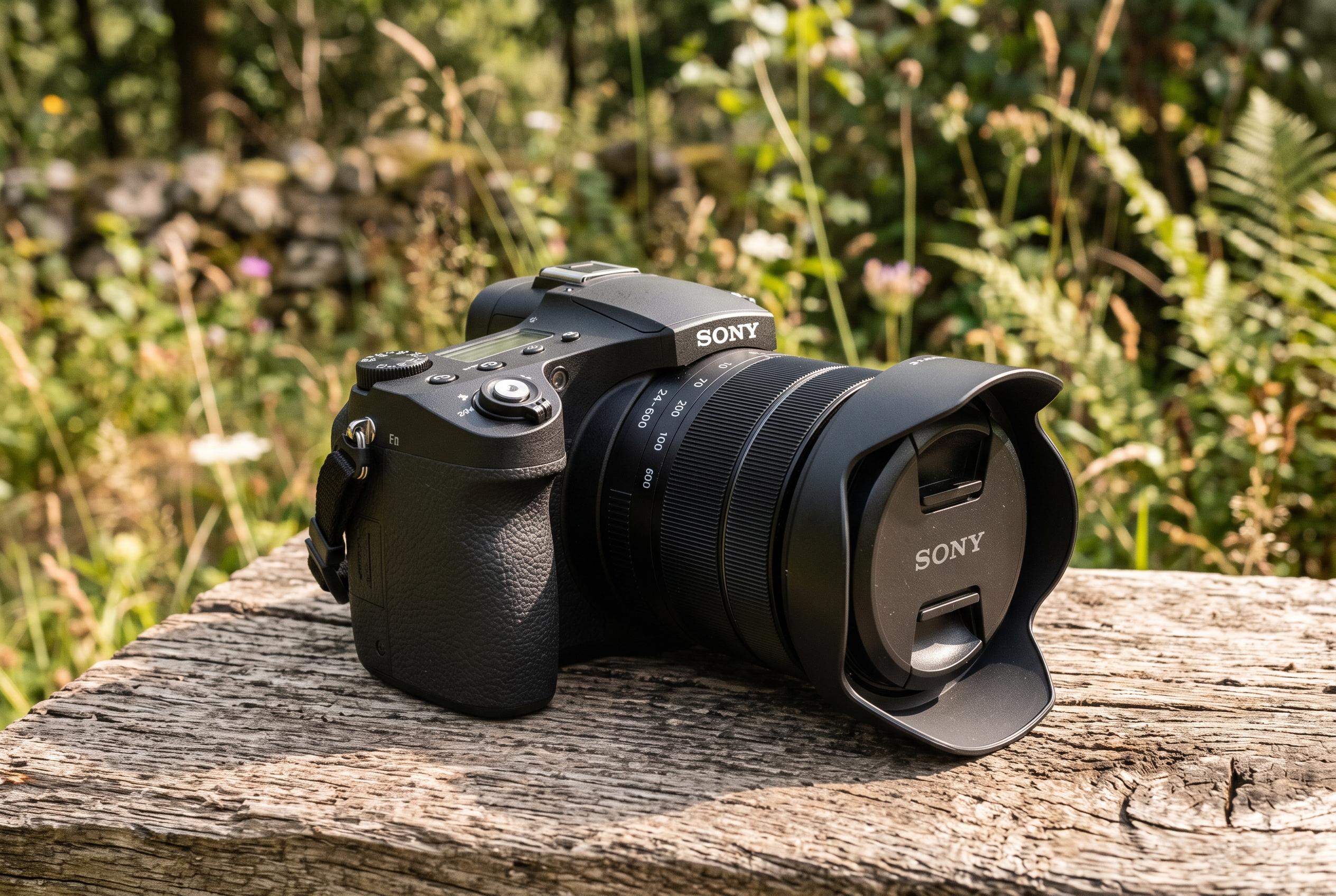

Sony’s latest RX10 V bridge camera introduces significant upgrades in processing, autofocus, and video options, challenging the notion that compact zooms lack professional appeal and versatility for outdoor and wildlife photographers.
Sony’s RX10 V arrives as a reminder that bridge cameras still have a role, provided they are aimed at the right buyer. According to Sony’s launch material, the fifth-generation model keeps the series’ familiar core: a 20.1-megapixel 1.0-type stacked Exmor RS CMOS sensor and a built-in 24-600mm F2.4-4.0 ZEISS zoom. What has changed is the engine around it, with BIONZ XR processing, a dedicated AI unit, faster burst shooting and a more capable video specification. The result is a camera built less for compromise and more for reach, speed and convenience.
That proposition is clearest in the lens. The RX10 V gives users full-frame-equivalent coverage from 24mm to 600mm without changing optics, which makes it unusually practical for wildlife, birding, aviation, travel and outdoor sport. Sony says the camera uses Real-time Recognition AF with AI subject detection, while the company’s own specifications list up to 30 frames per second with AF and AE tracking. For photographers who want one body to handle landscapes, distant subjects and sudden movement, that combination is the camera’s main attraction.
The handling has also been pushed closer to Sony’s Alpha mirrorless line. The deeper grip, revised controls and joystick-style operation are intended to make the RX10 V feel more serious than a typical superzoom. A 3.68-million-dot electronic viewfinder and a tilting 3-inch touchscreen support that approach, while the NP-FZ100 battery is rated at roughly 630 shots per charge in Sony’s published figures. That is a meaningful gain for long days in the field, even if the camera’s 1.1kg class weight means it is not remotely pocketable.
Image quality remains bounded by the sensor format. The 1-inch chip is competent and should be more than adequate for travel, web use, moderate prints and most documentary work, but it cannot match the low-light performance, cropping headroom or shallow depth-of-field control of modern APS-C or full-frame cameras. That limitation is part of the RX10 V’s identity rather than a flaw Sony has tried to hide. Its appeal lies in the fact that the integrated lens and fast autofocus can place a distant subject large in frame without the bulk and cost of a separate telephoto system.
Video support is stronger than on older bridge cameras and broadens the RX10 V’s audience to hybrid shooters. Sony’s material says the camera can record 4K at up to 120p, with full-width capture at 4K 60p and a cropped mode at the highest frame rate. That puts it in a useful position for wildlife film-makers, travel creators and sports coverage, especially given the fixed zoom range and the presence of microphone and headphone connections. It is not a dedicated vlogging model, but it is far more capable than a casual compact.
Pricing makes the RX10 V a serious purchase. Sony’s UK press release lists it at £2,199, while the company’s international pages place it at about $2,298 or €2,499 depending on market. That is firmly interchangeable-lens-camera territory, which means buyers will need to decide whether the convenience of a single 24-600mm system outweighs the better image quality and flexibility of a mirrorless kit. For wildlife travellers, bird photographers and anyone who wants reach without building a large bag of lenses, the RX10 V makes a strong case. For those who prioritise maximum sensor performance, it does not.
Disclaimer: This content is intended for informational purposes only. Readers are advised to exercise their own judgement, conduct due diligence, or consult a qualified expert before acting on any information provided.