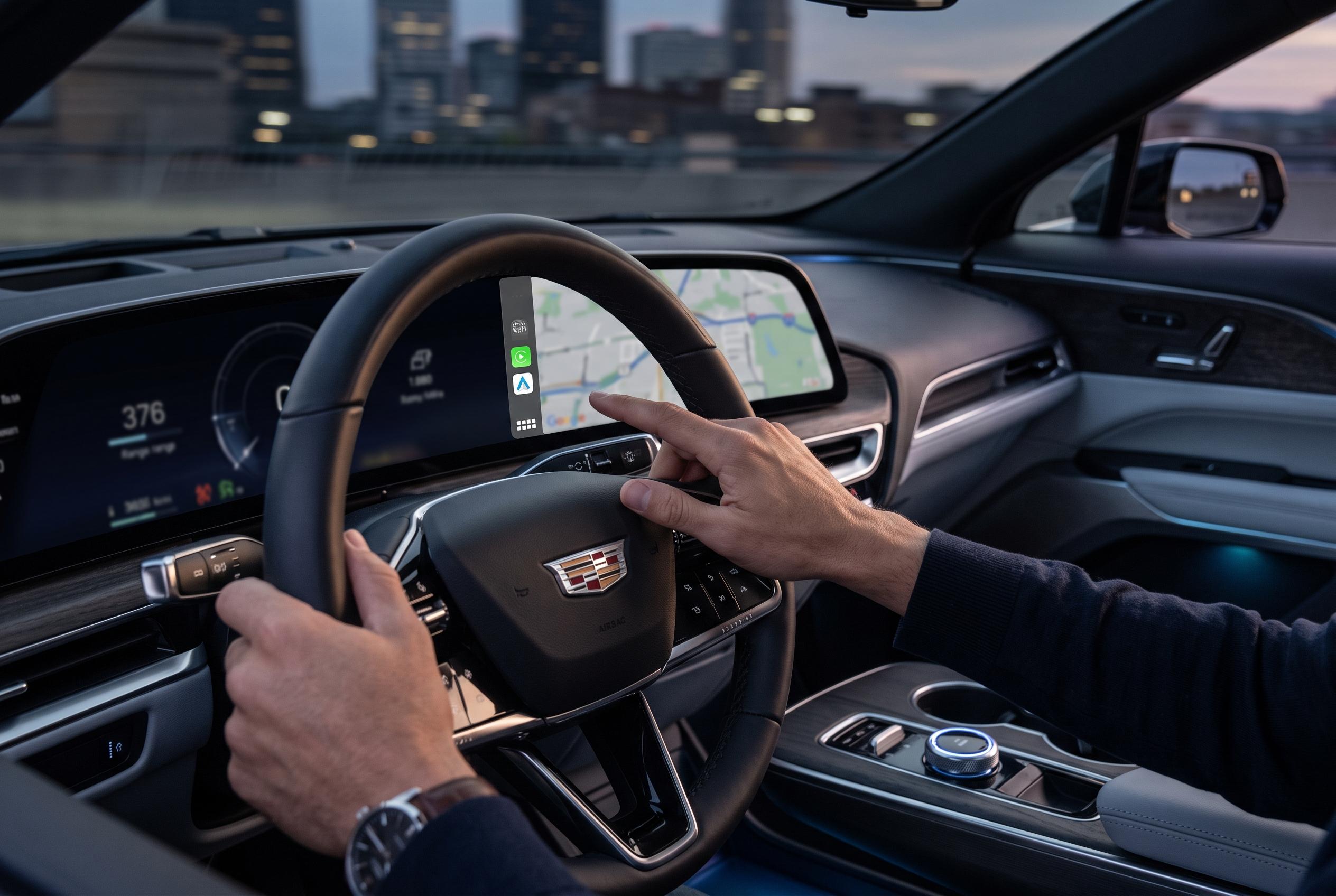

General Motors’ latest Cadillac Lyriq highlights a significant move towards smartphone integration as industry shifts away from proprietary software, with Tesla rumoured to follow suit amid broader industry support for device-agnostic in-car connectivity.
General Motors’ latest Cadillac listings suggest a quiet retreat from one of the auto industry’s most stubborn bets. The 2027 Lyriq is now shown with wireless Apple CarPlay and Android Auto as standard equipment, a notable shift after years of GM arguing that drivers should live inside its own software ecosystem. Review sites including Edmunds and Car and Driver both describe the electric SUV as offering smartphone integration alongside its 33.3-inch curved display, reinforcing the sense that the market is pushing carmakers back towards the phone-based experience many buyers already prefer.
That matters because the case against smartphone mirroring has always been weak where customers are concerned. For many drivers, CarPlay and Android Auto are not extras but purchase requirements, especially when the vehicle’s native software is slower, less familiar or tied to paid subscriptions. The appeal is practical rather than ideological: a phone is updated more often than a car, its apps stay current for longer, and its navigation, messaging and voice tools are already part of daily use.
Tesla, meanwhile, appears to be moving in the same direction, albeit more cautiously. MacRumors reported late last year that the company was testing CarPlay internally, and later said Bloomberg’s Mark Gurman still viewed support as in development in February 2026. A separate August 2026 update said no production Tesla had yet shipped with CarPlay, though the feature was still being worked on. If Tesla does eventually deliver it, the move would mark a significant reversal for a company that built much of its identity around keeping the dashboard closed to Apple’s software.
The broader lesson is that the car industry is no longer setting the terms of the in-car experience. Apple is pushing deeper into the cabin with CarPlay Ultra, while Google continues to improve Android Auto and also sells Android Automotive for built-in systems. Yet the decisive advantage still sits with the device most people already own. Carmakers can and should keep control of safety-critical and vehicle-specific functions, but for maps, messages and media, the phone has already won.
Disclaimer: This content is intended for informational purposes only. Readers are advised to exercise their own judgement, conduct due diligence, or consult a qualified expert before acting on any information provided.