
Micron’s massive new factory near Singapore’s Malaysian border signals a major shift in the global AI hardware supply chain, boosting the city-state’s industrial prominence amid surging AI demand.
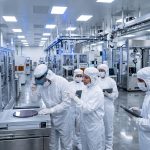
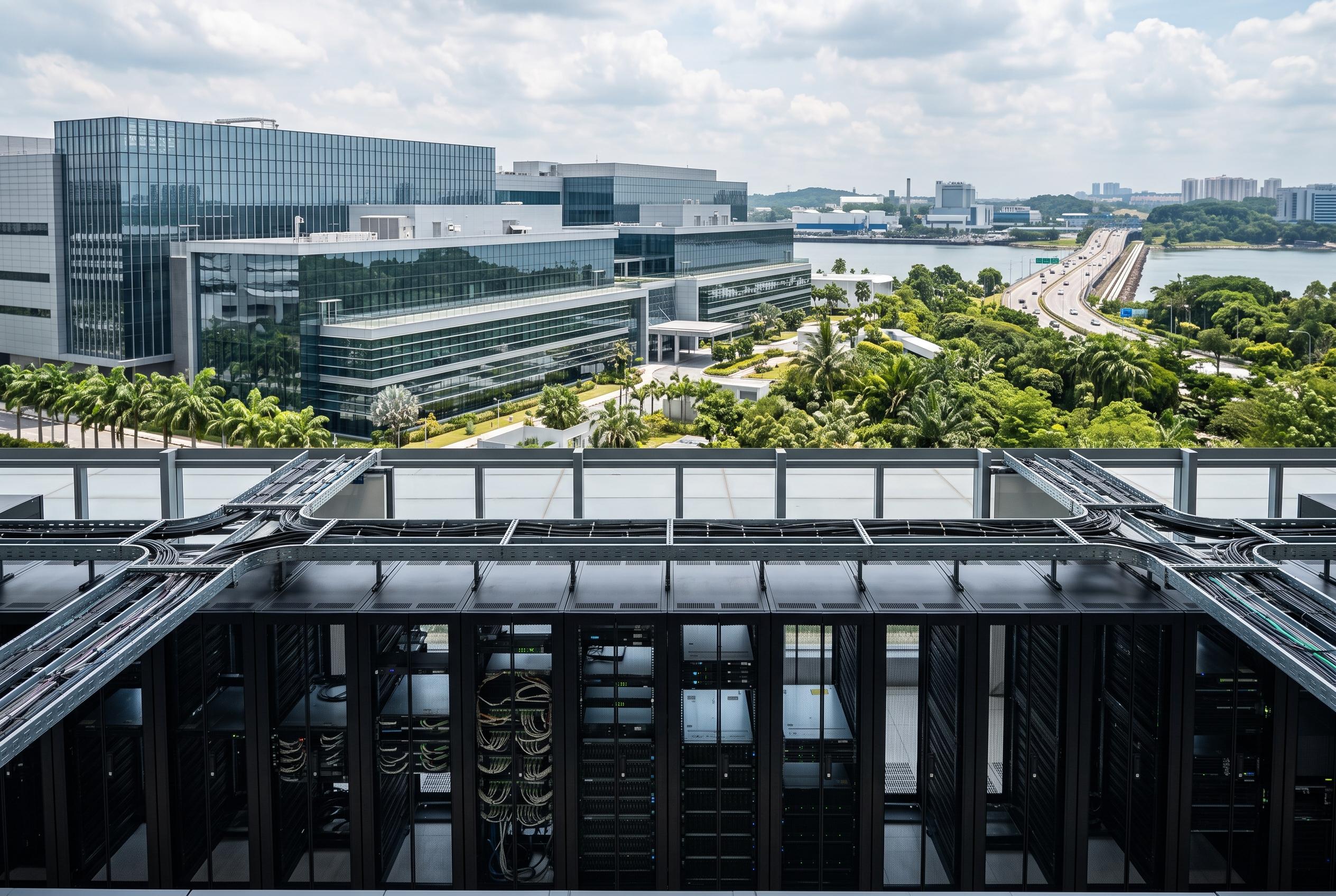
Singapore’s biggest economic surprise is taking shape on the north-western edge of the island, where a new factory is rising behind wire-topped walls near the Malaysian border. By the end of this year, Micron says the site will begin producing, assembling, packaging and testing high-speed chips used in artificial intelligence systems, with about 1,400 jobs expected to follow.
The US memory-chip maker is investing $7 billion in the facility, according to its announcement and the Singapore Economic Development Board. It is also building a separate two-storey plant next door for NAND flash wafers, a larger $24 billion project that Micron says will start operating in 2028 and eventually add another 1,600 industrial jobs. Together, the projects underline how aggressively the company is expanding in Singapore to serve rising demand from AI data centres.
The investment surge has helped turn Singapore into one of the clearer industrial winners of the AI boom. The government raised its growth forecast for 2025 to as much as 5.5 per cent after the economy expanded faster than expected in the second quarter, with industrial output jumping sharply on the back of semiconductor demand. That is unusual for a high-income city-state better known for banking, trade and legal services than for large-scale manufacturing.
Singapore’s role is not in designing the most advanced AI models or fabricating the most sophisticated chips. Those tasks remain concentrated in the United States and Taiwan. Instead, the island has become a crucial point in the hardware chain: it produces a significant share of the world’s chips and a large portion of semiconductor equipment, while firms such as Micron and Infineon rely on its infrastructure, logistics and regulatory stability. In effect, the Americans build the AI engine, Taiwan makes many of the parts, and Singapore provides much of the supporting machinery around it.
That position was not achieved quickly. After independence in 1965, the government under Lee Kuan Yew set out to attract electronics manufacturers from the US, Japan and Europe. National Semiconductor arrived first in 1968, followed by companies such as Texas Instruments, Hewlett-Packard and General Electric. What began with relatively simple assembly and testing gradually developed into a sophisticated production base. Today, Singapore remains an important site for advanced packaging, testing and other technically demanding work, with local firms such as AEM and Silicon Box working alongside global groups to support the next phase of AI hardware growth.
Disclaimer: This content is intended for informational purposes only. Readers are advised to exercise their own judgement, conduct due diligence, or consult a qualified expert before acting on any information provided.