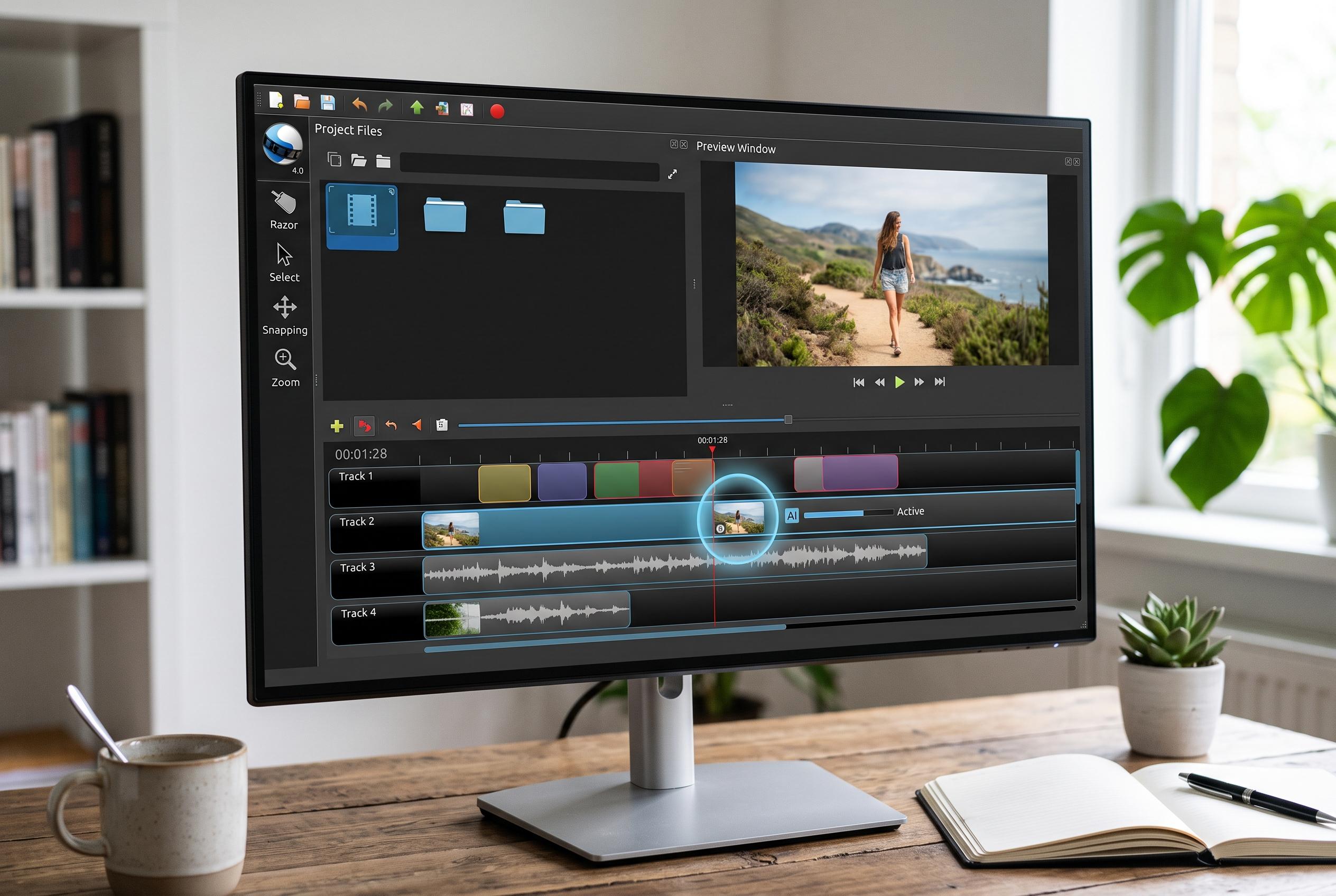

The open-source video editor OpenShot has released version 4.0, featuring a major shift to Qt6 and new AI-enhanced effects, signalling a significant upgrade aimed at improving usability and cutting-edge functionality.
OpenShot has moved to Qt6 in version 4.0, a major technical shift that underpins the latest release of the open-source non-linear editor. According to Phoronix, the port from Qt5 required substantial code changes, but it also brings a set of interface refinements, including a recording view, an audio recording dock and live multi-resource recording timeline previews.
The release also broadens the application’s toolset with new ComfyUI templates for audio denoising, cleanup, repair and voice enhancement. OpenShot 4.0 adds shadow and glow effects, an Analysis View, film grain clip presets and a YOLO model picker for the Object Detection filter, alongside a YOLOv5 setup. The Windows packages have been improved as well, which should matter for users who rely on the editor on Microsoft’s platform.
These additions build on a release line that has increasingly focused on usability, stability and machine-learning-based effects. OpenShot 3.2.0, for example, introduced new themes, better timeline snapping, a Remove Gap function and improved Blender integration, while version 3.1.1 concentrated on crash fixes, property-editing improvements and launch stability. Earlier releases also expanded tracking, object detection and audio processing features, showing a steady push to make the editor more capable without abandoning its free software roots.
OpenShot remains a cross-platform editor for Linux, macOS and Windows, with support for multiple media formats, drag-and-drop workflows, unlimited tracks and layered compositing. The 4.0 release suggests the project is now pairing that broad feature base with a newer UI stack and more modern image and audio tooling, while continuing to ship source code and binaries through GitHub.
Disclaimer: This content is intended for informational purposes only. Readers are advised to exercise their own judgement, conduct due diligence, or consult a qualified expert before acting on any information provided.