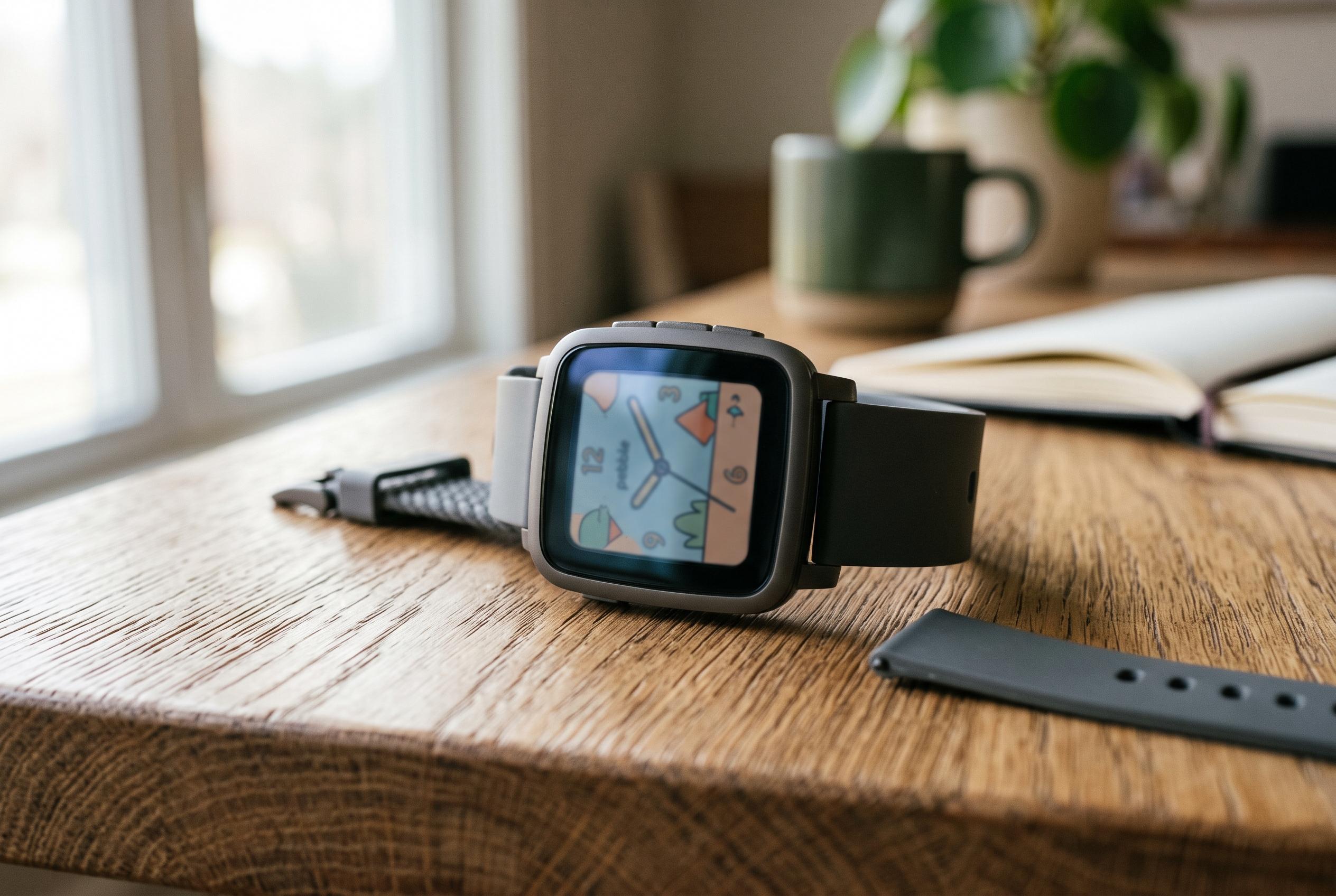

The new Pebble Time 2 brings back the brand’s signature charm with modern features, emphasising long battery life and a personalised user experience in a market saturated with complex devices.
Pebble’s return is less a reinvention than a reminder of what early smartwatches once did well. A hands-on impression of the new Pebble Time 2 suggests that the revived brand has kept the charm that made the original devices memorable, while adding enough modern hardware to make the experience feel current rather than merely retro.
The watch sits in a familiar niche: a $225 device built around an e-paper display, physical buttons and long battery life, but now with a touchscreen, heart-rate monitoring and step tracking. MacRumors reported that the Time 2 uses a 1.5-inch rectangular ePaper panel and can run for up to 30 days, while TechCrunch said the watch marks Pebble’s return after years out of the market. The result is a device that looks understated, but is designed to be practical in daily use.
What sets it apart is not raw specification, but personality. The new Pebble mobile app is described as clean and easy to use, and the watch can tap into a large library of classic Pebble apps and watch faces. That is central to its appeal. Instead of pushing users towards a tightly controlled ecosystem, Pebble appears to be leaning back into the open, hobbyist feel that helped define the brand in its first life.
That old spirit is most obvious in the watch faces. There are playful, odd and occasionally chaotic designs, alongside more useful layouts. PhoneArena said the revival brings back the “hacker spirit” associated with Pebble, and that broader sense of experimentation still seems to matter. The watch also offers sideloadable apps and an open-source PebbleOS, according to AndroGuider, which reinforces the idea that this is being aimed at enthusiasts as much as mainstream buyers.
In use, the trade-offs are clear. The Pebble can handle notifications, weather, sleep and walk tracking, and it is comfortable enough to wear overnight. But it lacks some of the smoother conveniences found on Apple Watch models, particularly for things such as voice timers and payments. For some users, that will be a weakness. For others, it is precisely the point: fewer interruptions, less friction and much less charging.
Battery life remains the most persuasive argument. Multiple reports describe it as stretching to around a month, depending on features in use, which puts it far beyond most contemporary smartwatches. That kind of endurance changes how a wearable feels. It stops being another device that must be managed and starts behaving more like an ordinary watch that happens to be connected.
Pebble’s comeback therefore lands as more than nostalgia. It offers a different answer to a market that has become crowded with sensors, gestures and sprawling software layers. The Time 2 suggests there is still room for a smartwatch that is simple, useful and a little eccentric. For users who want a wrist device that feels less like a miniature phone, that may be the strongest argument of all.
Disclaimer: This content is intended for informational purposes only. Readers are advised to exercise their own judgement, conduct due diligence, or consult a qualified expert before acting on any information provided.