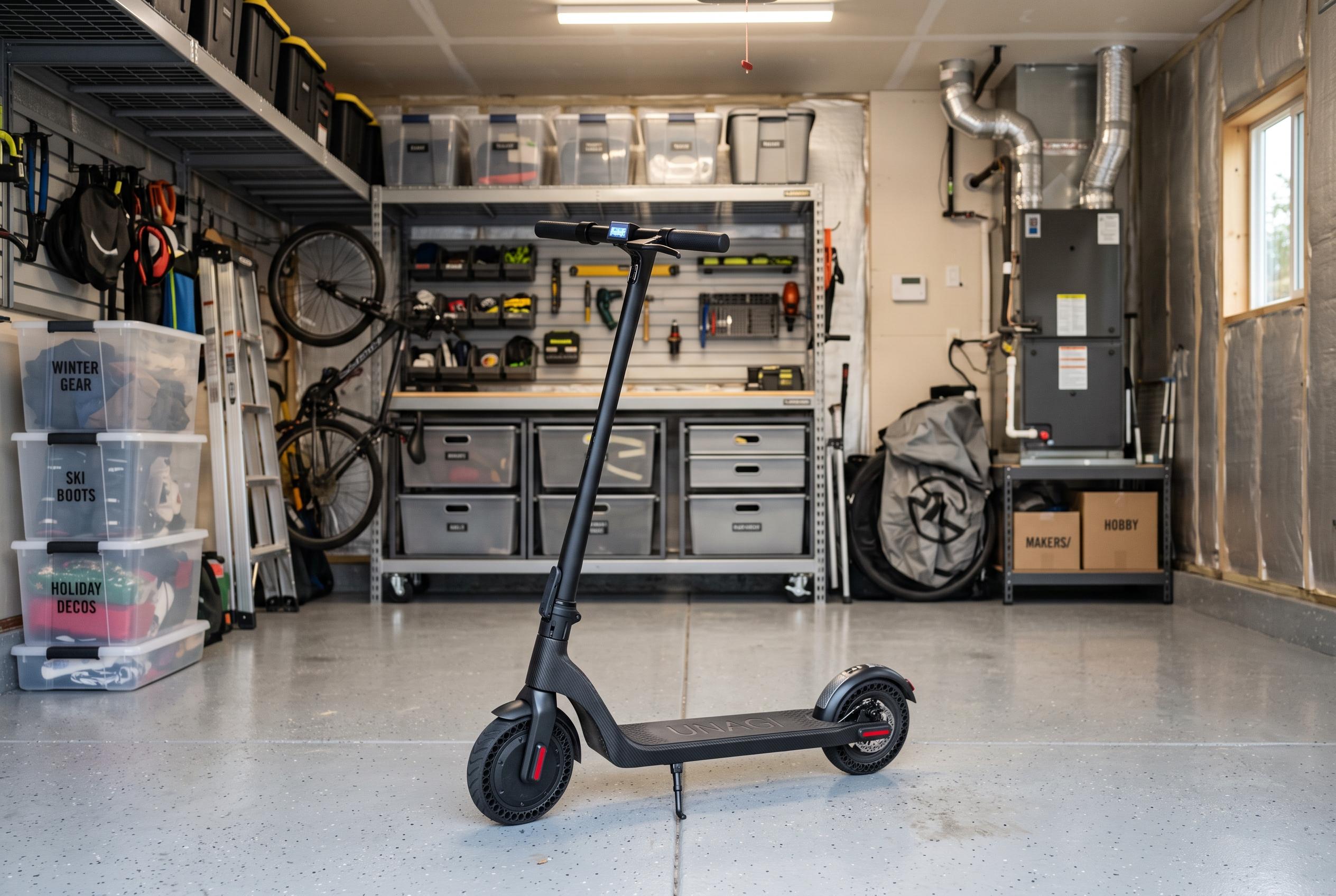

Expert advice highlights the importance of temperature, organisation, and regular maintenance to protect electric scooters during winter and summer storage in garages.
A garage is usually the safest place at home to keep an electric scooter when it is not in use. It shields the machine from rain, ultraviolet light, dust, vandalism and many of the knocks that come with outdoor parking. According to scooter storage guides published by Scooter Gear Lab and e-bikes specialists, the best results come from keeping the scooter dry, upright and away from the charger once it has reached its storage level. The main caution is not the space itself, but the conditions inside it.
Temperature is the biggest variable. A garage that is attached to the house may stay reasonably stable, while a detached unit can become very hot in summer or cold enough to threaten a lithium-ion battery in winter. For that reason, a scooter should be parked in a dry, sheltered corner, away from doors, heaters, plumbing leaks, fuel cans and anything that could be struck by a car or another bike. Stores and maintenance guides also advise keeping the area organised so the scooter remains easy to access rather than buried in workshop clutter.
Cleaning matters before storage. Mud, road salt and moisture should be removed from the frame, deck, wheels, brakes, lights and charging port area. Salt is especially corrosive in winter, and leaving grime on the scooter can accelerate wear on bolts, brake parts and exposed metal. It is also important to let the scooter dry fully before covering it or putting it away for a long period. High-pressure washing should be avoided because it can drive water into bearings, electrical connectors and sealed components.
The battery needs the most care. Lithium-ion packs do not like being left empty for months, but they also should not sit at full charge for long periods. For extended storage, many manufacturers and storage guides recommend a middle range of roughly 40% to 60%. If the scooter has a removable battery, storing that battery indoors may be preferable when the garage is prone to freezing cold or severe heat. If the battery is integrated, the safer option is often to leave the whole scooter in a more stable environment when conditions become extreme.
Cold garages create a charging risk. If the battery has been sitting in sub-zero conditions, it should not be charged until it has warmed gradually to a suitable temperature. The same caution appears in electric bike guidance from e-bikesdirect, which advises keeping batteries away from damp and freezing conditions and bringing removable packs indoors where possible. Rapid heating with a space heater, hair dryer, heat gun or open flame is not appropriate. Heat can be just as damaging over time; prolonged exposure to a very hot garage can age the battery more quickly and reduce capacity.
Tires and security also deserve attention. Pneumatic tires slowly lose pressure even when parked, and a scooter left on underinflated tyres for months can develop flat spots or other damage. Before storage, tyres should be inflated to the manufacturer’s recommended pressure and checked again periodically. A strong lock is sensible even inside a garage, particularly if the space is shared or accessible from outside. For higher-value scooters, a wall anchor, motion alarm, camera or GPS tracker can add another layer of protection. Storage systems should also be chosen with care: wall hooks, racks and ceiling lifts must be rated for the scooter’s actual weight.
If the scooter will remain unused for several months, the best routine is straightforward: clean and dry it, set the battery to its storage charge, check tyres and brakes, place it in a dry and reasonably stable part of the garage, and inspect it every four to eight weeks. Before riding again, the scooter should be checked for battery health, tyre pressure, brake feel, loose fittings, display faults and any unusual noise or loss of power. A short test ride is the safest way to confirm that everything is working normally after storage.
Disclaimer: This content is intended for informational purposes only. Readers are advised to exercise their own judgement, conduct due diligence, or consult a qualified expert before acting on any information provided.