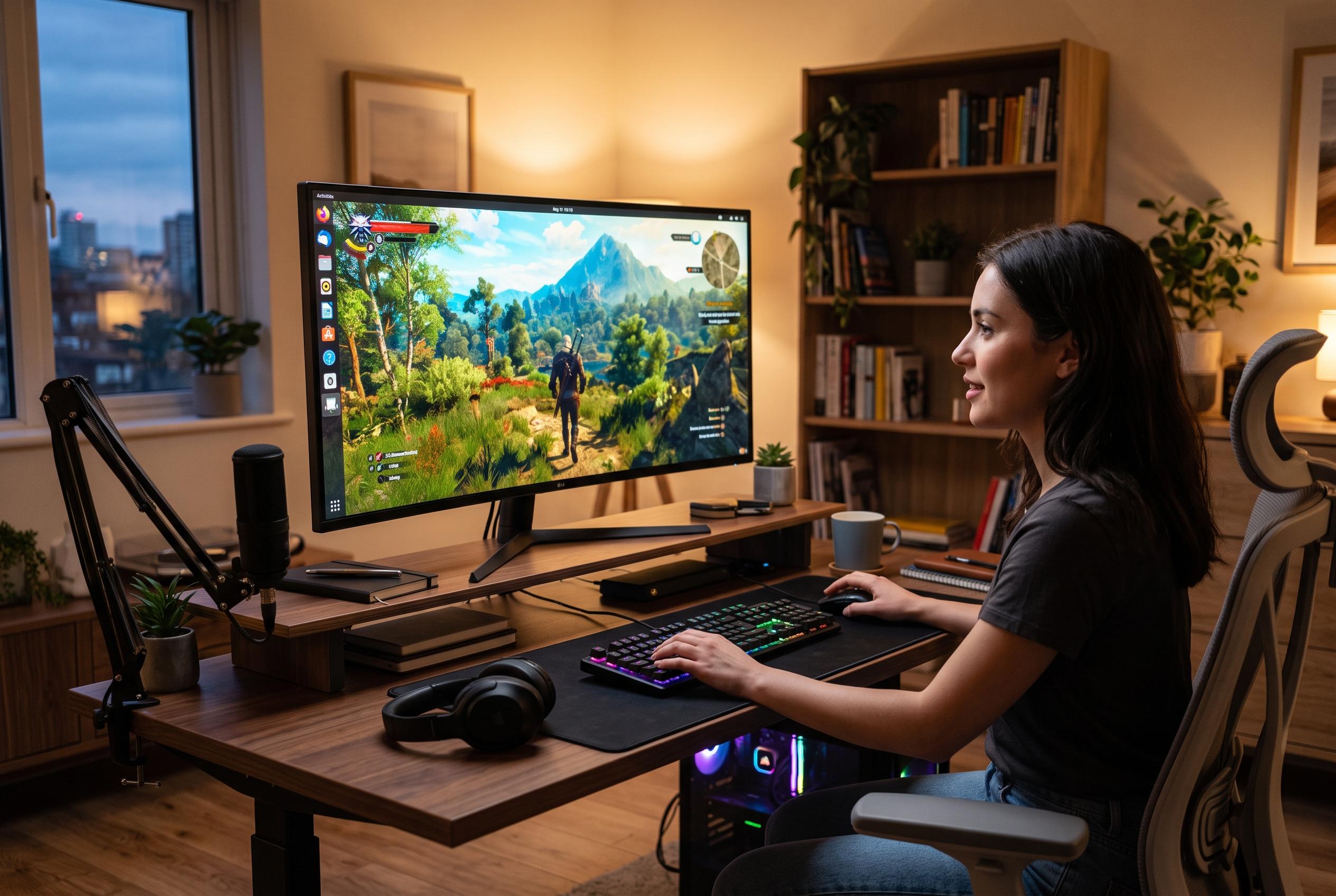

A full test of Steam’s gaming library on Linux reveals significant progress, with Proton’s evolving support transforming Linux into a viable gaming platform for mainstream players, despite ongoing challenges with anti-cheat systems.
Testing a full Steam library on Linux rarely sounds dramatic any more, yet it still exposes how far desktop gaming on the platform has come. On a CachyOS system used as a daily driver, most titles launched without special effort, and only a small set failed altogether. That result reflects a broader shift: for many players, Linux is no longer a fallback environment but a practical place to install, click and play.
Valve’s Proton compatibility layer is central to that change. According to GamingOnLinux, Proton 9.0-1 expanded support for several previously problematic titles, while also improving behaviour on high-core-count processors and Nvidia graphics hardware. More recent Proton releases have continued that pattern, with Phoronix reporting added game support and additional fixes in Proton 9.0-3. In practice, this means many Windows-only games now run on Linux with little or no adjustment.
The technical stack behind that experience is increasingly mature. Proton relies on translation layers such as DXVK and VKD3D-Proton to convert Direct3D calls into Vulkan, while Wine handles the Windows API side. Steam’s shader pre-caching also reduces first-launch stutter in many cases. Even older, obscure titles can benefit from this work, because long-maintained rendering paths and compatibility fixes have quietly made a broad class of legacy games more usable than they once were.
What has declined most sharply is the importance of native Linux ports. Several games that once shipped with native builds now run better, or only reliably, through Proton. Rocket League is the clearest example: its native Linux version was discontinued in 2020, and the Windows build through Proton became the functional route. That inversion captures a wider trend. Native support still exists in some games, but it is now less of a guarantee than a convenience.
The largest remaining obstacle is anti-cheat. GamingOnLinux’s compatibility guide notes that Easy Anti-Cheat and BattlEye can work on Linux only when developers enable support, while kernel-level systems are often a hard block. That matches the current situation for several major competitive shooters, including recent Battlefield entries, EA FC 26, Apex Legends, PUBG, Rainbow Six Siege and Escape From Tarkov. By contrast, some multiplayer titles, including Halo Infinite, DayZ, Hell Let Loose, Insurgency: Sandstorm and BattleBit, do work, which shows the problem is not genre-wide but implementation-specific.
Even so, Linux is not yet a complete replacement for Windows in every gaming setup. Performance can still vary from title to title, and some players will keep a separate Windows drive for games that need it or for cases where frame pacing is still easier to tune on Microsoft’s platform. That said, the overall direction is clear. With Proton improving steadily and the catalogue of working games widening, Linux gaming has moved from a specialist compromise to something that can now be recommended on its own merits.
Disclaimer: This content is intended for informational purposes only. Readers are advised to exercise their own judgement, conduct due diligence, or consult a qualified expert before acting on any information provided.