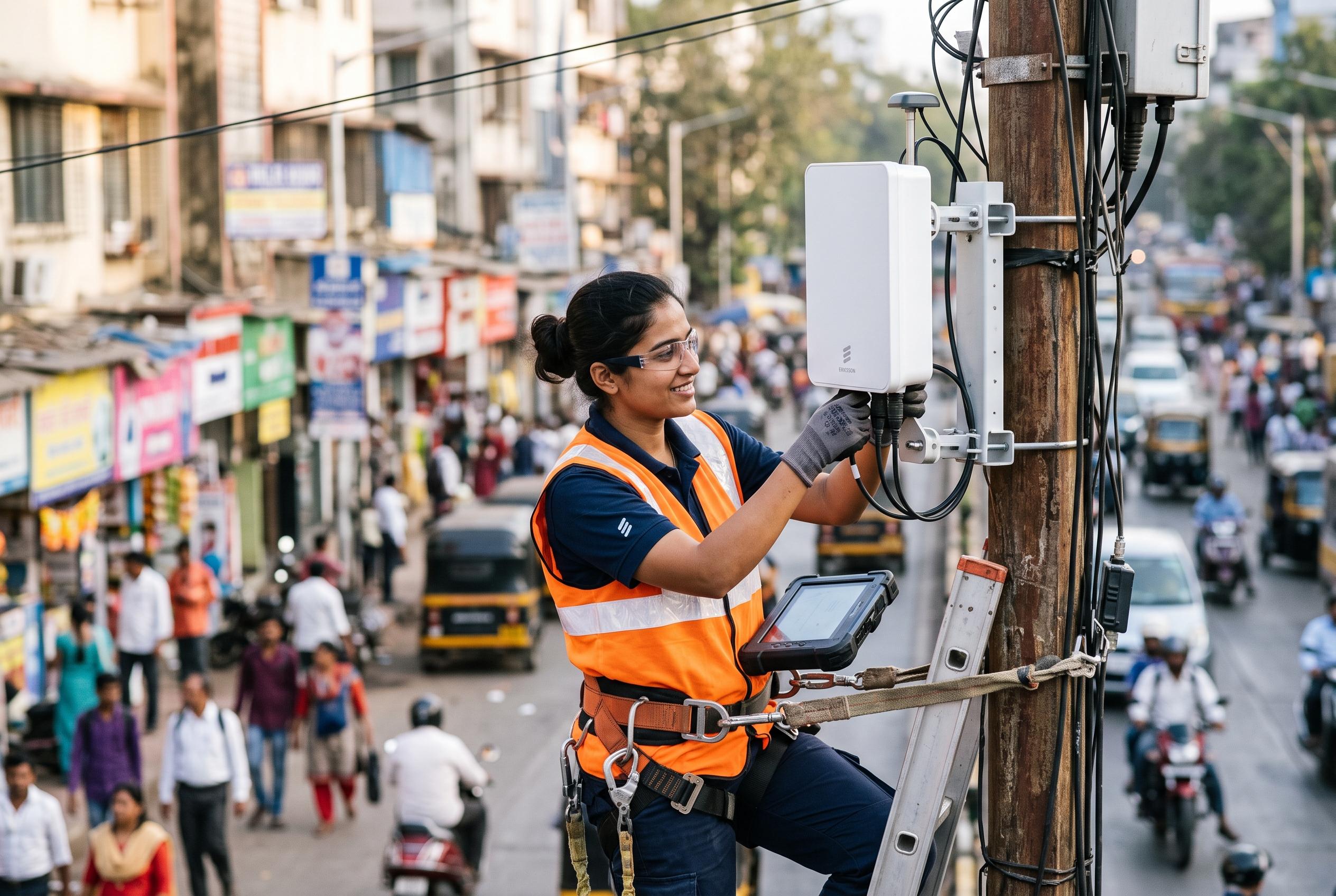

India’s decision to double its electromagnetic field limits for mobile networks aims to enhance 5G coverage and reduce deployment costs, aligning with global standards and easing constraints on operators amid rising traffic demands.
India’s decision to lift its electromagnetic field limits for mobile networks to 10 watts per square metre is set to give operators more room to expand 5G coverage without adding towers as quickly, according to reports in the Economic Times and Livemint. The revised threshold, which takes effect next month, doubles the current limit and brings the country in line with the level recommended by the International Commission on Non-Ionizing Radiation Protection.
The policy change matters because higher permitted power density should allow signals to travel further from each site, improving coverage efficiency and reducing the number of new mast installations needed in some areas. That, in turn, could lower deployment costs at a time when operators are still investing heavily in 5G networks and traffic growth is expected to increase pressure on capacity.
The move is likely to be especially useful for Vodafone Idea, which is still rolling out 5G, while Bharti Airtel and Reliance Jio may gain from lower incremental capital spending and better use of their existing sites, the Economic Times said. Industry sources have long argued that India’s tighter EMF rules, which had only recently been relaxed from 1 watt per square metre to 5 watts, made efficient 5G build-out more difficult than in many other markets.
Although the government has not publicly set out a detailed health or policy rationale for the timing, the change does align India with global norms used in a number of other countries. As several reports note, the official aim is to help operators maintain quality of service as 5G traffic volumes continue to rise.
Disclaimer: This content is intended for informational purposes only. Readers are advised to exercise their own judgement, conduct due diligence, or consult a qualified expert before acting on any information provided.