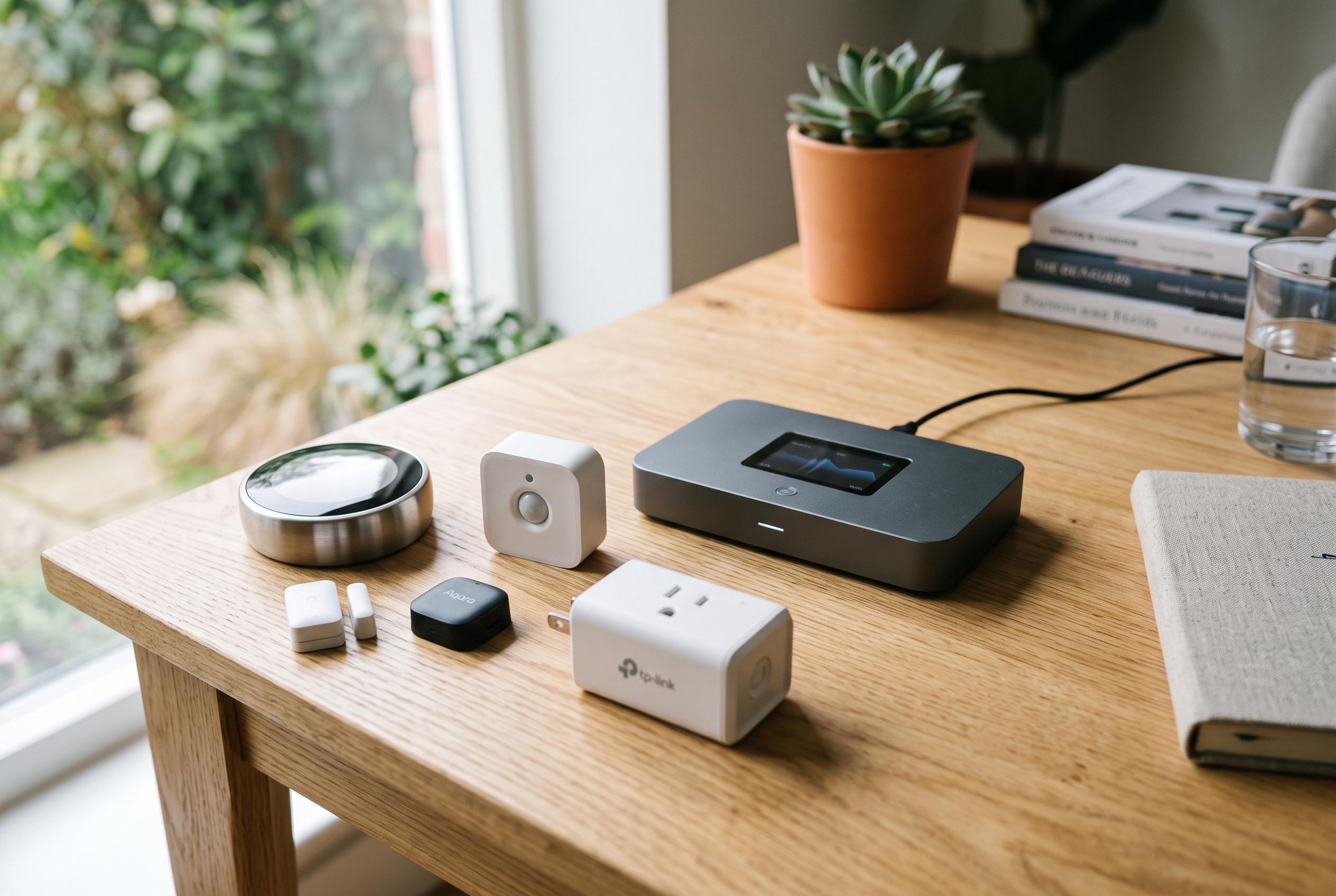

A practical approach to local energy data collection emphasises device independence, security, and simplicity, ensuring reliable operation amidst hardware variations and new device integrations.
Local energy monitoring often begins with a narrow goal: display a live power figure in a dashboard. In practice, the harder task is building a system that can keep working when hardware changes, when a second device is added, or when the same readings must feed both a browser view and another service. The most durable approach is to keep device-specific logic at the edge, convert everything into one shared energy model, and let every downstream tool consume that model rather than the original protocol.
That separation matters because meters and inverters rarely speak the same language. One device may expose Modbus registers, another a vendor HTTP interface, and another a local RPC endpoint. Register layouts, byte order, phase handling, import and export counters, firmware quirks and timeout behaviour all belong inside the adapter layer. According to the project material, the gateway’s job is not to understand every feature on every device, but to answer a narrower question: what is the current electrical state, and can it be trusted?
Normalisation also needs to cover direction and units with care. Import and export are not interchangeable, and a negative power value should not be left for a chart to interpret. The article argues that active power, cumulative import energy and cumulative export energy should remain separate fields, with clear rules documented in fixtures. That is important because a visually neat dashboard can still misrepresent household flow if it silently reverses grid import and export.
A practical implementation starts locally, before any cloud forwarding is enabled. The safer sequence is to connect one source, inspect the raw and normalised readings in the browser, compare the values against the device’s own interface, and only then turn on an external destination. This creates a useful fault boundary: if the local reading is wrong, the adapter is at fault; if the local reading is correct but the remote system disagrees, the transformation or upload path needs attention.
The deployment itself can stay small. The project describes a straightforward container-based service that runs on standard hardware such as a NAS, mini PC or home server. It can poll a supported source, retain a modest amount of runtime history, expose a setup page, and forward normalised records at a conservative rate. The point is to keep the first version simple enough to trust, rather than adding a message broker, a database cluster and a rules engine before the basic pipeline has proved itself.
Security needs to be treated as part of the design, not an optional extra. Energy data can reveal patterns of household behaviour, while configuration screens may expose local network addresses or upload targets. The article recommends no default password, a one-time bootstrap flow, hashed credentials, masked identifiers in logs and screenshots, and no public internet exposure by default. Containerisation helps with packaging, but it does not replace application-level authentication.
The project also makes a case for being honest about scope. Rather than claiming support for every protocol, it focuses on a small tested set of LAN devices: IAMMETER WEM3080T meters over Modbus TCP, Fronius SunSpec inverters over Modbus TCP, and Shelly Pro 3EM units through the local RPC HTTP interface. That narrower matrix makes fixtures, validation and documentation more manageable. Once the data boundary is stable, additions such as MQTT publishing, Home Assistant discovery, InfluxDB output, offline buffering and alerting become easier to add without reintroducing vendor-specific parsing into every feature.
Disclaimer: This content is intended for informational purposes only. Readers are advised to exercise their own judgement, conduct due diligence, or consult a qualified expert before acting on any information provided.