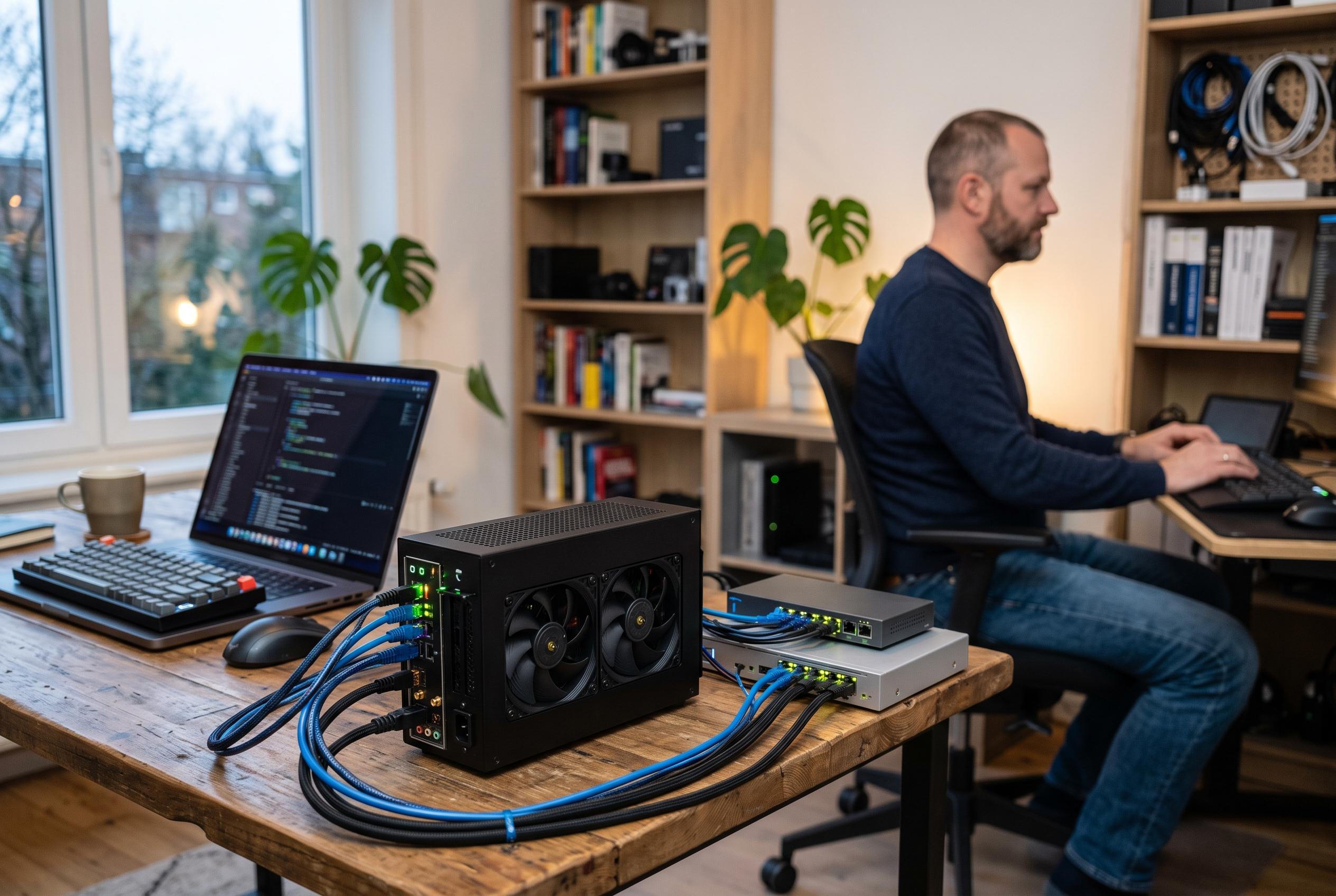

The focus in homelab AI is shifting from performance to transparency and control, as advances in hardware and software make local models practical, emphasising the importance of visibility and customisation over cloud solutions.
The case for local AI is no longer just about privacy or avoiding cloud bills. In homelab settings, the more important question is who can inspect the automation logic and who can change it. That is the argument running through the article on XDA Developers, which treats self-hosting less as a performance exercise than as a matter of control. Using Lemonade Server inside a Proxmox LXC, the writer argues that a home lab is only truly under the owner’s control when the rules themselves are visible and editable.
That shift in emphasis matters because the hardware is now capable enough to make local models practical. The setup described uses a Ryzen AI Max+ 395 system with 128GB of unified memory, a Debian 13 container template and direct access to Radeon graphics device nodes. According to the report, moving from Lemonade’s default Vulkan backend to ROCm roughly tripled throughput on a 120B model and more than tripled it on a 30B coding model, showing that software choice can make a material difference to local inference performance.
The article also highlights a limit that cloud assistants largely hide: platform permissions. Even with root access, the Proxmox API would not allow device passthrough and hardware configuration changes that had to be completed manually through shell commands. The writer presents that restriction as sensible rather than obstructive, because it reinforces the distinction between software-level orchestration and direct control over machine resources.
That broader theme is echoed in recent coverage of local-first AI tools. Tom’s Guide reported that Perplexity’s Portable Computer begins work on-device and only asks permission before sending tasks to the cloud, although it requires Nvidia hardware with 24GB of VRAM and Linux at launch. Separate comparisons from Tom’s Guide and Windows Central also note the same trade-offs the XDA piece explores: local AI usually offers better privacy, offline use and customisation, while cloud systems still tend to win on raw model quality and access to current information. The practical conclusion is clear: self-hosted AI is becoming less of a novelty, but its real value lies in transparency, not just locality.
Disclaimer: This content is intended for informational purposes only. Readers are advised to exercise their own judgement, conduct due diligence, or consult a qualified expert before acting on any information provided.