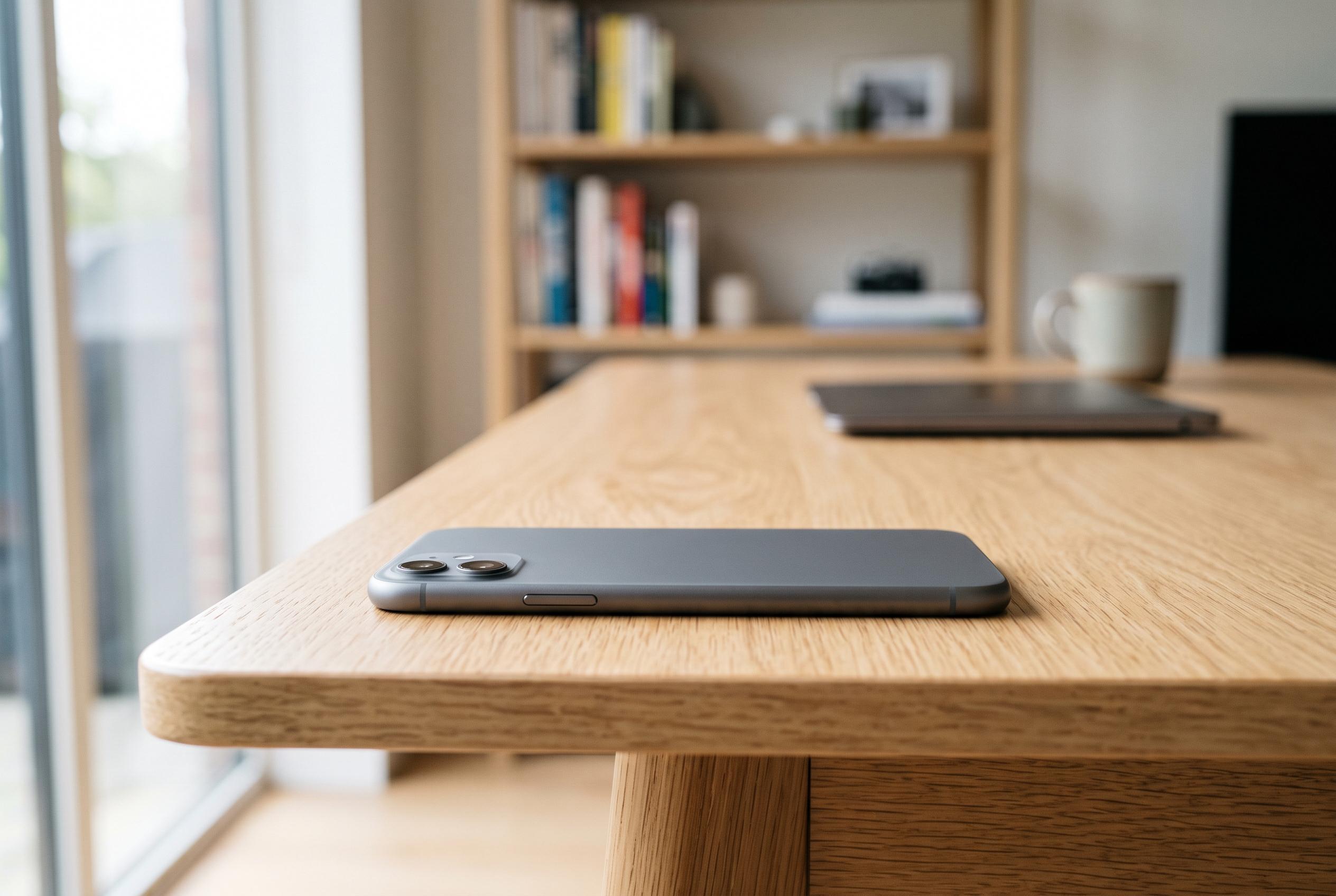

A year on, the iPhone Air remains a uniquely lightweight device prioritising feel over features, but its battery life and camera limitations highlight its trade-offs, leaving some users questioning its value compared to flagship models.
Apple’s iPhone Air remains a distinctive device nearly a year after launch, chiefly because its appeal is tied to feel rather than specifications. MacRumors videographer Dan Barbera, who has used it every day since release, says the thin chassis still makes the handset stand out in practical use: it slips easily into a pocket, works comfortably in one hand and feels notably lighter than the Pro models, while still offering a 6.5-inch OLED display.
That slim design comes with trade-offs that become more obvious over time. Battery life is the clearest limitation. Apple fitted the iPhone Air with a smaller cell than the iPhone 17 Pro models, and MacRumors’ testing last year found it lasted 12 hours and 2 minutes in continuous 5G web browsing, compared with 17 hours and 54 minutes for the iPhone 17 Pro Max. In other words, the Air can get through a day for lighter users, but heavier users may still need Apple’s external battery pack or another power bank.
Camera flexibility is another area where the Air asks users to compromise. It has a single 48MP Fusion Main camera, so owners do not get the Ultra Wide or Telephoto options available on the iPhone 17 Pro, and that also means no macro shots. MacRumors’ review noted additional reductions in hardware capability too, including a single speaker, slower USB-C data transfer and slightly lower charging speeds, all of which reinforce the sense that the device is built around thinness first and versatility second.
Pricing remains the hardest part of the iPhone Air to justify. At $999, it sits above the standard iPhone 17, which offers two rear cameras and a very similar processor, and only $100 below the three-camera iPhone 17 Pro. That positioning has long made the Air a niche choice, and reporting around Apple’s sales performance suggests demand has been weaker than the company would have hoped. For buyers who value minimal weight and slimness above all else, the Air still has a clear identity; for everyone else, the trade-offs are easier to see after a year of ownership.
Disclaimer: This content is intended for informational purposes only. Readers are advised to exercise their own judgement, conduct due diligence, or consult a qualified expert before acting on any information provided.