
As the 2026 camera showdown unfolds, the Insta360 X6 emerges as a battery-efficient alternative with superior outdoor screen performance, challenging DJI’s performance-led Osmo 360 II for creators seeking endurance and versatility.
For creators weighing a new 360-degree camera in 2026, the choice between DJI’s Osmo 360 II and Insta360’s X6 comes down to a clear split in priorities: speed and hardware flexibility on one side, endurance and workflow polish on the other. According to recent comparisons, both models target the same audience of vloggers, motovloggers and action shooters, but they approach the category in markedly different ways.
The most important divergence is in video capture. Several comparison guides note that the Osmo 360 II leads on native 8K recording at 60 frames per second, while the X6 tops out lower. That gives DJI the edge for fast action, where extra frames can make motion smoother and easier to use in post-production. By contrast, the Insta360 model is still described as a strong all-rounder, with advanced software features and a more mature mobile editing workflow.
Battery life is where the X6 earns its reputation as the endurance choice. Product comparisons consistently place it ahead of the Osmo 360 II for continuous recording time, with the X6 able to run longer in 8K capture without accessory power. That matters for all-day shoots, travel days and events where charging opportunities are limited. DJI does offer extension accessories, but the longer runtime is not built into the base camera in the same way.
Storage and field practicality also favour DJI in some scenarios. Reviews highlight that the Osmo 360 II includes much more built-in storage than the X6, reducing immediate dependence on a microSD card for short shoots. That makes it easier to start recording quickly, especially for travel or street work. Insta360 still supports expansion storage, but its smaller internal capacity means it is less forgiving if users forget a card.
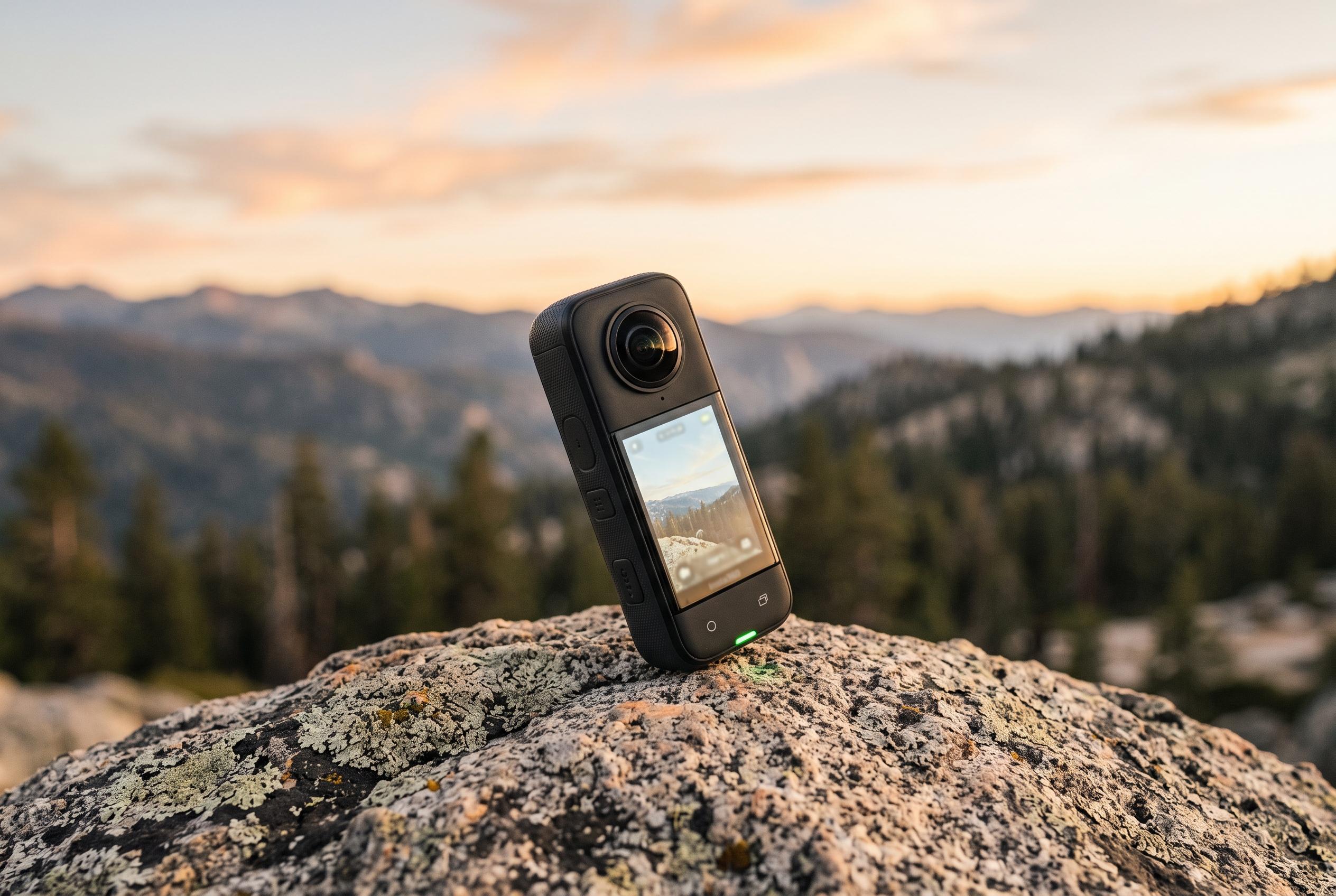
Screen quality and outdoor visibility tilt the other way. Comparisons say the X6 offers the brighter display, which is useful when checking framing in strong sunlight. For riders and outdoor creators, that can be more valuable than raw specification gains. The DJI screen is still functional, but the Insta360 display appears to be the more usable option in harsh lighting.
Audio and mounting workflows further reinforce the split. Third-party guides say Insta360 has tailored its software more directly towards motorcycle content, while DJI leans on tighter integration with its own microphone ecosystem. That gives the Osmo 360 II an advantage for users already invested in DJI accessories, but the X6 remains the more obviously purpose-built choice for motovloggers who want easier on-camera monitoring and a simpler field setup.
Availability adds another layer. Reports from the US market indicate that, at least in some regions, only the Insta360 X6 is being sold there, which makes purchase decisions depend not just on specification but also on local retail access. In markets where both are available, the final call is less about which camera is universally better and more about which shooting style it serves. The Osmo 360 II is the more performance-led model. The X6 is the more battery-conscious, software-heavy option.
Disclaimer: This content is intended for informational purposes only. Readers are advised to exercise their own judgement, conduct due diligence, or consult a qualified expert before acting on any information provided.