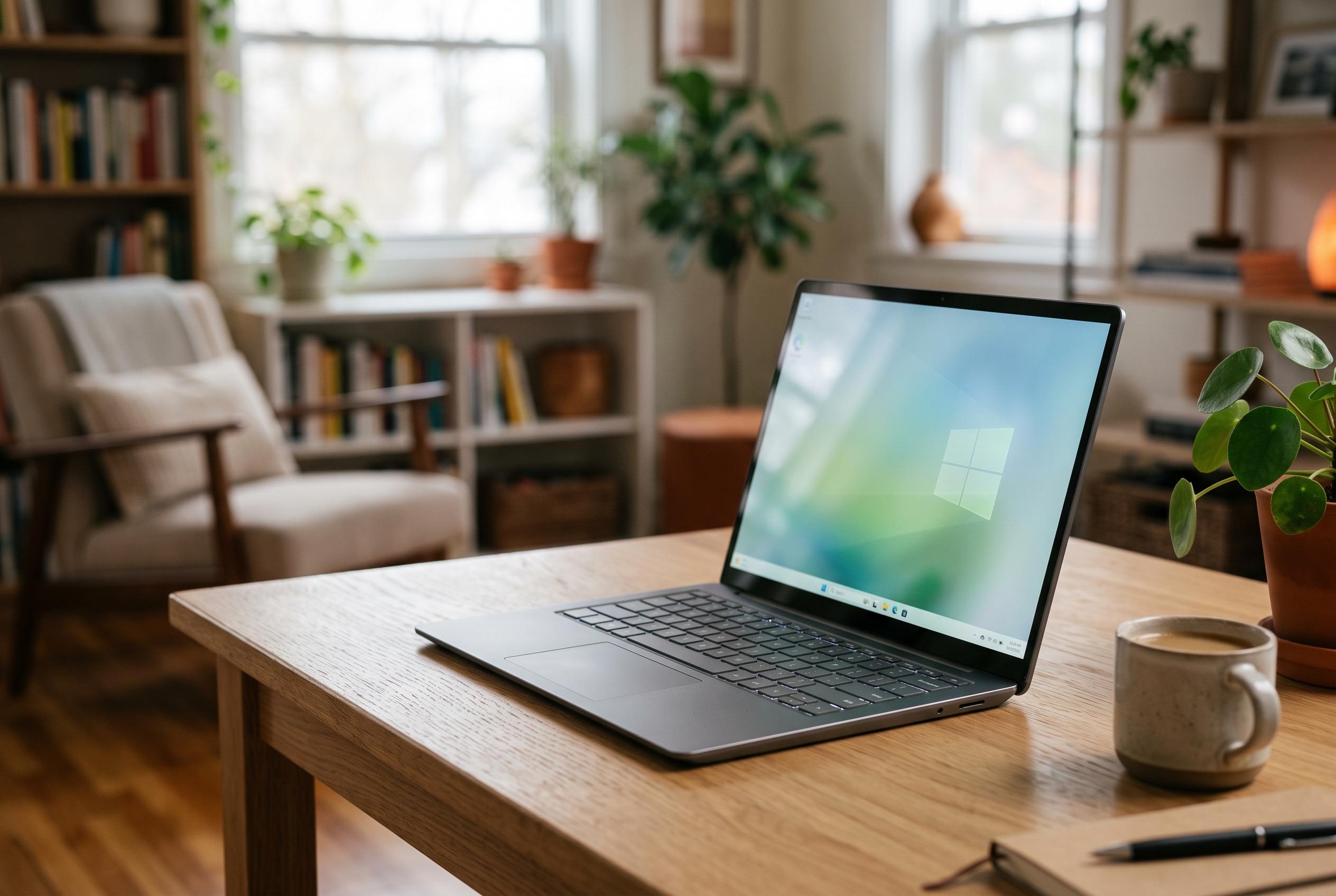

As the Windows laptop market evolves, consumer choices are shifting towards devices that balance performance with battery life, design, and everyday utility, driven by advancements like AI integration and new chip architectures.
Buying a Windows laptop for work in 2026 is less about raw novelty and more about efficiency. According to Gizmochina, the market has moved beyond the early uncertainty around AI PCs, and Copilot+ machines now offer a more mature set of benefits: cooler operation, longer battery life and better handling of background tasks without draining power. The larger shift is the contest between Intel’s Core Ultra Series 3, codenamed Panther Lake, and Qualcomm’s Snapdragon X2 Elite, both of which are designed around strong performance per watt. That matters for anyone who spends long days away from a desk and needs a machine that can stay responsive without living on a charger.
For most buyers, the useful question is not whether a laptop is labelled “AI-ready”, but whether it fits everyday work habits. A Windows Central tester says the features he will not compromise on are an OLED display, a light 14-inch chassis, at least 512GB of storage, USB-A for older accessories, all-day battery life, a backlit keyboard and USB-C charging. That reflects a broader industry trend: premium Windows laptops are increasingly capable, but the best models are the ones that still keep practical basics intact.
Tom’s Guide’s 2026 15-inch laptop guide reinforces that balance between performance, display quality and endurance. Its top-rated machines range from Apple’s MacBook Air M5 to Lenovo’s IdeaPad Slim 3i Gen 11, Yoga Pro 7i Gen 11 Aura Edition and IdeaPad Slim 5x, each aimed at a different mix of value, portability and premium features. The point for Windows buyers is clear: the strongest productivity machines are no longer defined only by processor speed, but by how well they combine battery life, screen quality and price.
That same pattern appears in higher-end systems. Tom’s Guide’s Computing Awards highlighted the Dell XPS 13, Asus Zenbook Duo and Acer Predator Helios 18 AI as standout devices, suggesting that design innovation is now just as important as benchmark numbers. At the professional extreme, TechRadar points to the ThinkPad P16 Gen 3 as a workstation for engineering, CAD and 3D rendering, with desktop-class components, a high-brightness 4K-class display and Windows 11 Pro. It is far beyond what most office buyers need, but it shows how wide the Windows laptop market has become.
Pricing remains the main constraint. Windows Central notes that component shortages are still pushing some laptop prices higher, even as sales occasionally soften the blow. That makes category choice important. For a travelling worker, a 14-inch ultralight with strong battery life may be the sensible option. For power users, a larger machine such as the Lenovo Yoga Pro 7i or a mobile workstation may be justified. For most people, though, the best Windows laptop in 2026 is likely the one that offers the right mix of screen, storage, ports and battery life, rather than the highest-spec chip on the shelf.
Disclaimer: This content is intended for informational purposes only. Readers are advised to exercise their own judgement, conduct due diligence, or consult a qualified expert before acting on any information provided.