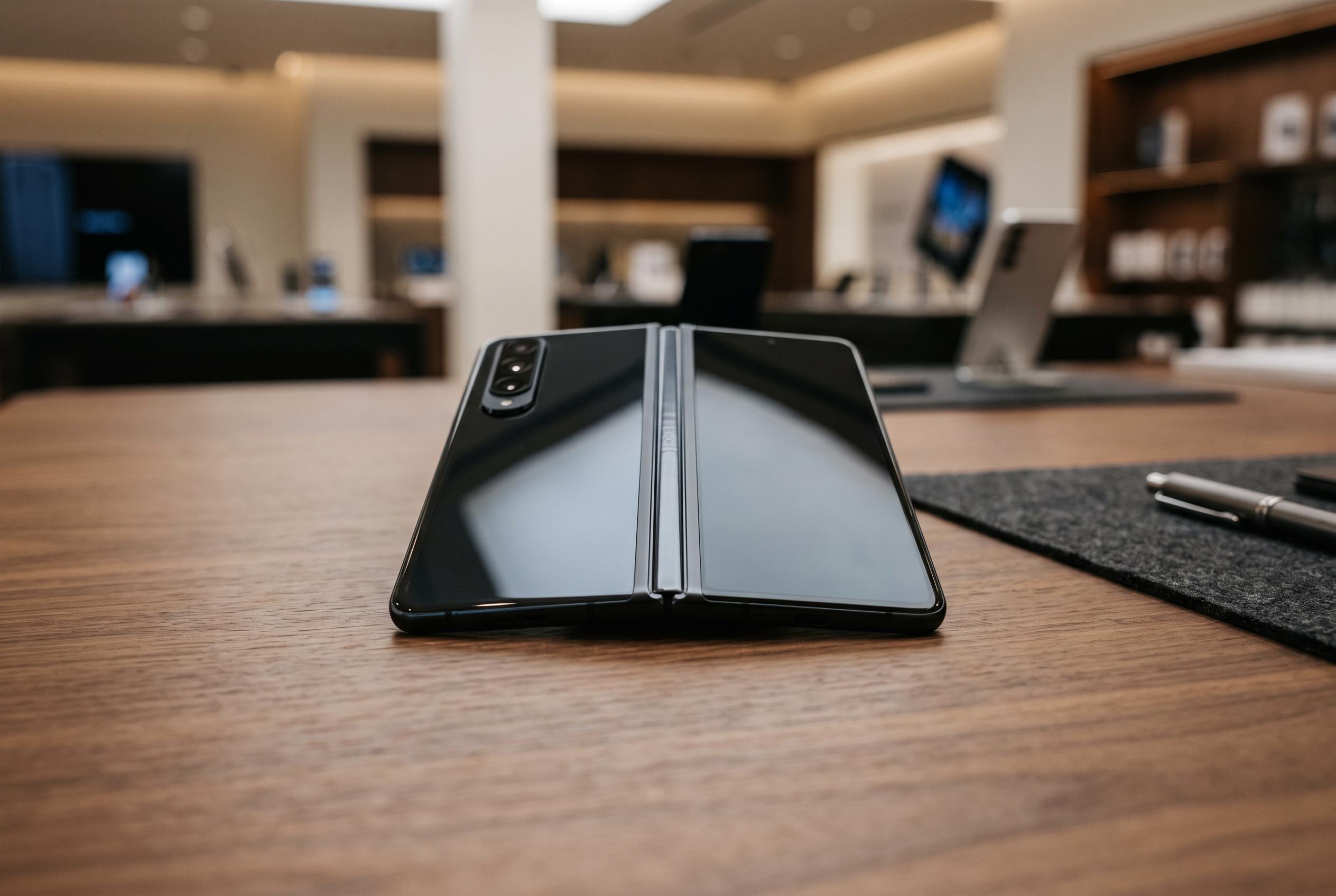

Xiaomi set to unveil the 18 Fold, featuring a unique ‘mid-fold’ layout and advanced hardware, signalling a disruptive shift in foldable smartphone design ahead of rival Samsung’s Galaxy Z Fold 8.
Xiaomi is preparing to unveil the 18 Fold on 7 September, and the company is already framing it as more than another entrant in the expanding foldable category. According to the material released ahead of launch, the device uses what Xiaomi calls a “mid-fold” layout built around a 2:1 aspect ratio, which the company says is intended to feel closer to opening a book or magazine than handling a conventional phone. That pitch comes as rival foldables, including Samsung’s latest Galaxy Z Fold 8, have sharpened interest in the format.
The design choice is unusual because Xiaomi says the same 2:1 proportion is used on both the 5.38-inch external display and the 7.58-inch inner screen. In practice, that should make the device more consistent to use whether it is folded or open. Lei Jun, Xiaomi’s chief executive, has said the layout is meant to support a more natural reading experience, while also making video playback and office documents easier to view without cropping or constant zooming.
Xiaomi is also stressing hardware refinements that go beyond the screen shape. The 18 Fold uses a flat aerospace-grade aluminium chassis, narrower display borders and rounded edges, while the rear camera bar is arranged horizontally rather than in a square module. Xiaomi says the device carries three Leica-tuned sensors. Notebookcheck reports that those cameras include a 200-megapixel main sensor, a 50-megapixel 3.5x periscope zoom lens and a 50-megapixel ultra-wide lens, all using Leica’s Summilux branding.
Durability and power appear to be central to the launch story. Xiaomi says the phone can survive drops from 1.2 metres and offers markedly better resistance to sharp impacts than the MIX Fold 4. Notebookcheck also reports 67W wired charging and 50W wireless charging, alongside a 6,000mAh battery and Xiaomi’s in-house Xring O3 chipset. The company says the handset will be the first to use LPDDR6 memory, with speeds of up to 12,800Mbps, and claims the battery’s 20% silicon content has helped it reach 920Wh/L in energy density. Full pricing and market availability are still to come, and Xiaomi has not yet said whether the device will reach Spain.
Disclaimer: This content is intended for informational purposes only. Readers are advised to exercise their own judgement, conduct due diligence, or consult a qualified expert before acting on any information provided.