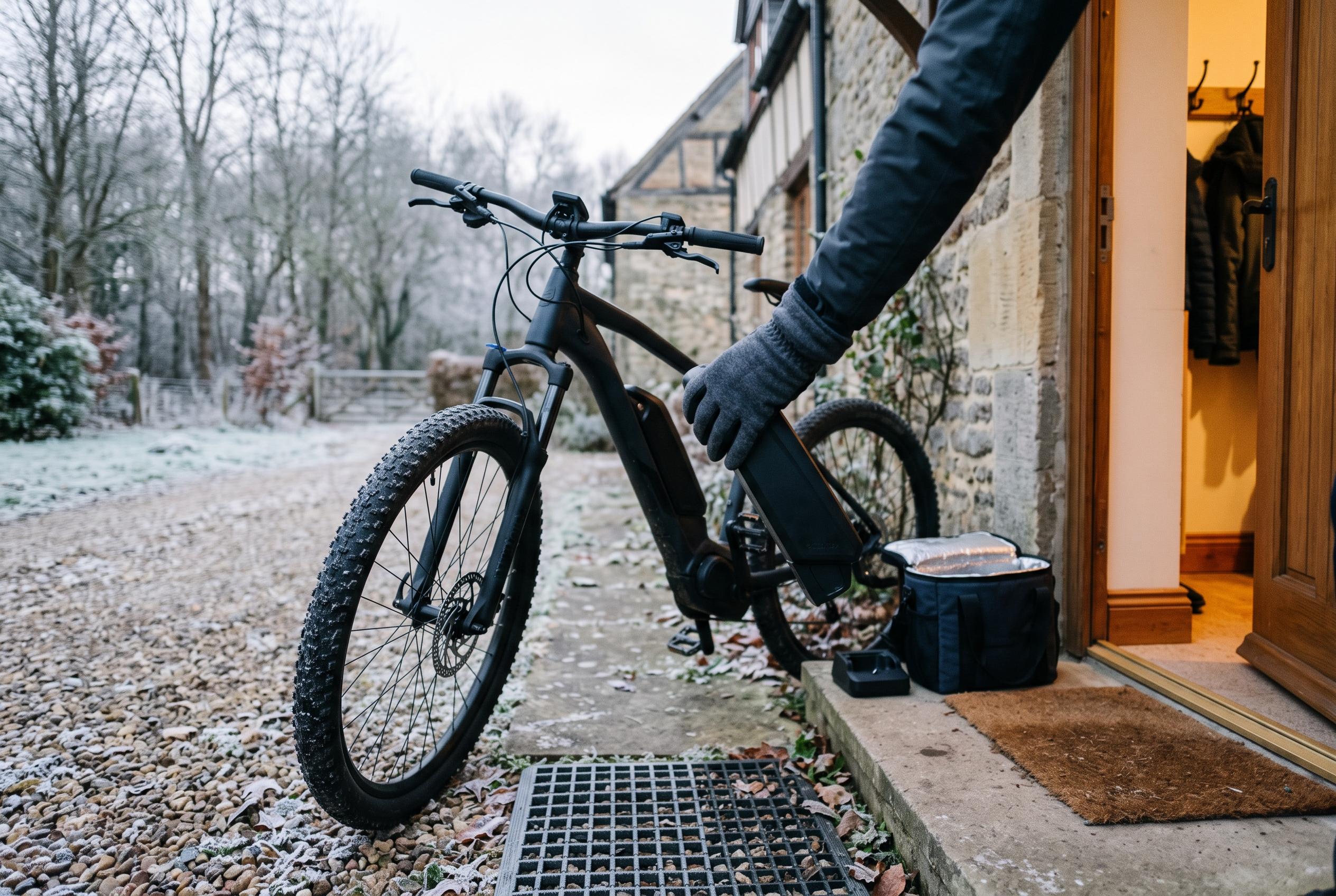

Expert guidance reveals essential tips for maintaining e-bike batteries in cold weather, ensuring optimal performance and longevity through the autumn and winter months.
E-bikes are not just a fair-weather option. According to Stiftung Warentest, they can be used through autumn and winter, but the lithium-ion battery needs more care once temperatures fall. Cold weather can reduce performance, shorten range and, over time, affect service life. Practical winter guidance from battery specialists broadly agrees that heat management, partial charging and proper storage matter most.
The simplest precaution is to keep the battery warm. If the bike is stored in an unheated garage or shed, the battery should ideally be removed and kept indoors at roughly 10C to 20C, with several guides recommending a dry room and a charge level of around 40 to 60 per cent for storage. For bikes with a fixed battery, an insulating cover can help reduce cold stress. Stiftung Warentest says the battery should be reinserted only shortly before riding, because a warm pack is better able to maintain usable output once the ride begins.
Charging is another point of risk. A battery that has been left in frost should first be allowed to warm above freezing, ideally to around 10C to 15C, before it is connected to a charger. Modern e-bike batteries do not suffer from the old memory effect, so partial top-ups are fine; in fact, repeatedly running the pack completely flat can shorten its life. Several winter-care guides also advise against storing a battery fully empty or fully charged, because both extremes put more strain on the cells.
How long the battery lasts depends on both use and age. Manufacturers often quote 500 to 1,000 full charge cycles, but actual mileage varies with temperature, charging habits and storage conditions. Stiftung Warentest notes that even with cautious use, a pack can still age on the calendar: cells lose capacity over time regardless of use, and after about five years a replacement may be needed. Keeping a spare battery is usually not economical, as unused packs also deteriorate and replacement units can cost several hundred euros, depending on the model.
There are also practical points for riding and transport. If the bike is carried by car, the battery should be removed so moisture cannot enter the housing and damage the electronics, and the contacts on the frame should be covered. In wet or icy conditions, a low assistance setting can reduce wheel spin on take-off, while the extra weight of an e-bike means braking distances may be longer and the machine can slide more easily in corners. Autumn may also be a good time to buy, as dealers clear stock; Stiftung Warentest says urban and city models can suit commuting well, while leasing may be attractive for temporary use.
Disclaimer: This content is intended for informational purposes only. Readers are advised to exercise their own judgement, conduct due diligence, or consult a qualified expert before acting on any information provided.