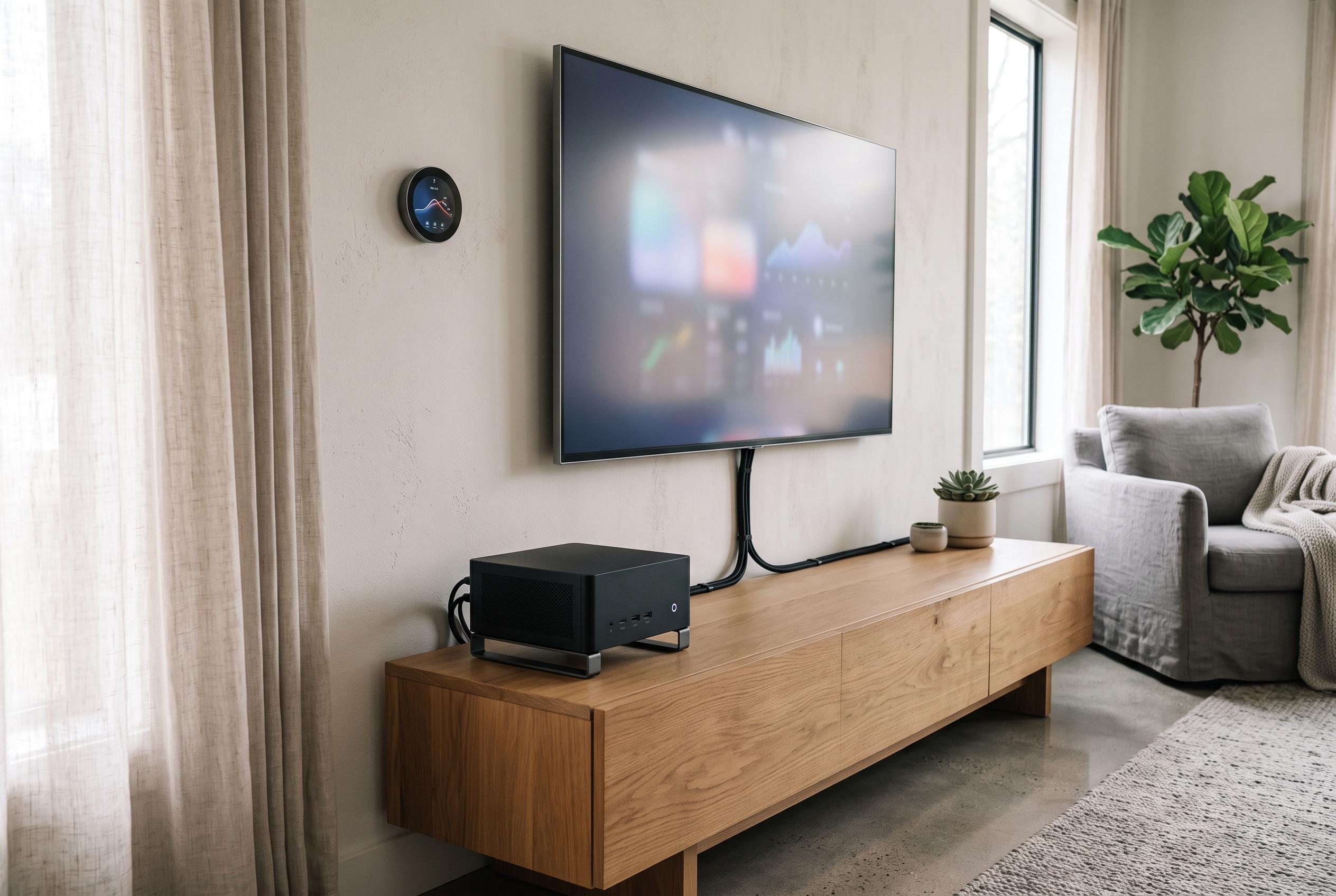

Home Assistant’s decentralised approach, running locally on in-home hardware, offers faster responses and enhanced privacy, challenging cloud-dependent systems and marking a shift towards self-hosted smart home ecosystems.
Many smart home systems still depend on third-party cloud services, which can become a weakness when broadband fails or a vendor changes direction. Home Assistant offers a different model: it runs locally, on hardware inside the home, and is designed to keep core automation available even when the internet is not. That local-first approach appeals to users who want faster response times, fewer points of failure and less dependence on outside services.
At its core, Home Assistant acts as a central control layer for lights, heating, cameras, locks and other connected devices. Instead of moving between separate manufacturer apps, users can manage everything from one dashboard and build automations that reflect how they actually use their home. Because commands are handled on local hardware, actions are typically quicker than cloud-mediated alternatives, with less delay between pressing a control and seeing the result.
The platform’s wider appeal is not just speed. According to the article, it also reduces exposure to service shutdowns and API changes that can leave otherwise functional devices stranded. Privacy is another major factor: with Home Assistant, data remains within the home unless the user chooses otherwise. That matters in a market where some commercial hubs collect detailed usage data to build behavioural profiles.
Setup is less intimidating than many expect. The article points to the Home Assistant Green as the simplest route, but says the software can also run on a mini-PC, a Raspberry Pi or a virtual machine. Installation is assisted by guides on the project’s website, and once the system is live, users can connect by browser and let the platform discover compatible devices on the local network.
The broader open-source ecosystem around Home Assistant reinforces that local control is becoming a serious design principle, not a niche preference. CasaBoard offers an open dashboard builder that stays on private hardware, while Gladys Assistant takes a similar self-hosted approach. Other projects, such as Fulloch, Nexum, Candor House and HomeOps, show the same push towards devices and software that process data on-site rather than in the cloud. Taken together, they underline a clear shift: for many households, the most practical smart home is the one that remains usable, private and responsive without relying on a remote server.
Disclaimer: This content is intended for informational purposes only. Readers are advised to exercise their own judgement, conduct due diligence, or consult a qualified expert before acting on any information provided.