
A month with Samsung’s Galaxy Z Fold 8 reveals that its real advantage lies not in the hinge, but in how the large screen enhances multitasking and user experience , with users adapting their habits to maximise its potential.
After a month with Samsung’s Galaxy Z Fold 8, one thing became clear: the biggest loss on moving back to a conventional handset was not the folding mechanism itself, but the way the larger screen changed daily use. According to Android Police, the reviewer had settled into using the cover display as the default screen and only unfolded the device when the extra space was genuinely useful, so the appeal lay less in the novelty of the hinge than in the layout it enabled.
That assessment is easier to understand when set against the wider handset design. SamMobile says the Fold 8 has a wider outer display, a lighter build and a tablet-like inner panel, while TechRadar also points to the quality of the main and cover screens. The result is a device that is meant to behave like two phones in one, with the outer display handling quick tasks and the inner panel reserved for more expansive work.
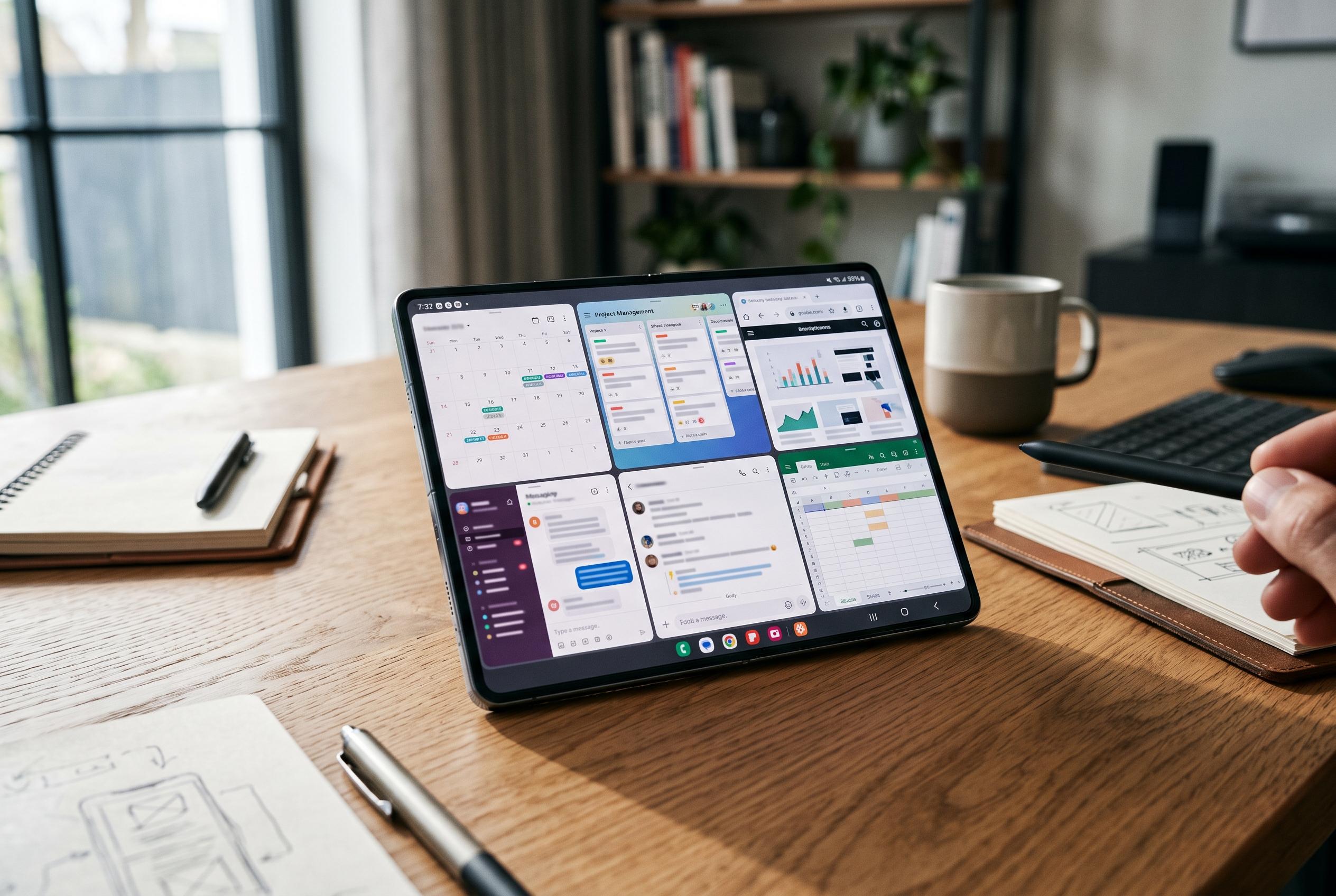
The real advantage, the Android Police piece argues, is screen organisation. A foldable allows a far denser home-screen setup, because the larger canvas effectively doubles what can be shown at once. The reviewer used the first screen for core apps, the second for widgets, the third for work and communications, and the fourth for entertainment. On a standard phone, the same widgets and shortcuts now feel intrusive because they consume too much of the available space.
That matters because Samsung’s software is built to support more ambitious multitasking. Samsung’s own support material explains how Galaxy Z Fold users can run apps side by side, open floating windows through Pop-up view, and use Galaxy AI’s Now nudge for quicker actions. SamMobile and Gadget Hacks also note gesture-based shortcuts for split screen and pop-up modes, plus the option of a three-app 90:10 split. In practice, that means the Fold is not just a larger phone, but a device designed around switching between tasks with less friction.
Even so, the trade-off remains clear. Samsung’s latest foldable is powerful, expensive and highly capable, but it also asks users to adapt their habits around unfolding the device to get the full benefit. For the reviewer, that workflow was worth it when watching video or gaming, but the daily convenience of a well-arranged, spacious home screen was the feature most missed after returning to a normal smartphone.
Disclaimer: This content is intended for informational purposes only. Readers are advised to exercise their own judgement, conduct due diligence, or consult a qualified expert before acting on any information provided.