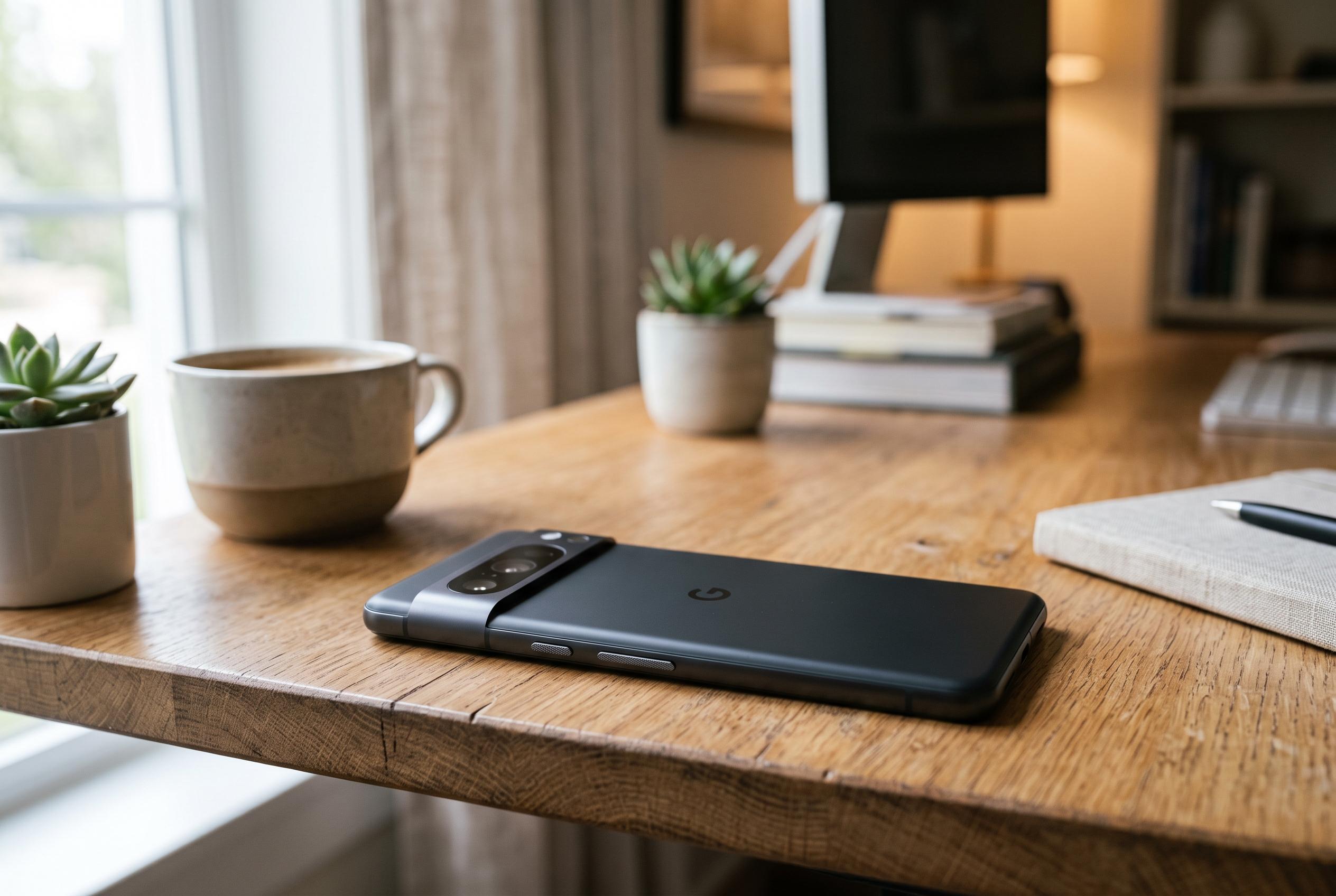

The Google Pixel 11 prioritises subtle upgrades like enhanced camera and AI features over a dramatic redesign, making it a compelling choice for software enthusiasts despite modest hardware improvements and a higher price.
Google’s Pixel 11 is the kind of handset that makes the strongest case for restraint. According to the review, it keeps the basic shape, size and display formula of the Pixel 10, but trims the camera hump, reduces weight and adds modest but useful refinements rather than chasing a dramatic redesign. At 197g, it is lighter than its predecessor, and the slimmer rear bar also makes the phone sit more cleanly on a desk. That matters more in daily use than another round of cosmetic theatrics.
The display remains one of the phone’s safer bets. It is still a 6.3-inch Actua OLED panel with a 60Hz to 120Hz refresh range and a 3,000-nit peak brightness claim, which keeps it firmly in flagship territory without moving the base model into Pro-style territory. Android Central’s 2026 Pixel buying guide places the Pixel 11 below the Pro and Pro XL models, but still as a strong all-round option in Google’s line-up, with the standard model positioned as the more accessible flagship. That positioning is central to the problem: at $899, it is no longer easy to describe it as the entry-level Pixel in the old sense.
Tensor G6 is the other major talking point, and the review suggests it is better judged for responsiveness than for chart-topping raw power. Google claims faster browsing, quicker app launches and a substantial jump in on-device AI throughput, while third-party testing cited in the review shows only a moderate CPU gain over the Pixel 10 and little improvement in graphics performance. That leaves the Pixel 11 feeling very quick in ordinary use, but still behind the fastest Snapdragon and Apple rivals, particularly for gaming and sustained heavy workloads. Android Central also notes the absence of a vapour chamber, which reinforces the sense that Google is prioritising efficiency and AI work over brute-force performance.
Software remains the Pixel’s clearest advantage. Android 17, seven years of updates and Google’s continuing Gemini integration give the phone a level of polish that competitors still struggle to match. The review highlights several genuinely practical AI features, including a more capable voice-to-text tool, contextual suggestions and a camera mode that can extract usable stills from video. Tom’s Guide also singled out Magic Capture as the most persuasive new feature, describing it as a useful way to save fleeting moments without relying on burst shooting or later frame hunting. Even so, the review warns that some of the headline Gemini functions are geographically restricted, which weakens the appeal of Google’s AI pitch outside supported markets.
The camera system is where the Pixel 11 makes its most convincing case for itself. The main sensor has been enlarged, which should help low-light performance, while the familiar 5x telephoto remains a key reason the standard model no longer feels hobbled. The review says Night Sight is quicker, zoom is more practical than the hardware alone would suggest, and the phone still delivers the clean, natural results that have defined recent Pixels. Android Central’s review adds that the camera tuning produces warmer tones than before, but it still treats the base model as a strong photographic phone for people who want reliable results without Pro-level complexity.
Battery and charging see smaller but still meaningful progress. The 4,985mAh cell is only fractionally larger than before, but the phone now supports 25W Qi2.2 wireless charging through Pixelsnap, which is a more visible daily upgrade than the tiny capacity increase. Wired charging remains less impressive, and the review notes that Google still ships the phone without a charger. That is now a familiar irritation rather than a surprise, but it does not become more defensible with repetition.
Taken together, the Pixel 11 sounds less like a radical new model and more like a careful correction. It is better in the places that matter most: camera quality, wireless charging, software support and general refinement. Yet the review’s main conclusion remains hard to dispute. Pixel 10 owners have little reason to rush, especially when some of the new AI features are not universally available and the price has climbed. For anyone coming from an older Pixel, or for buyers who value Google’s software over benchmark supremacy, it still looks like a very good Android phone. It is simply not the kind of upgrade that makes last year’s handset feel obsolete.
Disclaimer: This content is intended for informational purposes only. Readers are advised to exercise their own judgement, conduct due diligence, or consult a qualified expert before acting on any information provided.