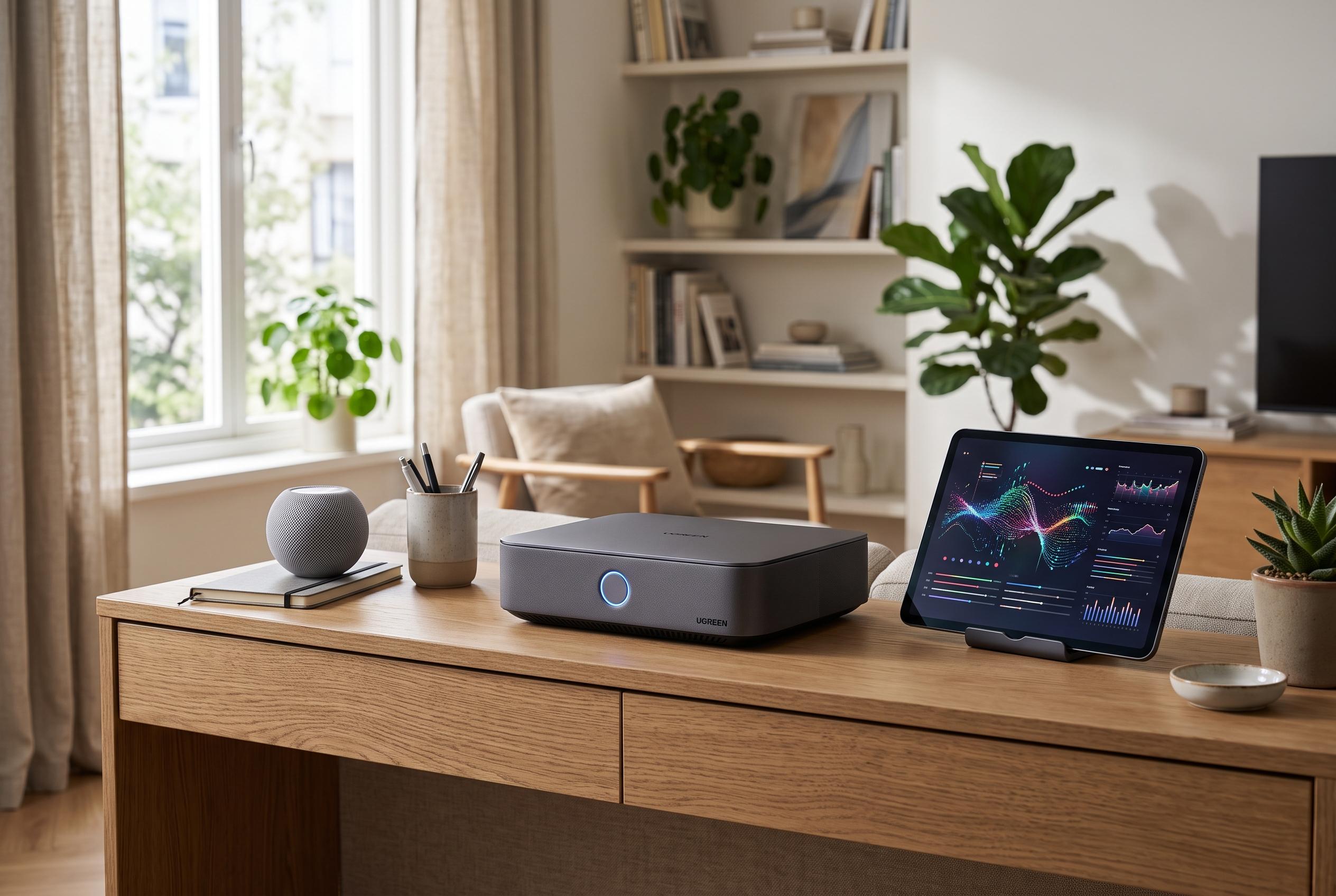

Ugreen ventures beyond cables into the smart home realm with HomeAgent, a local AI hub promising enhanced privacy and independence from cloud services, but at a premium price and with some industry support limitations.
Ugreen has moved from cables and storage hardware into a far more ambitious role: the control centre for the smart home. According to reports from Forkast, 9to5Google and Forbes, the company has unveiled HomeAgent, a local AI platform designed to keep device control, data processing and security functions inside the home rather than pushing them through cloud services. The pitch is straightforward: reduce dependence on subscriptions and improve privacy by doing the work on the device itself.
That promise comes with a steep bill. Forkast reported three pricing tiers for the new lineup, beginning with the HomeAgent HA100 at an early-bird price of $899 before rising to $1,799, followed by the HA100 Pro at $2,999 initially and $5,999 at retail. At the top end sits the MasterAgent MA100, which starts at $10,000 and is expected to reach $20,000. Ugreen’s argument is that the upfront cost replaces the ongoing expense of cloud fees, but that case is likely to be tested by buyers who are weighing value against convenience.
Technically, the company is positioning the system as more than a smart home hub. Forbes said the HomeAgent combines local AI processing, storage, camera support and smart home control in a single platform, while Tom’s Guide reported that Ugreen is also introducing a voice assistant called Uliya. The emphasis is on on-device operation, with the aim of handling automation, notifications and device interaction without sending data to external servers. That approach fits a wider industry shift towards local processing, which is being framed as both a privacy feature and a hedge against service shutdowns or internet outages.
Even so, there are reasons for caution. Forkast noted that Ugreen only showed one working prototype, and that some of the more advanced functions, including voice-based rule creation, were not demonstrated. It also reported a notable omission: there is no Home Assistant support, despite the system being aimed at the local-first smart home audience. That contrast matters because Home Assistant has become a reference point for enthusiasts who want open, flexible and fully local control, and guides published by Marius Hosting show that Ugreen NAS devices are already used by some owners to run it separately. Ugreen’s closed approach may appeal to buyers seeking an integrated appliance, but it could also limit the audience for a product that is trying to justify a premium price by promising freedom from the cloud.
Disclaimer: This content is intended for informational purposes only. Readers are advised to exercise their own judgement, conduct due diligence, or consult a qualified expert before acting on any information provided.