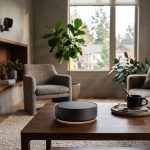
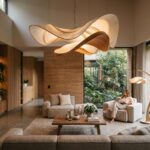
In 2027, lighting design is evolving towards layered, sculptural, and wellness-oriented solutions that prioritise atmosphere, flexibility, and sustainability within homes.
Lighting in 2027 is moving away from the single central fitting and towards a more deliberate arrangement of sources across a room. Designers are planning illumination in layers, using lower-level lamps, concealed strips and architectural details to create softer transitions between activity and rest. The result is less about brute brightness and more about atmosphere, flexibility and control.
One clear direction is the growing importance of sculptural fixtures. Chandeliers, pendants and floor lamps are increasingly treated as objects in their own right, not just as equipment. Livingetc has identified this as part of a wider move towards expressive forms, including oversized pieces, curved silhouettes and materials such as alabaster and glass. Other coverage points to pastel-tinted lighting, aged brass and textured ceramics as a way to add colour without making a room feel excessive.
At the same time, lighting is becoming more integrated into the structure of a home. Concealed cove lighting, illuminated shelving and recessed architectural systems are being used to make the source itself less visible while giving surfaces more depth. This shift allows designers to place light exactly where it is needed, whether that means a wash across a wall, a glow beneath cabinetry or a narrow track that can support several fixture types.
The wellness angle is also becoming more central. Human-centric lighting, with tunable white and warmer evening settings, is being used to support daily routines and circadian rhythm. IKEA’s updated VARMBLIXT lamp is one sign of the direction of travel: decorative lighting is now expected to offer colour change, dimming and app-based control as standard rather than as a specialist extra. The broader trend is towards systems that feel calm and intuitive rather than technically intrusive.
Natural materials continue to matter, but the language around them is broadening. Designers are not only using wood, stone and woven fibres, but also drawing on neoclassical references, terracotta tones and softer, more organic outlines. That fits a broader desire for interiors that feel warmer and less mechanical. Lampshades, too, are regaining status as visible design elements, with pleated linen, cotton and velvet helping to turn light into texture as well as illumination.
Flexibility is another defining feature of the year ahead. Portable rechargeable lamps are moving from restaurants into kitchens, bedrooms and terraces, where they can be repositioned as needed. Modular lighting systems are following the same logic, allowing pendants and directional heads to be moved as furniture layouts change. That makes lighting easier to adapt in open-plan homes, where one room may need to serve several functions across the day.
Technology is becoming quieter, not louder. Smart lighting is increasingly expected to work through familiar controls, scene settings and sensors rather than app-heavy routines. At the same time, sustainability is becoming a practical design issue. The industry is paying more attention to serviceable components, replaceable LED modules and longer-lasting fixtures, which means a well-made fitting should be able to outlive more than one generation of electronics.
Disclaimer: This content is intended for informational purposes only. Readers are advised to exercise their own judgement, conduct due diligence, or consult a qualified expert before acting on any information provided.