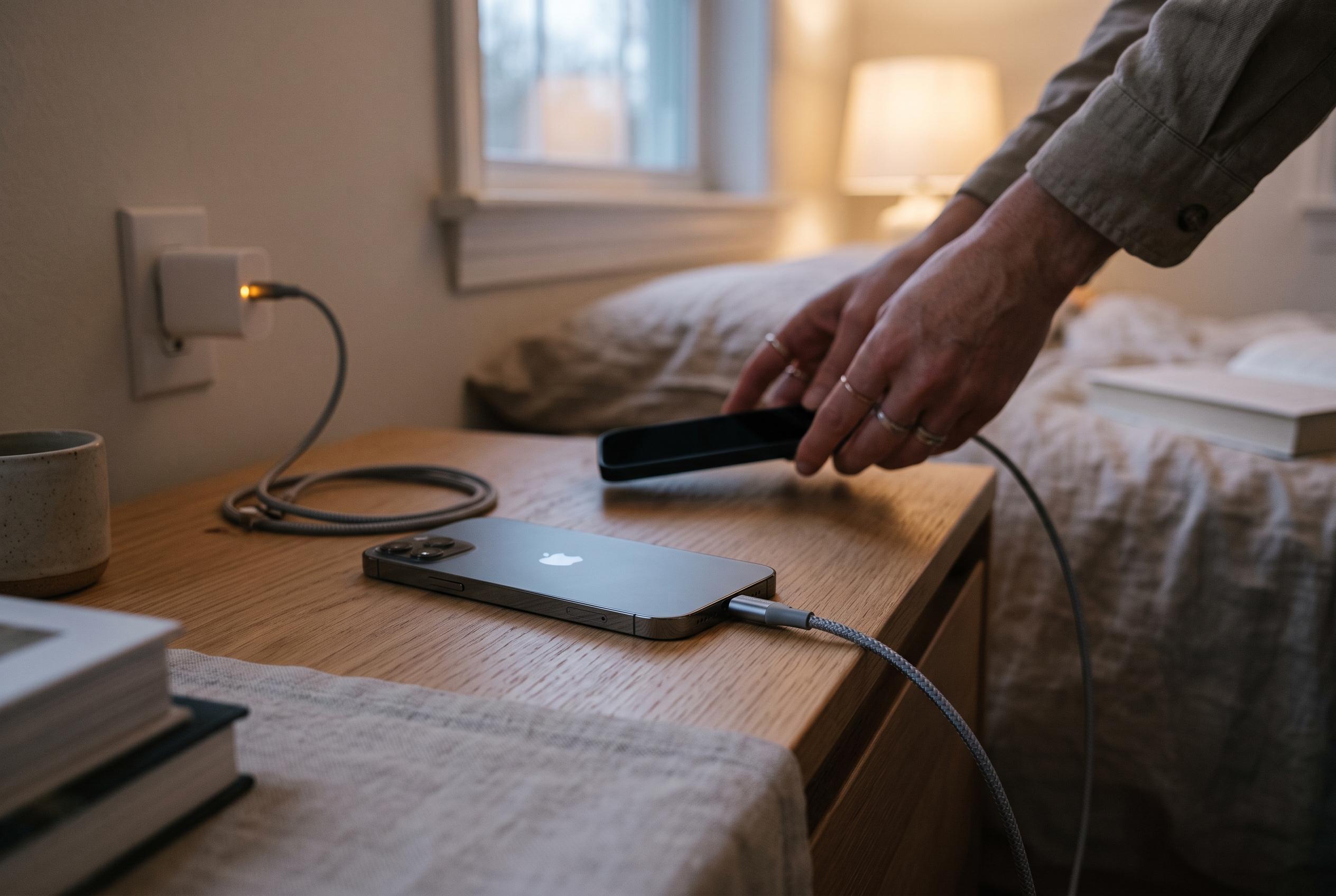

Understanding wattage, cable quality, and usage habits can significantly improve your phone’s charging speed and battery longevity, even with the latest tech advancements in 2026.
Choosing the right charging setup still makes a practical difference in 2026. The most useful figures are not hidden in technical fine print: they are the charger’s wattage, the cable’s actual rating and the battery’s real capacity. Together, these determine how quickly a phone returns to a usable level and how much stress the battery will face over time. The key point is simple: the number printed on the box only matters if the phone, charger and cable can all negotiate it properly.
Wattage is the first figure worth checking. It indicates how much power a charger can supply and how much a handset can accept. Many premium phones now sit around the 45W mark, while some go higher, but a device will only draw up to its own limit. A 100W charger will not force a 45W phone to charge faster than the handset allows. That is standard behaviour under USB Power Delivery, where the device and charger agree the level of power to use.
Multi-port chargers need closer reading. A unit advertised at 65W, 100W or more does not necessarily deliver that amount to each socket at once. Once several devices are connected, the charger splits power according to its internal distribution rules. That means a phone that might draw near its maximum when plugged in alone can slow down when a tablet, earbuds or laptop are added. It is not a fault; it is how shared charging systems are designed to work.
The cable matters just as much as the charger. A USB-C lead bought casually at checkout may be fine for basic charging but still be inadequate for fast charging at higher power levels. For stronger output, the cable should explicitly support the relevant standard, such as Power Delivery, and for very high wattage it should be able to handle the current safely. Guides from accessory makers such as Delta and Anker also note that charging directly from a wall socket is usually faster than using a computer port, which often supplies far less power.
Battery capacity can also be misleading if it is read in isolation. A 5,000mAh battery does not automatically guarantee longer life than a smaller one, because screen size, chipset efficiency, modem use and software all affect real-world endurance. The same applies to power banks: the headline capacity is never fully transferred to the phone, because some energy is lost in conversion and heat. In practice, many users see around four-fifths of the nominal figure.
That is why battery health is about habits as much as hardware. Modern lithium-ion cells do not need the old routine of being fully drained before recharging. In fact, consistently staying near empty or sitting at 100% for long periods can increase wear. Many manufacturers now recommend keeping charge levels roughly between 20% and 80% when possible, and several phones include optimised charging modes that hold back the final part of the charge until just before waking.
Wireless charging follows the same principle. The technology itself does not damage the battery, but heat does. Fast wired charging and wireless charging can both raise temperatures, which is why certified accessories and good ventilation matter. If a phone regularly becomes hot while charging, the sensible response is to change the charger, the cable or the charging position rather than to assume more power is better.
Disclaimer: This content is intended for informational purposes only. Readers are advised to exercise their own judgement, conduct due diligence, or consult a qualified expert before acting on any information provided.