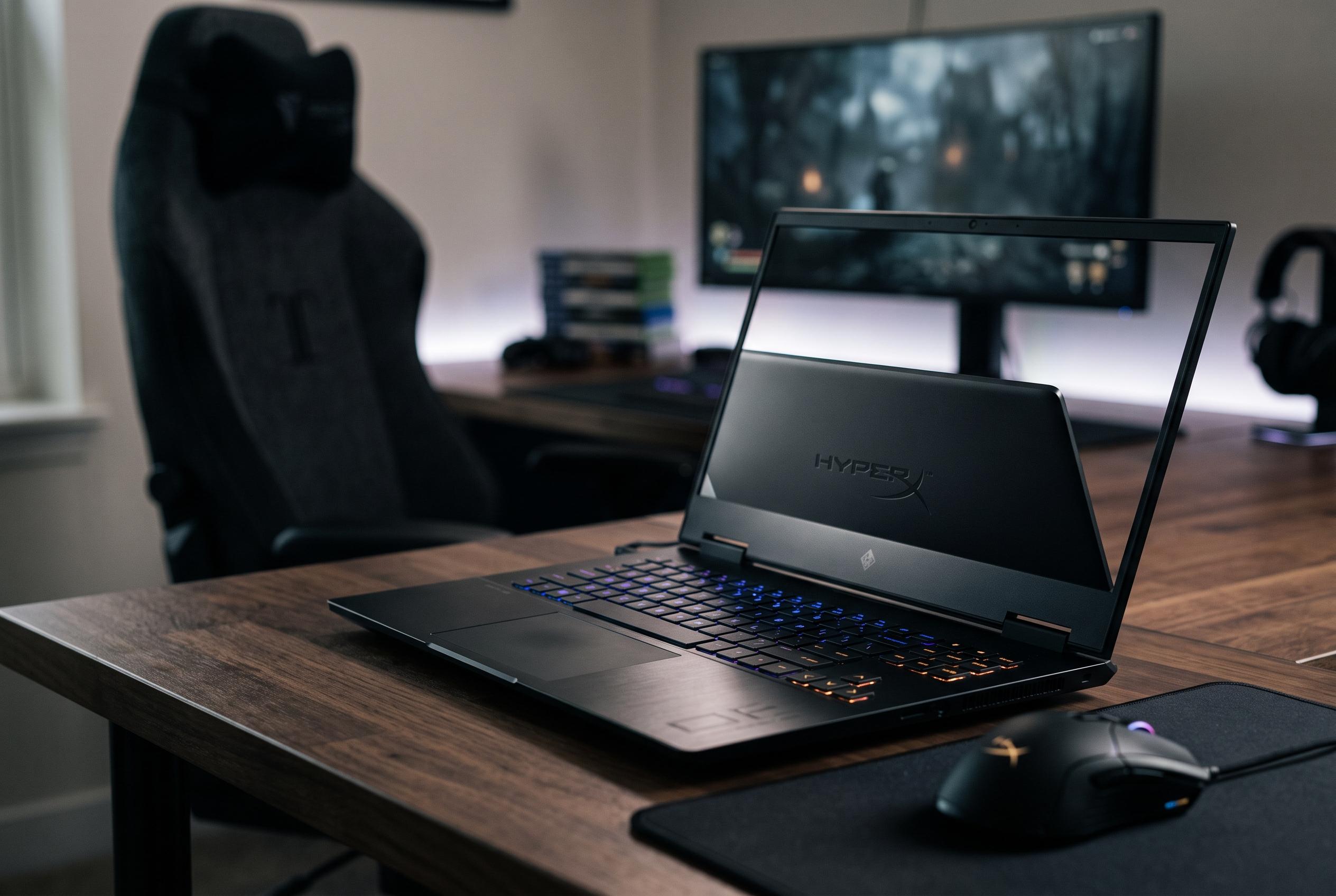

HP’s reclassification of HyperX as a family name reflects a focus on mid-range gaming machines, but market data warns of steep depreciation rates complicating resale ambitions for owners.
By 2026, HP was no longer treating HyperX as a side badge attached to OMEN hardware. Its own store was selling HyperX OMEN laptops directly, while current reviews showed the same name covering very different performance classes: an AMD-based 15-inch machine with a Ryzen 7 processor, RTX 5060 graphics, 16GB of memory and a 1TB SSD on HP’s shop site, and a higher-tier Intel review unit with a Core Ultra 9 386H, RTX 5070 graphics and a 2,880 x 1,800 OLED display. (hp.com) The practical point for buyers is that the label now denotes a family, not a single specification.
That branding shift rests on a transaction completed on 1 June 2021, when HP bought HyperX, which it described as “the gaming division of Kingston Technology Company”, for $425 million. (hp.com) At the time, Alex Cho, president of HP’s Personal Systems business, said “HyperX has built a loyal following among gamers”, underscoring that the value in the name was brand recognition and peripherals rather than a separate notebook engineering platform. (hp.com) That helps explain why a HyperX OMEN laptop is still, fundamentally, an OMEN notebook whose character is set by its processor, graphics chip, cooling design and ports.
The clearest evidence of how much the AMD-versus-Intel choice can change an OMEN comes from HP’s earlier Omen 16 split. TechSpot reported that HP sold Intel systems as the Omen 16T and AMD systems as the Omen 16Z, with the Intel branch topping out at Core i7-11800H and RTX 3060 options, while the AMD branch stretched from Ryzen 5 5600H to Ryzen 9 5900HX and reached as high as RTX 3070 or Radeon RX 6600M configurations. (techspot.com) The two sides also diverged in less obvious ways. Tom’s Hardware said AMD variants used 10Gbps USB-C where Intel models got 40Gbps Thunderbolt 4, while TechSpot said the Intel version supported dual M.2 drives and the AMD version officially claimed only one. (tomshardware.com) Even the display ladder differed: TechSpot found a 144Hz panel cost $30 on AMD but $100 on Intel, and criticised the arrangement as “an arbitrary decision to force consumers into spending more”. (techspot.com)
Recent testing suggests the newer Intel-flavoured HyperX Omen 15 is aimed further up the stack than HP’s current mainstream AMD store listing. Tom’s Hardware reviewed a unit with 32GB of DDR5-5600 memory, a 1TB PCIe 4.0 SSD, RTX 5070 graphics and a 120Hz OLED panel, and recorded battery life of 8 hours and 30 minutes. (tomshardware.com) In the same review, the keyboard surface reached 95.4F between the G and H keys, the hottest point on the chassis hit 110F, and sustained temperatures under stress were 63.4C on the CPU and 63.2C on the GPU. (tomshardware.com) Tom’s also noted a 1080p webcam with infrared support for Windows Hello, a better specification than the 720p camera found on an older Omen 16 reviewed by the same publication. (tomshardware.com)
HP’s current AMD model is more restrained, but not under-specced. The company’s product page lists a 15.3-inch HyperX OMEN with a Ryzen 7 processor, RTX 5060 Laptop GPU with 8GB of GDDR7 memory, 16GB of DDR5 memory, a 1TB PCIe Gen4 SSD, a 2.5K 180Hz IPS display, a 70Wh battery and Wi‑Fi 7. (hp.com) HP also pushes OMEN AI and Unleashed Mode as headline features, saying the software can provide one-click settings advice and manual overclock control through OMEN Gaming Hub. (hp.com) Taken together, that looks less like a stripped budget entry and more like a mid-range gaming configuration that leaves headroom above it for pricier Intel and special-edition builds.
Price history reinforces that middle-market positioning. Tom’s Hardware priced one Intel Omen 16 test system at $2,139.99, while noting that AMD versions started at $999.99 with a Ryzen 5 6600H, RTX 3050, 16GB of RAM and a 512GB SSD. (tomshardware.com) TechSpot, looking at an earlier generation, found both AMD and Intel models began at roughly $1,050 but became significantly dearer once buyers wanted 144Hz screens or stronger graphics. (techspot.com) That makes the OMEN family difficult to classify as either bargain hardware or full luxury kit. It tends to look sensible at the entry point, then becomes expensive once a buyer chases the ports, panel and GPU combination that enthusiasts usually want.
The resale story is where the supporting evidence most sharply departs from Gadget Salvation’s own estimate. Its article suggests an OMEN might still hold 30% to 40% of its original value after three years, but SellMyLaptops’ September 2026 market guide paints a harsher picture for gaming notebooks as a class. (sellmylaptops.com) That guide says gaming laptops lose about 50% of their value in the first year and around 80% by the three-year mark on a notional $1,000 device, leaving roughly $200. (sellmylaptops.com) It also says its live pricing covered 2,799 gaming laptop models, with current buy-back offers ranging from $50 to $1,681, a median of $313 and an average of $339. (sellmylaptops.com) An OMEN with a stronger GPU, clean chassis and healthy battery can still outperform those broad medians, but the wider market data suggests that a three-year residual in the 30% to 40% range is optimistic unless the machine started at the premium end and has aged unusually well.
For buyers, the lesson is straightforward. Ignore the HyperX wording first and inspect the platform split underneath it. If you need Thunderbolt 4, broader docking support and the higher-end configurations that reviewers are testing, Intel-based OMEN variants still have the clearer case. (tomshardware.com) If you want a capable current model without paying for the top trim, HP’s directly sold AMD configuration already delivers modern RTX 50-series graphics, fast memory, a high-refresh display and the same OMEN software layer. (hp.com) For sellers, the timing matters almost as much as the specification: the external data indicates that gaming laptops shed value quickly, so waiting an extra year is more likely to destroy resale value than to extract a useful final spell of ownership. (sellmylaptops.com)
Disclaimer: This content is intended for informational purposes only. Readers are advised to exercise their own judgement, conduct due diligence, or consult a qualified expert before acting on any information provided.