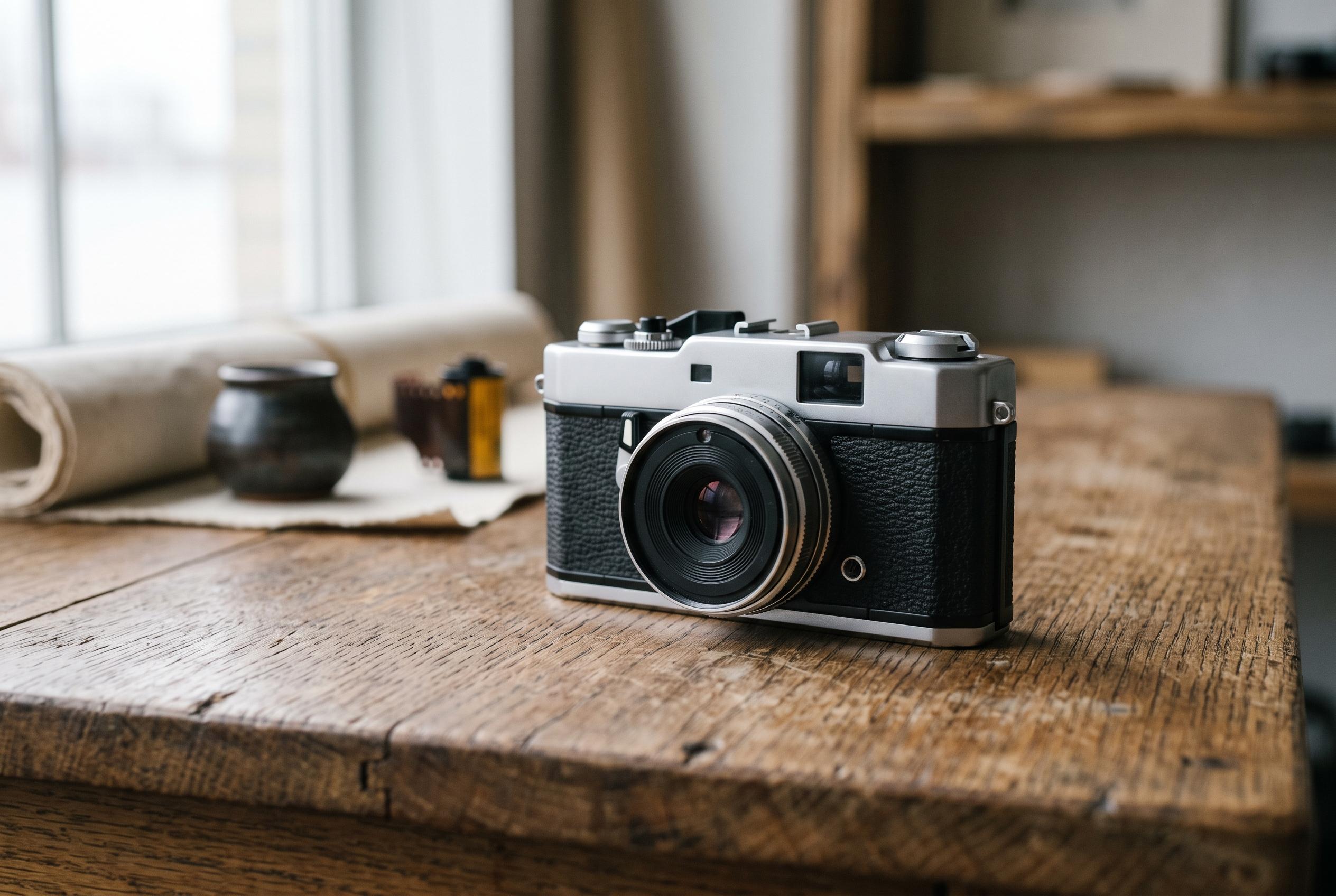

A year after its launch, the Pentax 17 continues to divide opinion, but real-world use reveals its strengths in casual photography, despite handling and technical quirks that challenge its modern appeal.
A year after its debut, the Pentax 17 still divides opinion, but extended use has given it a clearer case. Jason Kummerfeldt’s reassessment suggests that the camera is easier to admire once it has been carried, loaded and shot across real locations rather than judged on first contact. His early resistance was largely rooted in the half-frame format, which splits a 35mm exposure into two vertical images and trades some negative size for economy and convenience. Yet the camera’s 25mm f/3.5 HD Pentax lens, which reviewers at DPReview and TechRadar also found sharper than expected, gives the format more credibility than its detractors allow.
The practical appeal is straightforward. Half-frame doubles the number of frames on a standard roll, giving 72 exposures from 36 and making the camera a strong fit for casual shooting, travel and experimentation. That is reinforced by its six-zone focusing system, leaf shutter and built-in flash, which give it a deliberately simple operating model. Tom’s Guide noted that the Pentax 17 is unusual among new film cameras for offering manual control over shutter speed and exposure compensation, while still remaining compact enough to keep in a bag. The result is a camera that favours spontaneity over precision, but without feeling crude.
Handling, however, remains central to the debate. Kummerfeldt found the body awkward in larger hands and improved it with inexpensive accessories, including a wooden battery-chamber grip and a thumb grip on the film door. He also noted that the top-plate controls can be too easy to knock out of position, which is a real weakness on a film camera where there is no immediate playback to confirm settings. Other reviewers have made similar remarks about focusing confidence and the camera’s handling quirks, even while praising the design’s logic and the viewfinder’s usefulness.
The limitations are equally clear. The viewfinder has some distortion and colour shift, the shutter release uses Pentax’s proprietary connector rather than a standard cable fitting, and the camera’s electronic shutter tops out at four seconds. Kummerfeldt also points out that the f/3.5 aperture can feel restrictive in dim morning light, and that the camera’s future is uncertain now that its designer has left Pentax. That matters because the Pentax 17 is not a nostalgic exercise in the broadest sense; it is a modern film camera with a specific compromise built into its purpose.
Even so, the camera’s supporters argue that the compromise is the point. B&H Photo lists it as a compact half-frame model with a fixed 25mm lens, macro capability and a window-style viewfinder, while Pentax’s own film revival has made it the clearest sign yet that the company still sees a market for analogue photography. For users who want a small, always-ready film camera that stretches each roll and delivers cleaner results than the format’s critics expected, the Pentax 17 appears to have earned a second look.
Disclaimer: This content is intended for informational purposes only. Readers are advised to exercise their own judgement, conduct due diligence, or consult a qualified expert before acting on any information provided.