
The iPhone accessory landscape has become more specialised and competitive in 2026, with a fragmented charging standards ecosystem prompting consumers to choose devices more carefully amid wider adoption of Qi2 25W technology and the continued limitations of older models like the iPhone 16e.
The accessory market around the iPhone has become more technical in 2026 because magnetic charging no longer means one speed or one level of compatibility. The Wireless Power Consortium (wirelesspowerconsortium.com) said in July 2025 that Qi v2.2.1 would be marketed as Qi2 25W, marking the first certified 25W devices, while Apple’s own support guidance (support.apple.com) shows that current iPhones still sit across several different charging tiers rather than one common standard.
That makes model-by-model buying more important than broad claims on packaging. Apple (support.apple.com) says the iPhone 17 Pro, iPhone 17 Pro Max, iPhone 17, iPhone 16 Plus and iPhone 16 Pro Max can reach up to 25W with a 30W or stronger adapter. The iPhone Air peaks at 20W, while the iPhone 16 and iPhone 16 Pro top out at 22.5W. By contrast, the iPhone 17e and iPhone 15 generation and earlier are limited to 15W, and the iPhone 13 mini and iPhone 12 mini reach up to 12W. In practice, that means some owners will benefit from the newest magnetic chargers, while others will simply pay more for hardware their phone cannot fully use.
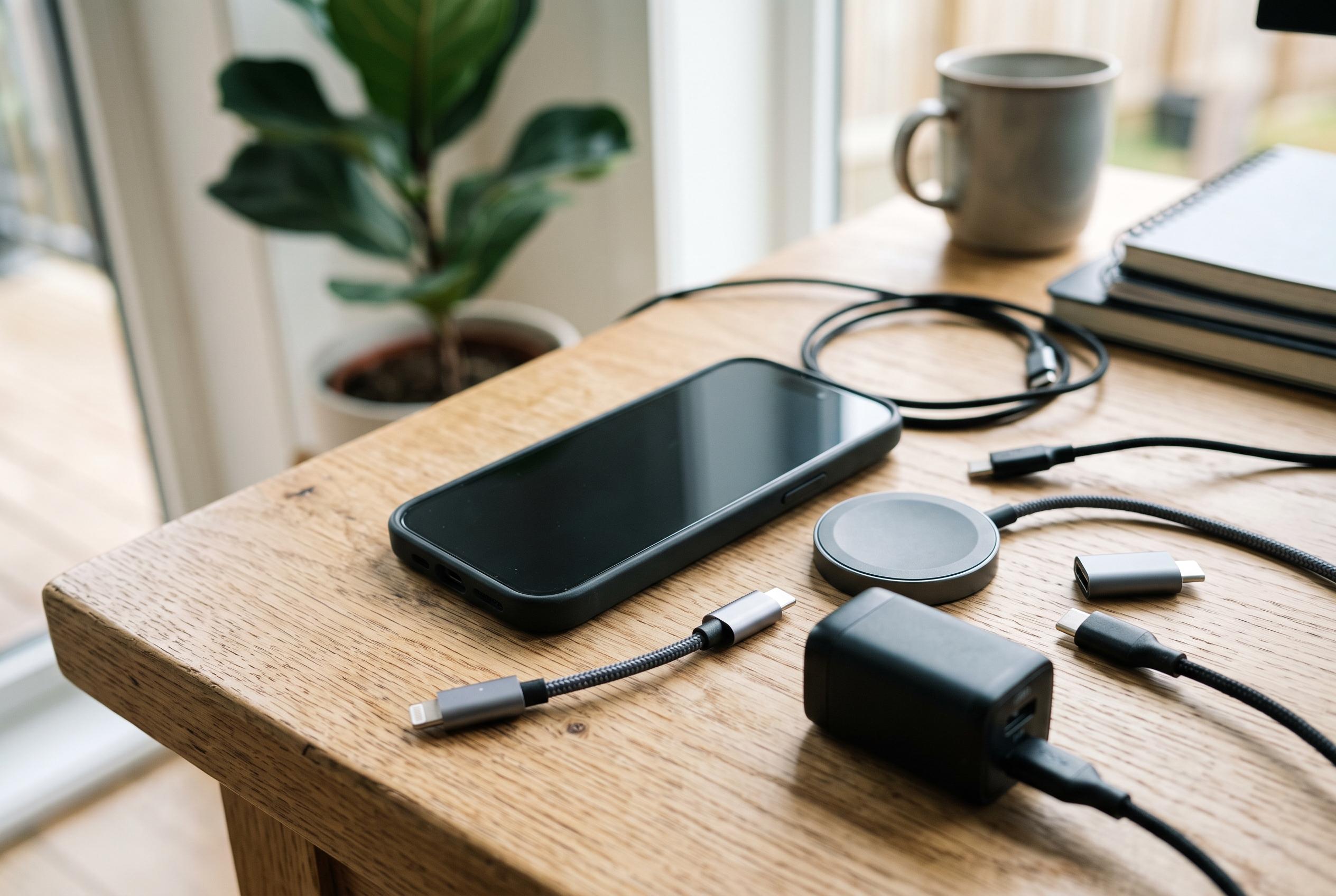
For buyers whose phone can take advantage of the faster tier, the charging market is now broad enough to justify being selective rather than merely loyal to one brand. Macworld’s latest guide (macworld.com) puts Apple’s own MagSafe Charger at the top of the simple-pad category, partly because the updated version supports 25W on compatible handsets and is available with a 2m cable. In Macworld’s testing, it took an iPhone 16 Pro from 0% to 50% in “just over 30 minutes”. The publication also notes that the category now runs from basic pads to stands capable of charging up to six devices, and that foldable travel chargers have become more credible daily tools: one ESR 25W foldable 3-in-1 model weighed 148g against 210g for a more metallic Ugreen rival.
The main qualification to all of this is the iPhone 16e. Apple (support.apple.com) says the MagSafe Charger will charge the device only as a non-MagSafe, Qi-compatible phone, with different power and charging times. MacRumors (macrumors.com) reported when the handset launched on 19 February 2025 that Apple had left MagSafe out altogether, limiting the 16e to standard Qi charging up to 7.5W. That omission matters well beyond charging speed. According to MacRumors, MagSafe cases, wallets and battery packs do not work with the device, and even Apple’s silicone cases for the 16e are not MagSafe products.
That compatibility gap changes the advice on more ordinary purchases, too. A case still belongs at the top of any shopping list, but in 2026 it must do more than cushion a fall: it should preserve charging alignment and avoid undermining the accessories you intend to use. Apple (support.apple.com) also warns users not to place credit cards, security badges, passports or key fobs between the phone and the charger because magnetic strips or RFID chips may be damaged. For people who carry cards on the back of the handset, or who were considering a magnetic wallet as an all-in-one solution, that is a practical limitation rather than a theoretical footnote. For iPhone 16e owners especially, a conventional protective case and a wired or plain Qi charger remain the more rational combination.
Wireless audio is also less settled than the usual one-line recommendation suggests. RTINGS (rtings.com) now rates the Nothing Ear (3) as its best-value wireless earbuds for iPhone users, noting that they support unusually good iOS integration for a non-Apple model, including quick pairing, multi-device pairing and an iPhone-compatible app. RTINGS says that app includes a hearing test and an eight-band EQ, and describes the earbuds’ active noise cancellation as very good at reducing construction rumble and high-pitched rail noise. The same guide says AirPods Pro 2 remain a sensible option for people who do not get on with the deeper fit of AirPods Pro 3.
At the premium end, the competitive pressure is even clearer. Tom’s Guide (tomsguide.com) argues that Sony’s WF-1000XM6 are the strongest alternative to Apple’s latest in-ear offering because they deliver “much better sound” and broadly comparable noise cancellation, while adding a particularly strong EQ and Sony’s DSEE Extreme processing to improve lower-quality streams. The drawback, Tom’s Guide says, is a larger case that is less pocket-friendly. Its broader point is telling: Apple may still offer more exclusive features, including translation and heart-rate monitoring, but rivals are now competing effectively on sound, fit and day-to-day tuning controls rather than merely undercutting on price.
The sensible accessory stack in late 2026 is therefore narrower, and more exacting, than the average shopping list implies. Buy protection first. After that, match the charging hardware to the exact phone in your pocket: a 25W magnetic pad or 3-in-1 stand for compatible recent models, ordinary Qi or wired charging for the iPhone 16e, and premium earbuds only if you value sound quality or customisation more than Apple’s tightest ecosystem features. The larger shift, as the Wireless Power Consortium (wirelesspowerconsortium.com) made clear when it launched Qi2 25W, is that Apple is no longer the only force shaping this category. With more manufacturers building into the same fast magnetic standard, the best iPhone accessories are improving because the market has become more competitive, not because owners suddenly need more gadgets.
Disclaimer: This content is intended for informational purposes only. Readers are advised to exercise their own judgement, conduct due diligence, or consult a qualified expert before acting on any information provided.