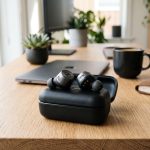
The evolving landscape of PS5 headsets in 2026 reveals a shift from brand loyalty towards performance and connection flexibility, with rankings now influenced more by measured sound quality and user needs than by ecosystem allegiance.
By September 2026, the market for PS5 headsets is defined less by a single runaway winner than by a split verdict among the review sites doing the most testing. RTINGS, which says it has measured more than 905 headphones and updated its PS5 guide on 19 August, now puts the Audeze Maxwell 2 at the top on sound balance and overall performance. TechRadar and GamesRadar, however, favour SteelSeries’ Arctis Nova Pro Omni for its broader feature set and multi-platform flexibility, while Tom’s Guide still argues that Sony’s Inzone H5 is the easiest recommendation for most PlayStation owners. The change is important because it shifts the buying question away from brand recognition and towards use case: pure audio quality, noise control, battery behaviour, cross-device support, or price.
RTINGS’ ranking is the clearest sign of that change. Its case for the Audeze Maxwell 2 is built on measured performance rather than ecosystem loyalty. The site says the PlayStation version is the one to buy if Tempest 3D audio matters, and describes the headset as balanced out of the box, with enough low-end weight for explosions and gunfire without smothering detail. RTINGS also draws a sharp line between the Maxwell 2 and feature-led rivals, saying the SteelSeries Arctis Nova Pro Omni offers active noise cancellation and more flexible routing, but that the Audeze is better built, more balanced by default and equipped with a stronger microphone. For buyers who play in noisy rooms, RTINGS points instead to the Razer BlackShark V3 Pro, citing 13ms wireless latency, nearly 70 hours of battery life and noise cancelling that gives it an edge in shared spaces.
That is not the only view of the high end. TechRadar and GamesRadar both place the SteelSeries Arctis Nova Pro Omni at the front of the PS5 pack, and both frame that choice around convenience rather than absolute neutrality. GamesRadar says the model, launched on 5 May 2026, replaces the older Nova Pro Wireless at the top of its list and scores highly across audio, battery, microphone, versatility and build quality. TechRadar says it used the headset as a “daily driver” for gaming, calls and work for roughly three months. Between them, the two publications highlight 2.4GHz wireless, Bluetooth and wired support, active noise cancellation, hot-swappable batteries and a Game Hub that pushes the headset towards all-in-one desk and console setups. Both also warn that it is expensive, and TechRadar is explicit that players who only want straightforward chat and game sound may not need its full set of extras.
Sony’s own position in this market is more mixed, but still stronger than a generic buying guide suggests. Tom’s Guide continues to back the Sony Inzone H5 as its best overall PS5 headset, describing 3D audio performance as a major strength and putting the headset at $149 or £129 with 28 hours of battery life and a wireless dongle that also works with PC. The same guide still calls the older Pulse 3D an essential accessory despite the absence of active noise cancellation and some awkward earcup controls. SoundGuys takes a different Sony line. Its 2026 roundup names the PlayStation Pulse Elite as the best PS5-specific gaming headset, with a $149.99 list price, planar magnetic drivers, a retractable boom mic, Bluetooth and Sony’s PlayStation Link for low-latency use with both PS5 and PlayStation Portal. SoundGuys says it is “the best official headset yet”, but adds meaningful caveats: weak noise isolation, loose earcups and EQ access that is limited on PS5. TechRadar broadly agrees on the strengths, while warning that the Pulse Elite is bulkier and heavier than several rivals.
Further down the price ladder, the recommendations widen again. PC Gamer’s broader 2026 gaming-headset guide ranks the Razer BlackShark V3 as the best overall headset across platforms, not just on PlayStation, and gives it extra credit for pairing 50mm drivers with 2.4GHz wireless, Bluetooth and a low-latency mode that drops to 10ms. At $149 or £140, that puts it in a more aggressive price bracket than some premium PS5-first models. For shoppers spending far less, PC Gamer’s budget pick is the PowerA LucidSound LS500 at $70, a lightweight model with USB-A and USB-C dongles, Bluetooth and a flip-up microphone. PC Gamer praises its comfort and notes a glasses slot in the headband, though it also reports a quirk: the mic arm behaved properly over the dongle connection but not over Bluetooth. RTINGS places the SteelSeries Arctis Nova 7 Wireless in the affordable middle ground, saying it gives up some battery life next to Razer but retains useful gaming features and software EQ.
Across all these lists, there is one point of rare agreement: PS5 buyers should think carefully about connection method before anything else. The stronger recommendations overwhelmingly favour low-latency proprietary links or USB dongles over ordinary Bluetooth audio. TechRadar repeatedly stresses PlayStation Link and dongle-based wireless as the safer route on Sony’s console. SoundGuys makes the same case for the Pulse Elite, linking its appeal directly to PS Link support. RTINGS adds another distinction within wireless: the Audeze Maxwell 2 supports Bluetooth multi-device pairing, while the Razer BlackShark V3 Pro does not. That difference matters for people who want one headset to move cleanly between console, phone and computer instead of serving only one screen.
Comfort, meanwhile, is the factor that most sharply separates strong reviews from weak ones. TechRadar’s favourite wired option, the Sony Inzone H6 Air, is singled out not only for 3.5mm and USB-C support but because it weighs 199g, making it one of the lightest serious PS5 choices in the current market. PC Gamer’s PowerA budget pick is heavier at 261g but still presented as easy to wear for hours, especially for glasses wearers. GamesRadar highlights the Logitech G325 Lightspeed at 212g as remarkably light, though lightness there comes with fewer features. The same site is less forgiving about bulkier premium sets, saying the Maxwell family can feel durable but heavy enough to limit long sessions. The message is simple: specifications on a box tell only part of the story if clamp force, pad depth and weight work against you.
The latest evidence, then, does not support a single universal answer for PS5 owners. The Audeze Maxwell 2 now appears to be the strongest choice for buyers who prioritise measured sound quality and solid tuning. The SteelSeries Arctis Nova Pro Omni is the feature-rich option for people running multi-device setups and willing to pay for convenience. Sony’s Pulse Elite makes the clearest case for players who want a PS5-and-Portal headset built around PlayStation Link, while the Inzone H5 remains the simpler value play for many mainstream users. At the lower end, the PowerA LucidSound LS500 shows that a credible PS5 headset no longer has to be expensive, provided buyers accept modest compromises on finish and microphone behaviour.
Disclaimer: This content is intended for informational purposes only. Readers are advised to exercise their own judgement, conduct due diligence, or consult a qualified expert before acting on any information provided.