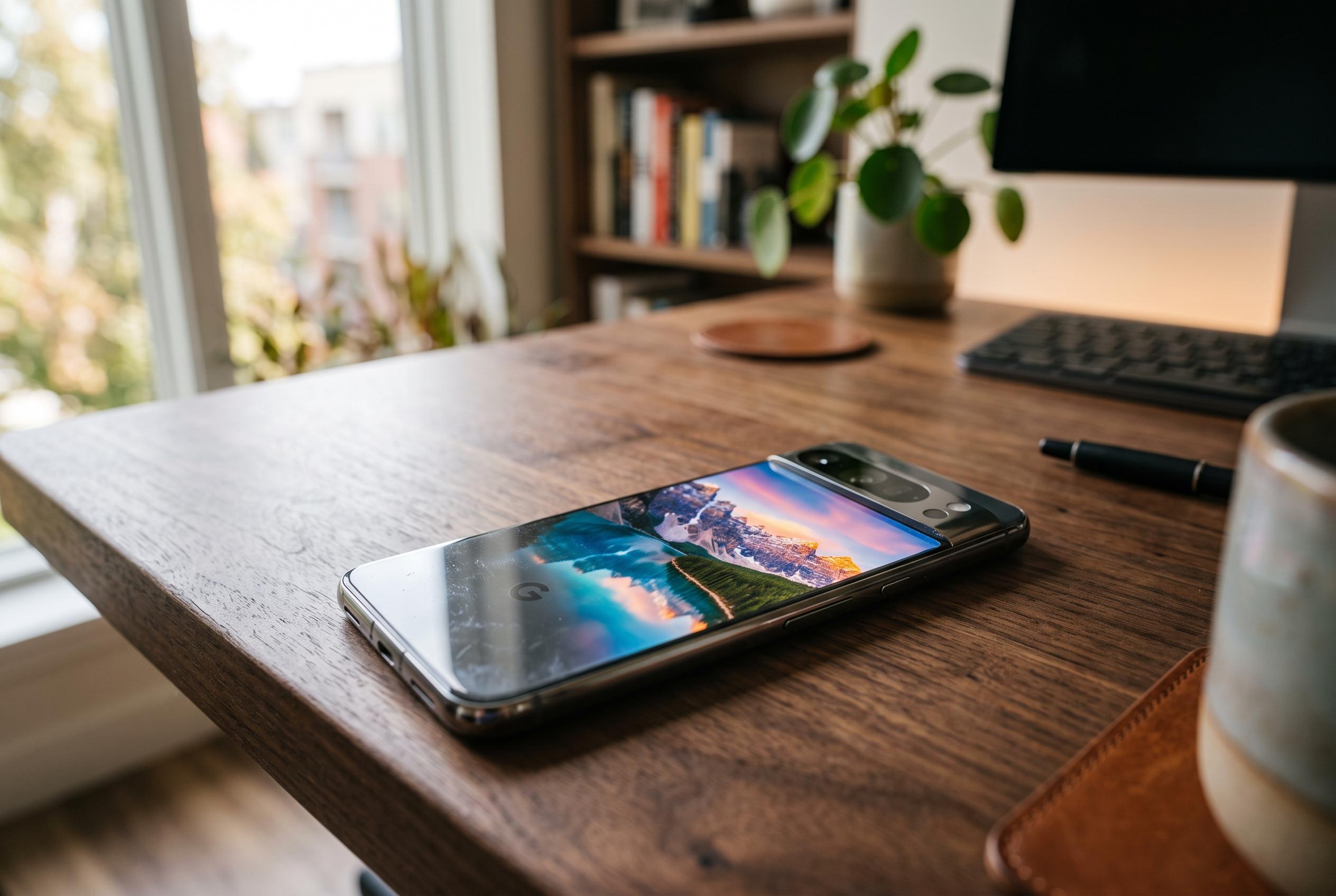

After a year of mixed reviews, the Pixel 10 Pro is praised for its excellent display and compact size but criticised for its susceptibility to scratches, highlighting the importance of screen protection for buyers.
The clearest verdict on Google’s Pixel 10 Pro after a year of reviews is that Google built an unusually convincing compact flagship, then muddied the picture with repeated complaints about how easily the front glass can mark. Across early reviews and longer-term use, writers consistently praised the 6.3in OLED for brightness, colour balance and outdoor legibility. But several outlets also reported scratches appearing sooner than expected, which turns a premium display into one that many owners may want to cover from the first day. (theguardian.com)
On pure display quality, there is remarkably little disagreement. TechRadar listed a 6.3in panel with a 1080 x 2424 resolution, a 60-120Hz refresh rate and 3,000 nits peak brightness, while Android Central said HDR output could reach 3,300 nits and called it “ridiculously easy to see outside”. XpertPick said the size was a sweet spot for one-handed use, and The Guardian described it as “one of the best displays on a phone”. Taken together, that places the Pixel 10 Pro among the strongest small-screen options in the top end of the market. (techradar.com)
That screen sits inside a handset reviewers broadly agree feels expensive. TechRadar said the phone had a polished, solid feel that “exudes a premium quality”, while Forbes noted a new aluminium frame and a fingerprint-resistant coating that still left visible smudges. At £999 in the UK and $999 in the US, according to The Guardian, TechRadar and Android Central, Google pitched it directly into iPhone 16 Pro territory, but with Qi2 magnetic charging and Pixelsnap support as key hardware distinctions. The Guardian also highlighted magnetic accessory support as a practical advantage rather than a gimmick. (techradar.com)
The durability concern, however, is not theoretical. In November 2025, Android Authority’s Joe Maring wrote that after about three months with the phone as his main Android device, the display had developed scratches “all over” it, plus a deeper cluster near the middle. He said the worst marks produced a rainbow effect against light backgrounds and could be felt with a fingernail. More notably, he could not identify one dramatic accident that caused them; the damage seemed to emerge through everyday handling and only a few minor drops. (androidauthority.com)
That account is not the only one. Forbes reported a similar shock after a single bag carry, with Rebecca Isaacs writing that the phone “came out with a deep scratch on the screen”. XpertPick was blunter, saying that despite Gorilla Glass Victus 2, its review unit had “picked up visible scratches far too quickly” in ordinary use, with no drops or rough treatment. Yet the evidence is still mixed rather than conclusive. TechRadar did not raise the same complaint in its review, and Maring himself said he was not trying to argue that the Pixel 10 Pro had a broader durability defect. The Guardian, for its part, noted Google’s use of Victus 2 on both front and back, which makes the gap between specification and lived experience harder to ignore. (forbes.com)
Those reports explain why the accessory advice around this phone is unusually firm. XpertPick concluded that “A thin plastic screen protector is basically mandatory here”, arguing that thicker tempered glass is a poor fit with the ultrasonic fingerprint sensor. Its reviewer suggested that owners who insist on tempered glass may end up leaning more heavily on face unlock instead. Android Authority arrived at a similar practical lesson after the fact, saying the visible damage could have been avoided with basic protection. Even TechRadar’s note that Google supplied a case reflects the same reality: reviewers seemed more comfortable using this phone protected than bare. (xpertpick.com)
Beyond the glass, the Pixel 10 Pro follows a familiar Google pattern: refined day-to-day usability, paired with compromises elsewhere. Forbes called the Tensor G5 the weakest flagship chip it had tested that year, citing Geekbench scores of 2,314 single-core and 6,060 multi-core. The Guardian nonetheless said the phone felt quick in daily use, even if it fell short of Qualcomm’s best silicon, while TechRadar dismissed the temperature sensor as hardware that “does not work properly”. Android Central added two practical warnings for US buyers: the launch model was eSIM-only, and the new PWM-sensitive mode still did not do enough for users who are sensitive to display flicker. (forbes.com)
Even with those caveats, the broader ownership case remains strong. The Guardian said the phone could last up to about two days between charges with roughly seven hours of active screen use, and it also pointed to repair routes through Google, third-party shops or self-repair, plus a battery rated to retain at least 80% capacity after more than 1,000 full cycles. Add Qi2 magnets, storage options up to 1TB and long software support, and the Pixel 10 Pro still emerges as one of the most persuasive smaller flagships of its cycle. The practical conclusion from the combined reporting is straightforward: buy it for the excellent display, the manageable size and the clean software, but factor in screen protection immediately. (theguardian.com)
Disclaimer: This content is intended for informational purposes only. Readers are advised to exercise their own judgement, conduct due diligence, or consult a qualified expert before acting on any information provided.