
Xiaomi introduces the Smart Band 11 in China, featuring a brighter AMOLED display, new all-metal and ceramic finishes, and advanced sleep monitoring with HRV , but international availability remains unconfirmed.
Xiaomi has moved beyond a simple product reveal for the Smart Band 11 and into the first phase of sales in China. Tech-ish reported that reservations opened on 3 September and that the standard and NFC versions are due to go on sale on 7 September at 10am Beijing time. Pricing starts at CNY 289 for the regular model, rises to CNY 339 for the NFC edition, and reaches CNY 399 for both ceramic and all-metal versions. Gizmochina and Notebookcheck said Xiaomi has still not set out any timetable for an international release. (tech-ish.com)
What Xiaomi appears to be offering is a careful annual refresh rather than a rethink of the range. Gadgets & Wearables described the update as a tightening of an already established formula, and Tech-ish noted that each Smart Band 11 version is roughly CNY 20 to CNY 30 above the Smart Band 10 prices announced in June 2025. Even with that increase, IntoMobile argued that Xiaomi remains far below the price bands occupied by Apple, Fitbit and Samsung in wearables, which helps explain why the company keeps treating this line as a volume product rather than a prestige device. (gadgetsandwearables.com)
Most of the visible hardware changes are incremental but clear. The display remains a 1.72-inch AMOLED panel with 2mm borders, yet brightness rises from 1,500 nits on the previous generation to 2,000 nits on the new one, according to Gadgets & Wearables, Tech-ish and Notebookcheck. Xiaomi has also thinned the body to 9.99mm and trimmed weight to 15.58g, down from 10.95mm and 15.95g on the standard Smart Band 10. Notebookcheck highlighted the all-metal edition as the main new addition to the range, while the ceramic variant returns as a more premium finish rather than a separate feature tier. (gadgetsandwearables.com)
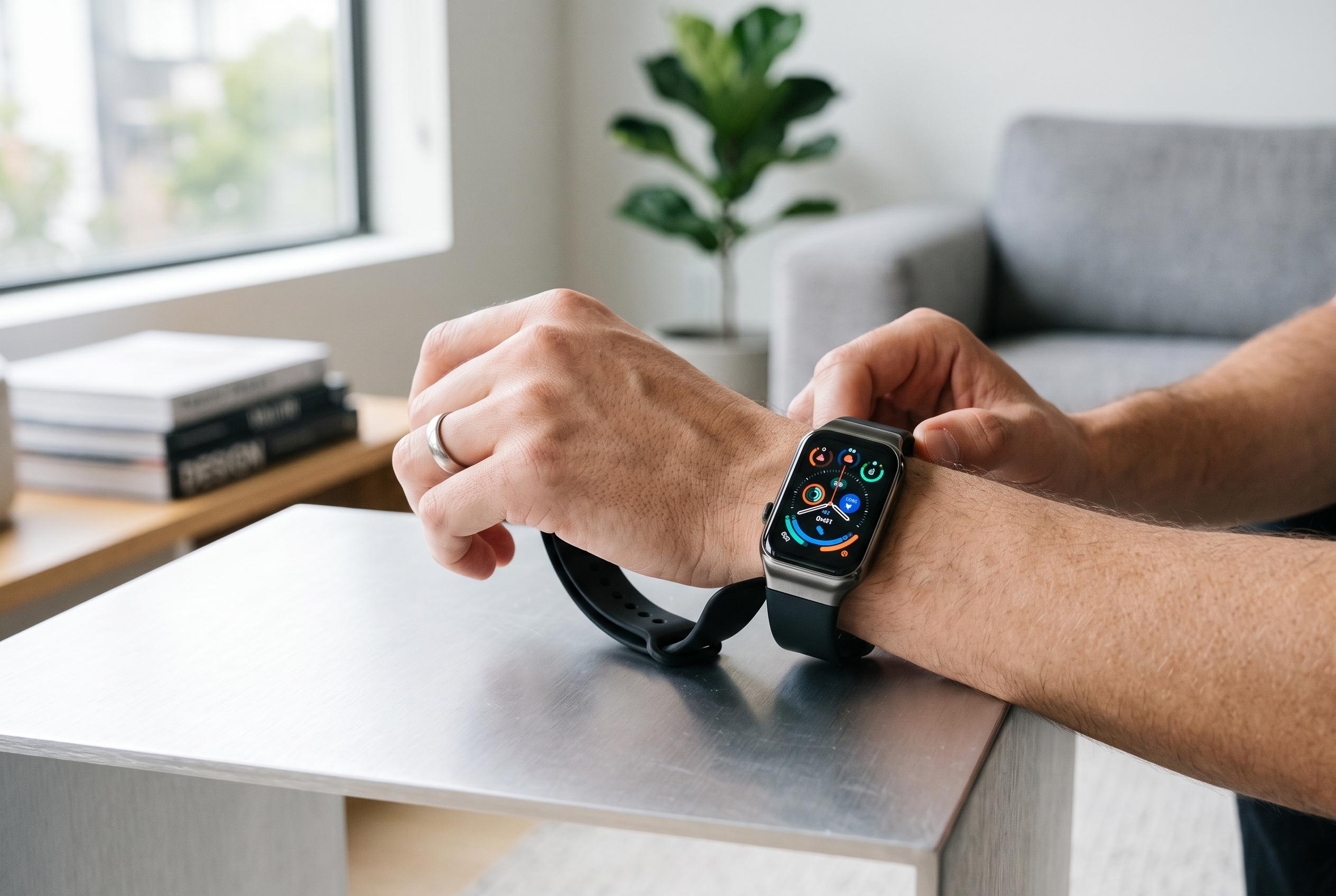
The rest of the package shows Xiaomi trying to make the band feel less utilitarian without turning it into a watch. Gizmochina said the device ships with multiple swappable strap options, including metal and ceramic styles, while Código Cero reported that Xiaomi is also offering several colour choices. The software base is HyperOS 4, and both Gizmochina and Código Cero said the Smart Band 11 works with Android handsets and iPhones. Gadgets & Wearables added that Xiaomi’s own marketing puts unusual emphasis on Apple compatibility, including broader notification support and Apple Shortcuts integration. (gizmochina.com)
The more meaningful change is on the health side. Several outlets said Xiaomi has added overnight HRV, or heart-rate variability, tracking, a metric often used as a rough indicator of recovery and physiological strain. IntoMobile, Gizmochina and Código Cero all said Xiaomi pairs that reading with AI-generated sleep interpretation rather than leaving users with raw charts alone. Alongside that, the tracker keeps the familiar core suite of heart-rate, blood-oxygen and stress monitoring, adds women’s health functions, supports more than 150 sports modes and retains 5ATM water resistance. In practical terms, Xiaomi is bringing a feature more commonly associated with pricier wearables into a band that still sits near the bottom of the market on price. (intomobile.com)
Battery life, by contrast, has not changed. Gadgets & Wearables, Tech-ish and Gizmochina each said Xiaomi continues to rate the Smart Band 11 for up to 21 days on a charge, despite the brighter screen and slimmer case. Tech-ish added one important limitation for the NFC model: its payment and access-card functions remain tied to China. That matters because Xiaomi has yet to confirm whether the AMOLED Smart Band 11 will follow the company’s usual path into overseas markets, even though earlier bands in the series have done so. For now, the product is a China launch with no formal European or wider global schedule. (gadgetsandwearables.com)
That leaves the Smart Band 11 in a familiar but still effective position. It does not introduce headline hardware such as built-in GPS or a larger display, and it does not materially extend endurance beyond the previous generation. Instead, Xiaomi has chosen a brighter panel, a thinner case, a new premium all-metal finish and a more advanced sleep-recovery feature, while holding the entry price at the equivalent of roughly $43 in Chinese sales. For a company competing on specification density and price discipline, that may be enough. The unanswered question is no longer what the band is, but when, or whether, Xiaomi decides to sell this AMOLED version beyond China. (intomobile.com)
Disclaimer: This content is intended for informational purposes only. Readers are advised to exercise their own judgement, conduct due diligence, or consult a qualified expert before acting on any information provided.