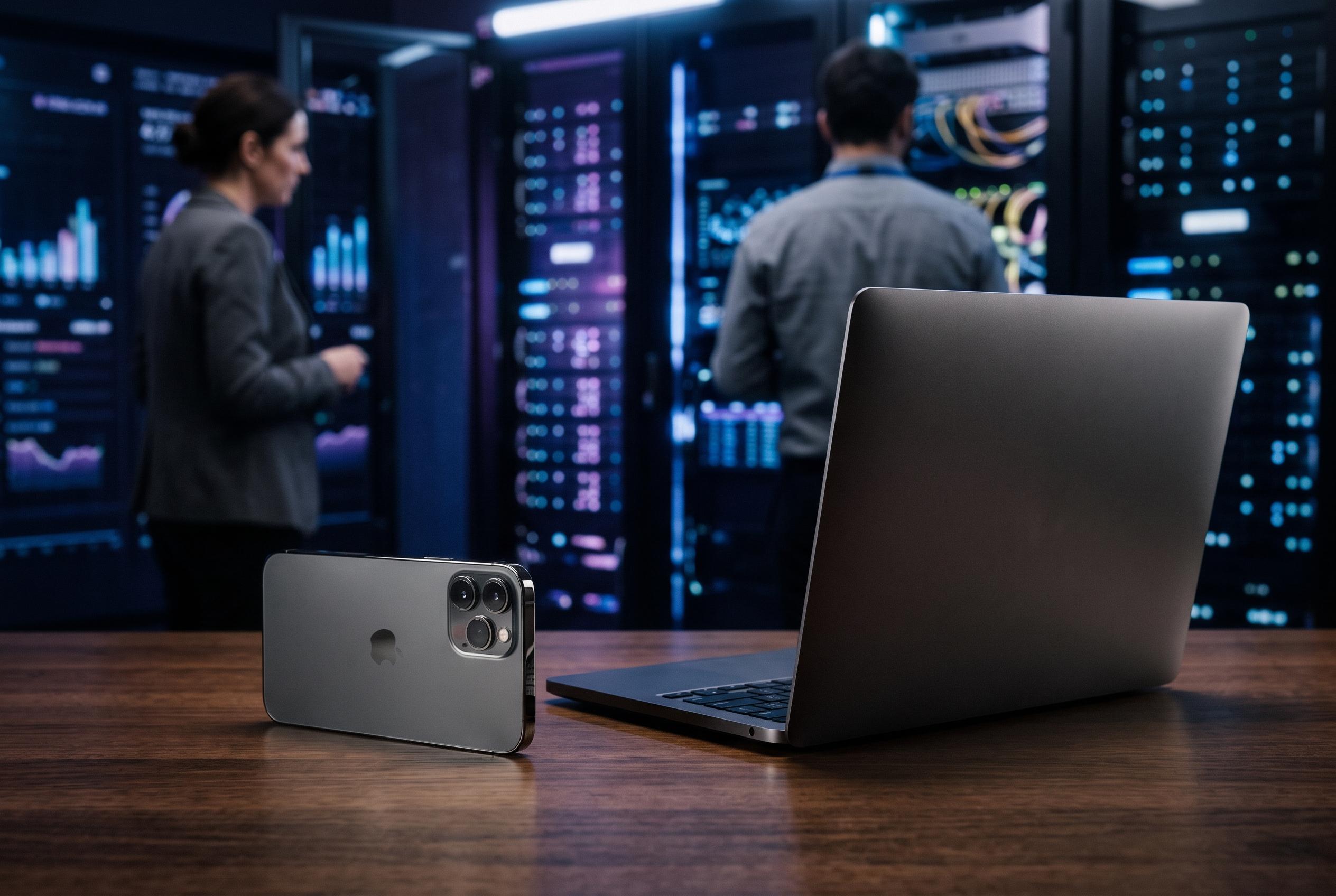

A global memory-chip squeeze, driven by AI infrastructure demands, is escalating prices across the consumer electronics sector, forcing manufacturers to choose between higher costs and weaker specifications amid a widening industry gap.
The price impact of the artificial-intelligence build-out is no longer confined to chip contracts and industry forecasts. It has reached shop shelves. Apple said in June that it was raising Mac and iPad prices because memory chips had become markedly more expensive, lifting the entry-level MacBook Neo to $699 from $599, the 512GB MacBook Air to $1,299 from $1,099 and the 256GB iPad Pro Wi-Fi to $1,199 from $999. The company described the jump in component costs as an “unprecedented challenge” for consumer electronics.
What has changed is not that phones and AI servers use identical finished products, but that they are drawing on the same memory ecosystem. Reuters reported early this year that Samsung, SK Hynix and Micron were all struggling to keep up as data-centre operators absorbed supply that would once have gone to ordinary gadgets. TrendForce said in March that suppliers were shifting wafer capacity towards high-bandwidth memory and server products, leaving conventional DRAM tight and driving projected second-quarter contract price rises of 58% to 63% for standard DRAM and 70% to 75% for NAND flash.
The squeeze has not eased. In July, TrendForce said the DRAM market would remain “extremely tight” in the third quarter, even if the pace of price rises slowed from the violent gains seen earlier in the year. It said notebook prices were expected to rise broadly as higher-cost parts worked through inventories, while smartphone makers were likely to lift retail prices to offset persistently high low-power DRAM costs. Later that month, the same research group said meaningful new DRAM capacity would not contribute materially until the second half of 2027, with substantial output gains more likely in 2028.
IDC’s latest smartphone outlook suggests the consumer damage is deepening rather than stabilising. The research firm said on 26 August that worldwide smartphone shipments were now expected to fall 16.7% in 2026 to just over 1 billion units, a much steeper contraction than it had projected a quarter earlier. Yet the market’s value is still forecast to rise to $613 billion because prices are doing the work that volume once did. IDC said average smartphone selling prices would climb 27.6% this year to $581, while devices priced below $100 were facing an existential squeeze. In its words, “The era of the cheap smartphone has ended.”
The effect is wider than handsets. Associated Press reported that Microsoft said its Xbox console would rise by $100 by 1 August, while Sony was already charging more for the PlayStation and Dell and HP had lifted laptop prices. The same report said four large technology groups – Alphabet, Amazon, Meta and Microsoft – were expected to spend about $720 billion this year, mainly on data centres. JPMorgan economists estimate that some memory-chip prices will have risen as much as 400% between 2024 and the end of 2026, helping to keep broader inflation under pressure as electricity and hardware costs rise together.
Manufacturers are not being hit evenly. Reuters said the burden was heaviest in low- and mid-range devices, where margins are too thin to absorb another surge in bill-of-materials costs. IDC now expects the PC market to shrink 4.9% in 2026 after growth last year, while TrendForce has forecast a 4.4% fall in console sales. Intel finance chief David Zinsner warned in January that rising memory prices “could limit our revenue opportunity”, and Intel chief executive Lip-Bu Tan said smaller companies were struggling simply to finish products because they could not get the memory they needed.
Warnings from senior executives had begun months before the first retail price lists changed. Bloomberg reported in February that Tim Cook, Elon Musk and Micron were all signalling that a shortage of dynamic random-access memory was becoming a cross-industry problem. According to Bloomberg, Apple warned the squeeze would compress iPhone margins, while Micron called the bottleneck “unprecedented”. Musk went so far as to raise the idea of Tesla building its own memory fabrication plant, underlining how far the issue had spread beyond laptops and phones into vehicles and industrial systems.
For buyers, the most likely outcomes now are simple and unappealing: higher prices, weaker specifications, or both. IDC says brands focused on cheaper Android models are already cutting low-end lines and pushing customers towards more expensive devices, while some vendors are leaning on older designs and 4G variants to defend price bands that no longer make economic sense. TrendForce expects consumer electronics to remain under pressure in 2027 as DRAM supply stays constrained, even if NAND flash begins to loosen later in the year. In other words, the industry may be nearing the end of the sharpest price jumps, but not the end of expensive memory.
Disclaimer: This content is intended for informational purposes only. Readers are advised to exercise their own judgement, conduct due diligence, or consult a qualified expert before acting on any information provided.