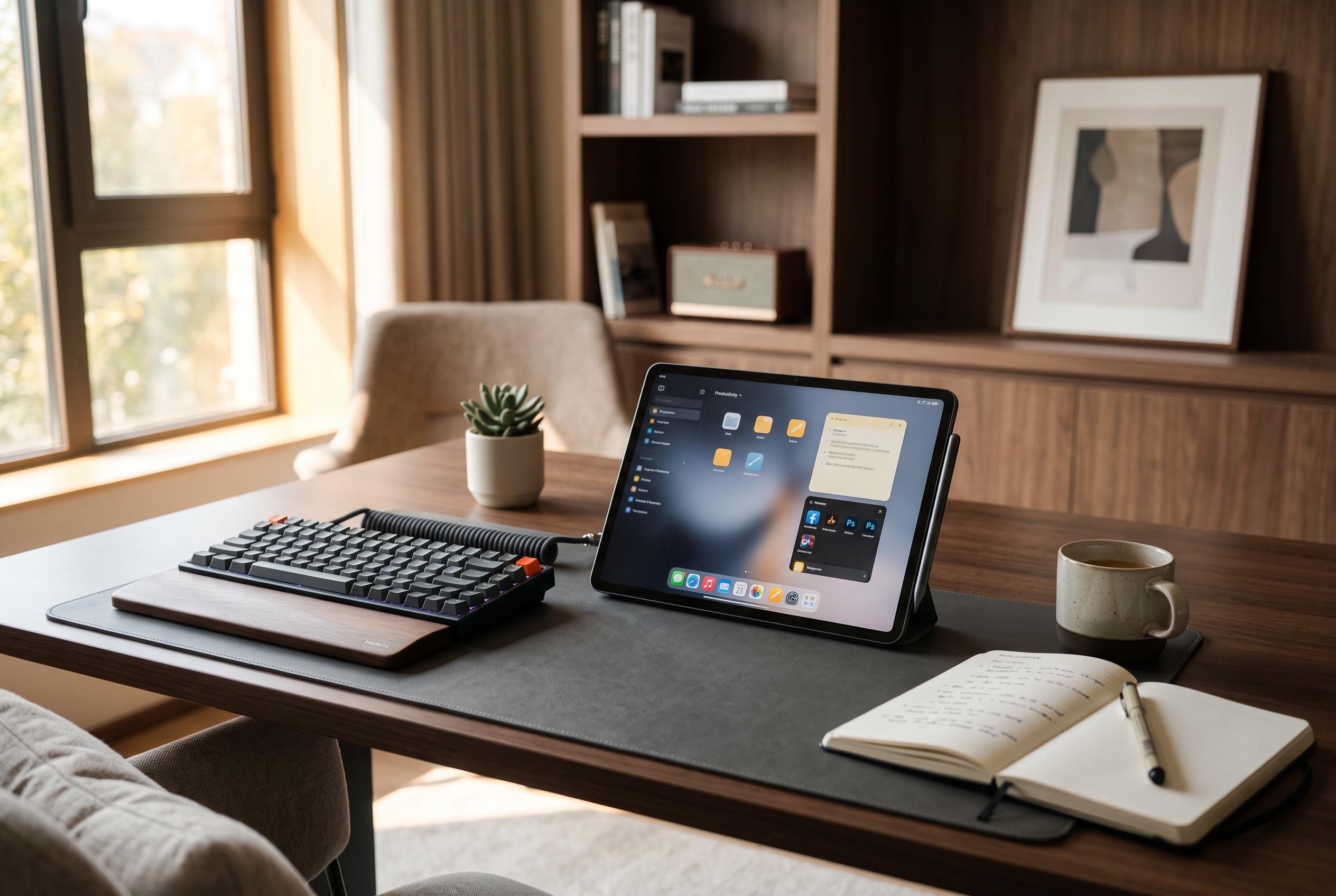

Xiaomi leverages its September launch in China to unveil the Pad 9 Pro Max, showcasing its new Xring O3 processor and a strategic move into premium productivity hardware alongside electric SUVs and foldable devices.
Xiaomi is using its autumn launch in China on 7 September to do more than add another tablet to its range. The Pad 9 Pro Max is being presented as the first tablet showcase for the company’s Xring O3 processor and HyperOS 4, with the debut timed to the same event as the Xiaomi 18 Fold. Gadgets360 says Xiaomi will also use the presentation to reveal N70 and N90 series electric SUVs, underlining that this is a broader product push rather than an isolated tablet announcement.
That context matters because the Pad 9 Pro Max appears to sit near the centre of Xiaomi’s in-house silicon strategy. Tech-ish and SamMobile both describe Xring O3 as a 3nm chip made by TSMC, and Gadgets360 identifies it as the successor to Xring O1. SamMobile says Xiaomi has chosen a performance-led 10-core design with no small efficiency cores, suggesting the company wants the processor to be judged against premium laptop-style and flagship mobile workloads rather than conventional tablet chips.
Xiaomi’s published claims for the processor are ambitious. Gizmochina says the company has outlined a 10-core all-big-core CPU peaking at 4.35GHz and a 16-core G2-Ultra NX GPU. IT Home reports Xiaomi calling Xring O3 the first flagship SoC to clear five million points in AnTuTu, after what it says was a 459-day development effort. The same report says Xiaomi is promising third-generation ray tracing, an 85% gain in graphics performance and a 64% reduction in power use against the previous generation. Those figures still await independent testing.
Early benchmark evidence gives a more cautious picture. A Geekbench entry highlighted by Tech-ish and The Tech Outlook for model M367FC shows Android 17 and 15GB of memory, typically interpreted as a 16GB configuration, with single-core scores of roughly 3,471 to 3,474 and a multi-core result of 13,229. The Tech Outlook says the listing shows four cores at 3.15GHz, four at 3.69GHz and two at 4.36GHz, plus a Mali-G2-Ultra-NX MC16 GPU. That is lower than the 15,000-plus multi-core figures linked to Xring O3 in Xiaomi-backed reporting and repeated by SamMobile, which suggests either different test conditions or unfinished pre-release software. That is an inference rather than a confirmed explanation.
On hardware, the clearest pattern is size and endurance. Gizmochina and Tech-ish both say the Pad 9 Pro Max uses a 13.3-inch LCD panel rather than OLED, and Gizmochina expects a “soft-light” version intended to cut glare. The same two outlets point to a battery above 10,000mAh, 120W wired charging, storage options of 512GB and 1TB, and a weight of about 650g. Tech-ish notes that if the LCD reports are accurate, Xiaomi would be moving away from the OLED approach used on the Pad 7 Ultra.
Software is the other main part of Xiaomi’s message. IT Home says the company is calling the device a “professional productivity flagship”, while Gizmochina and Tech-ish report that HyperOS 4 has been tuned for large screens and for running PC-level applications. That language is notable because it moves the Pad 9 Pro Max away from the usual entertainment-first tablet pitch. Xiaomi is trying to frame it as a work device first, with productivity software and large-screen optimisation carrying as much weight as raw processor numbers.
The surrounding event also shows how much Xiaomi is trying to bundle into one announcement. Gadgets360 says the company plans to present the 18 Fold together with the N70 Pro, N70 Max and N90 Max vehicles, while Tech-ish describes three Sky Nomad SUVs on the same stage. The naming is not fully aligned across reports, but the broader point is clear: Monday 7 September is being treated as a platform event for Xiaomi’s premium hardware, and the Pad 9 Pro Max is one of the first products selected to carry the new Xring O3 into public view.
Two days before the launch, the unanswered questions are the ones that usually determine whether a tablet becomes important outside its home market: final price, confirmed battery size, retail performance, and international availability. For now, Xiaomi’s pre-launch line is consistent across the reporting. The Pad 9 Pro Max is not being sold simply as a larger Android tablet. It is being used to test whether Xiaomi can extend its own chip programme into serious productivity hardware and make that strategy credible from the first release.
Disclaimer: This content is intended for informational purposes only. Readers are advised to exercise their own judgement, conduct due diligence, or consult a qualified expert before acting on any information provided.